Getting outdoor lights for house right transforms how you experience your property after dark. A well-lit exterior doesn’t just look inviting, it improves security, defines pathways, and extends the usability of patios and decks into the evening hours. Whether you’re installing fixtures around your front entrance, lining a deck with stringing outdoor lights, or exploring solar for outdoor lights, understanding your options matters. This guide walks you through fixture types, selection criteria, design choices, and installation fundamentals so you can make decisions that fit both your home’s architecture and your lifestyle. By the end, you’ll know exactly what outdoor lighting setup works for your space.
Table of Contents
ToggleKey Takeaways
- Outdoor lights for house serve multiple purposes including improved security, defined pathways, and extended usability of outdoor spaces, making a well-planned lighting design essential for any property.
- Fixture selection depends on three critical factors: the space you’re lighting, required brightness (measured in lumens), and power source (hardwired, solar, or battery), with security areas needing 1000+ lumens and ambient areas requiring 500-800 lumens.
- Wall sconces work best for entryways and porches at 8-12 feet high, while post lights define deck and patio edges spaced 8-10 feet apart, and layering multiple fixture types creates both function and visual depth.
- Choose warm white color temperature (2700K) for residential outdoor lighting to create inviting ambiance, and match fixture style and finish to your home’s architecture—bronze and black finishes are most forgiving for weathering.
- Installation requires GFCI-protected circuits, proper conduit burial (12-18 inches underground), and corrosion-resistant hardware, with mistakes creating serious safety hazards, making professional help worthwhile for complex projects.
Types Of Outdoor Lighting Fixtures For Your Home
Outdoor lighting comes in distinct categories, each serving a purpose. Understanding the differences helps you avoid over-buying or installing the wrong fixture in the wrong spot.
Wall Sconces And Wall Lights
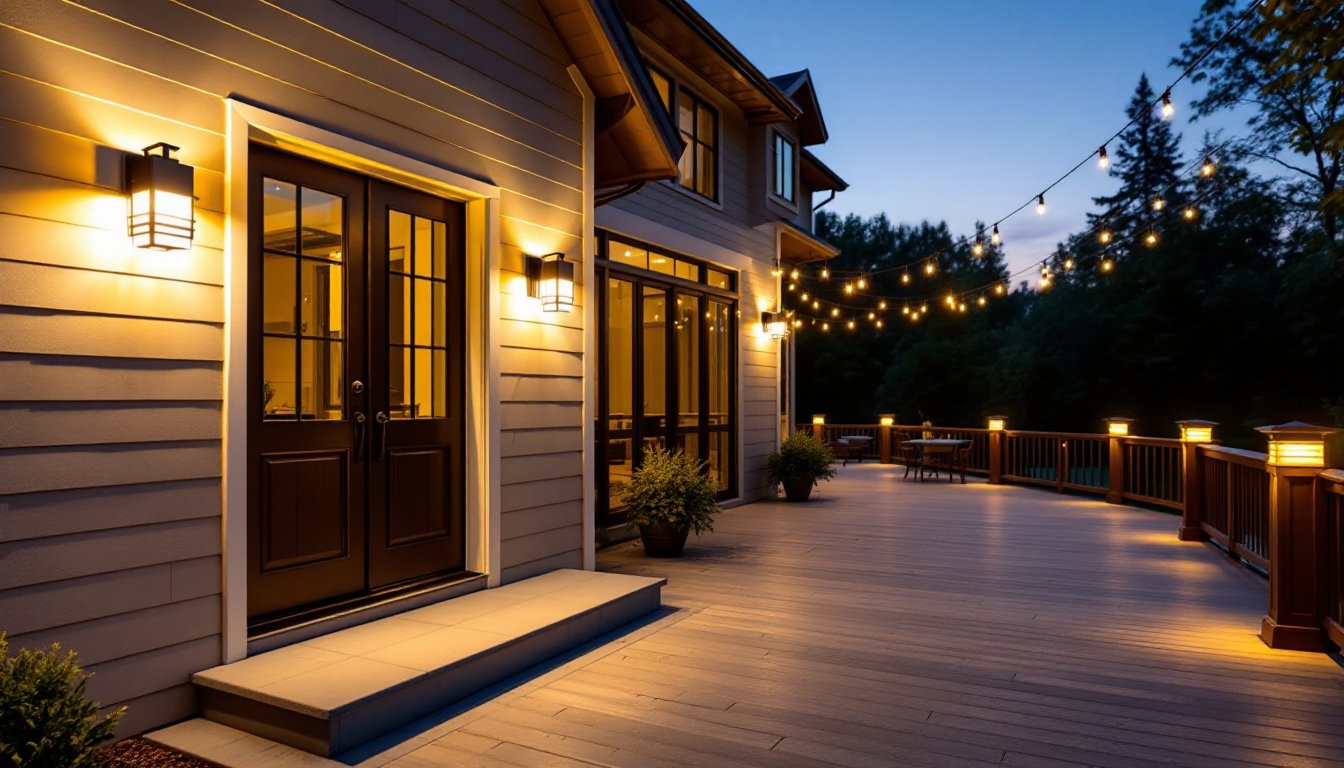
Wall sconces mount directly to exterior walls and shine light upward, downward, or in both directions. These fixtures work best flanking a front door, illuminating entryways, or running along covered porches. A 1000–1500 lumen output suits most residential entryways: anything brighter risks glare. Sconces come in traditional lantern styles, modern minimalist designs, and everything in between. They’re hardwired, so installation means running electrical cable through your exterior wall, a job that often requires drilling holes and routing wires. Outdoor sconce lighting elevates both curb appeal and safety when positioned thoughtfully. Look for fixtures rated IP65 or higher to handle rain and humidity without corrosion.
Post Lights And Pier Lights
Post lights sit atop deck posts, fence posts, or garden pillars. Pier lights work similarly but are designed for dock or waterfront installations. Both provide ambient illumination across a wider area than sconces. A typical post light outputs 800–1200 lumens and casts light in a downward cone pattern. Post lights work well for defining pathways, marking property edges, and creating visual rhythm along a fence line. Installation involves mounting brackets and running power, either hardwired or, increasingly, solar-powered options. Post lights take the hit from weather, so buy fixtures with durable aluminum or stainless steel construction. Plastic housings degrade faster under UV exposure.
How To Choose The Right Outdoor Light Fixtures
Choosing the right fixtures hinges on three questions: What are you lighting? How bright does it need to be? How will you power it?
Brightness and coverage depend on purpose. Security lights flanking a front door need 1000+ lumens to deter intruders and prevent shadowed approach paths. Ambient patio lighting can work with 500–800 lumens per fixture since you’re layering multiple sources. Accent lighting for landscaping or architectural features often needs only 200–400 lumens. Check fixture specifications, reputable manufacturers list lumens, color temperature (in Kelvins), and beam angle.
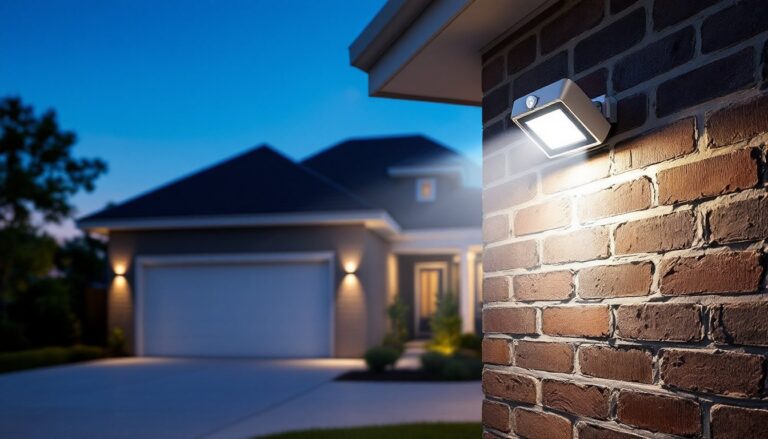
Power source shapes your installation. Hardwired lights deliver consistent brightness, work anywhere, and integrate with smart systems. They require running electrical conduit, pulling permits in many jurisdictions, and hiring a licensed electrician if you’re not experienced with outdoor wiring. Solar for outdoor lights. Modern solar fixtures have improved dramatically, but cloudy climates and shaded yards limit performance. Battery-powered options sit in the middle, no trenching or permits, but batteries need seasonal replacement.
Color temperature affects mood and function. 2700K (warm white) creates inviting, residential ambiance and is standard for porch and entryway lighting. 3000K (neutral white) offers a clean, slightly modern feel. 4000K and higher feel sterile and suit only security or commercial applications. Warm light is almost always the right choice for house exterior lighting.
Style, Finish, And Design Considerations
The aesthetic of your outdoor lights should complement your home’s architecture, not fight it. A contemporary glass-and-steel sconce on a traditional colonial-style home looks out of place: similarly, ornate Victorian lanterns clash with modern minimalist design.
Finish options include oil-rubbed bronze, matte black, brushed nickel, and polished brass. Bronze and black are forgiving: they hide weathering and work with most styles. Nickel and brass show fingerprints and oxidation more readily but offer a refined, intentional look if you’re willing to maintain them. For coastal or humid climates, stainless steel components resist salt corrosion better than iron-based finishes.
Scale matters. An undersized fixture on a large, two-story home looks cheap: an oversized sconce dwarfs a cottage entrance. A good rule: fixture width should be roughly one-quarter the width of the entry door. On a standard 36-inch door, aim for a 9–10 inch wide sconce.
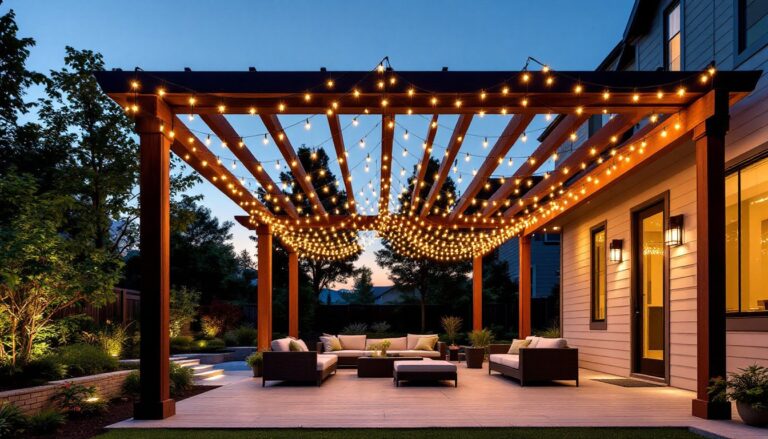
Layering multiple fixture types creates depth and function. Pair wall sconces with string lighting for ambiance on a patio, combine entry sconces with low-level deck lights for safety, or mix accent uplighting with broader ambient overhead fixtures. This approach lets you adjust mood and brightness by switching different circuits on or off.
Installation And Placement Tips
Proper placement and installation determine whether your outdoor lights function as intended or create shadows, glare, or dead zones.
Entry and porch lighting should flank the front door symmetrically, mounted 8–12 feet above ground on either side. This height clears heads, prevents upward glare, and distributes light downward across the entry. Avoid mounting sconces directly beside a window: light bouncing off glass creates confusing reflections.
Deck and patio lighting works best layered. Post lights along the perimeter define edges and prevent tripping hazards: overhead ceiling lighting provides ambient illumination for the center zone. Space deck post lights roughly 8–10 feet apart. If you’re stringing outdoor lights across a patio, run them at a height of 8–10 feet and allow 12 inches of sag in the middle span for weather drainage and visual balance.
Electrical safety and codes are non-negotiable. Outdoor circuits must be protected by GFCI (ground-fault circuit interrupter) breakers, this is not optional: it’s NEC code. All conduit must be rigid or Schedule 40 PVC if run underground: burial depth varies by jurisdiction but typically 12–18 inches is standard. Consult your local building department or a licensed electrician if you’re unsure. When in doubt, hire a professional: a misrouted line can create shock hazards and fires.
Secure all fixtures with corrosion-resistant hardware, stainless steel bolts and washers, never ordinary steel. Check tightness annually: vibration and thermal cycling loosen fasteners over time. If using landscape lighting to accent plantings, stake lights at least 6 inches from shrub stems to prevent branches from blocking the beam as plants grow.
Conclusion
Outdoor lights for house aren’t a one-size-fits-all purchase. Success comes from matching fixture types to purpose, choosing appropriate brightness and color, respecting your home’s design language, and following safety codes during installation. Start with entry and pathway lighting, then add ambient or accent fixtures as your budget allows. Whether you go hardwired for reliability, solar for simplicity, or a hybrid approach, thoughtful placement and quality fixtures repay the effort every time you step outside after dark.