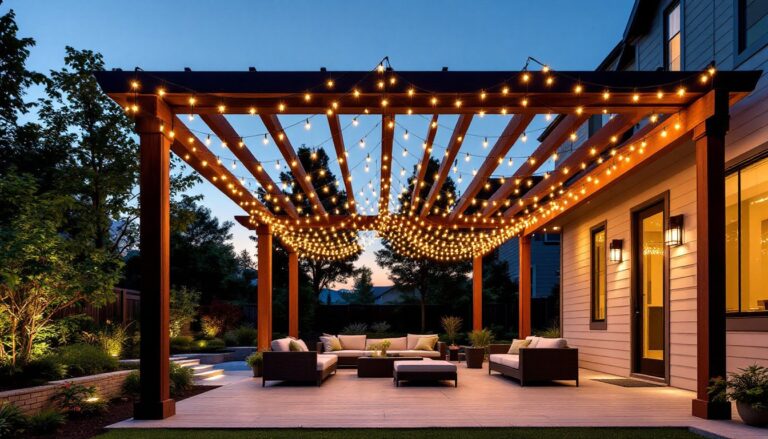
Outdoor lighting isn’t just about flipping on a porch light. Done right, it transforms gardens into evening showcases, lights walkways safely, and adds curb appeal that doesn’t quit when the sun goes down. LED landscape lighting has become the go-to choice for homeowners tackling outdoor illumination, offering lower energy bills, minimal maintenance, and enough flexibility to light everything from a flagstone path to a towering oak. Whether you’re considering your first install or upgrading old halogen fixtures, understanding LED options and installation basics will save time, money, and frustration.
Table of Contents
ToggleKey Takeaways
- LED landscape lighting delivers 25,000 to 50,000 hours of use (10–20 years) while consuming 80% less energy than halogen bulbs, making it a cost-effective long-term investment for outdoor spaces.
- Plan your LED landscape lighting design by identifying safety priorities like walkways and steps first, then accent focal points such as trees and architectural features, using a simple site sketch to map fixture locations and cable routes.
- Low-voltage LED landscape systems (12V or 24V) are DIY-friendly and don’t require permits in most areas, but sizing your transformer 20% above your total fixture wattage and keeping wire runs under 100 feet prevents voltage drop and dim fixtures.
- Clean lenses twice yearly, inspect connections for corrosion, and adjust spotlights and uplights as plants grow to maintain optimal brightness and prevent common issues like flickering or dimming.
- Start with 3 to 5 watts per spotlight or uplight fixture and use interchangeable LED modules to fine-tune brightness after installation, avoiding overlighting that washes out textures and creates unwanted glare.
What Is LED Landscape Lighting and Why Choose It?
LED landscape lighting uses light-emitting diode (LED) technology to illuminate outdoor spaces, driveways, pathways, gardens, architectural features, and more. Unlike incandescent or halogen bulbs that burn filaments, LEDs pass current through a semiconductor, producing light with far less heat and energy waste.
Homeowners choose LEDs for three practical reasons: longevity, efficiency, and versatility. Most quality LED landscape fixtures deliver 25,000 to 50,000 hours of use. That’s roughly 10 to 20 years at typical outdoor lighting schedules (4–6 hours per night). Halogen bulbs, by comparison, burn out after 2,000 to 4,000 hours.
Energy consumption drops significantly. A 3-watt LED produces light comparable to a 20-watt halogen, cutting electricity use by 80% or more. Over time, that adds up, especially if you’re lighting a full yard.
LEDs also run cool to the touch, reducing fire risk around mulch, dry leaves, or wood decking. They’re available in a range of color temperatures (measured in Kelvin), from warm amber (2700K) to crisp white (5000K), letting you dial in the mood without swapping bulbs. Most landscape-grade LEDs are rated IP65 or higher, meaning they’re dust-tight and protected against water jets, essential for fixtures exposed to sprinklers, rain, and snow.
Types of LED Landscape Lighting Fixtures
Choosing the right fixture depends on what you’re lighting and the effect you want. Here are the workhorses of landscape lighting.
Path Lights and Bollards
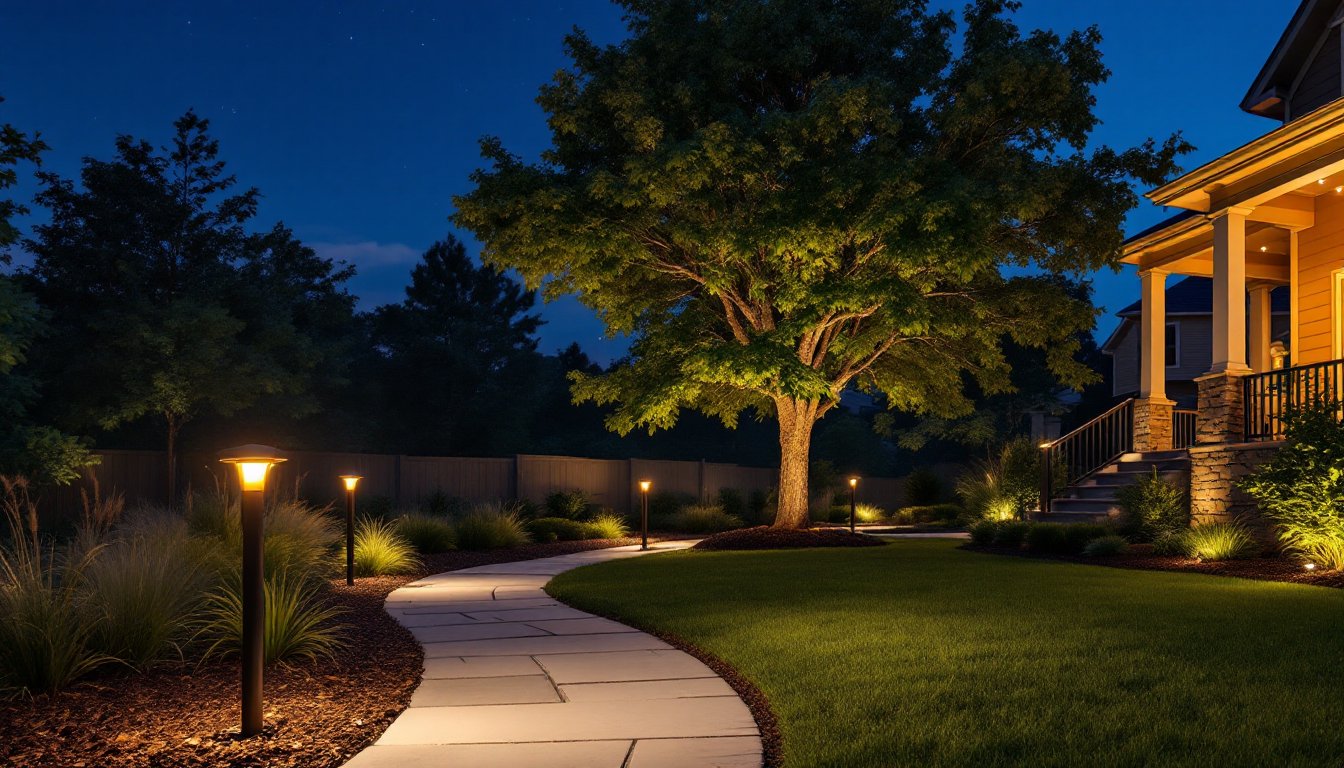
Path lights are low-profile fixtures, usually 12 to 24 inches tall, that line walkways, driveways, or garden borders. They cast downward light pools that guide foot traffic without blinding anyone walking by. Most use a stake mount that pushes into soil, making relocation easy if you rework beds or add plantings.
Bollards are taller (24 to 48 inches) and sturdier, often used along driveways or commercial-style landscapes. They provide broader illumination and work well where mower traffic or foot traffic might knock over shorter stakes. Both styles are available in finishes like bronze, black, or stainless steel to blend with existing hardscape.
Look for fixtures with shielded or frosted lenses to soften glare. Bare LED chips are harsh and can create hot spots that ruin nighttime aesthetics. Many modern designs also feature energy-efficient LED technology that reduce operating costs without sacrificing brightness.
Spotlights and Uplights
Spotlights (also called bullet lights) deliver a focused beam, typically 10 to 40 degrees, to highlight specific features: tree trunks, specimen plantings, stone walls, or architectural details like columns or eaves. They’re adjustable, letting you aim the beam as plants grow or seasons change. Most spotlights use a ground spike or surface mount and accept interchangeable lenses to adjust beam spread.
Uplights are a subset of spotlights, designed to be placed at ground level and aimed upward. They create dramatic shadows and emphasize vertical elements. A well-aimed uplight on a Japanese maple or ornamental grass adds instant depth.
Both fixture types benefit from adjustable wattage or dimming capability. Overlighting is a common rookie mistake, too much wattage washes out textures and creates glare. Start with 3 to 5 watts per fixture and increase only if needed. Many pros use fixtures with interchangeable LED modules (1W, 3W, 5W) to fine-tune brightness after installation.
Planning Your LED Landscape Lighting Design
Good outdoor lighting is as much about restraint as it is about coverage. The goal is to create layers of light that guide, accent, and enhance, not floodlight every square foot.
Start by walking your property at dusk. Identify safety priorities first: steps, grade changes, walkways, and blind corners. Then note focal points: mature trees, water features, seating areas, or architectural details worth highlighting. Take photos on your phone: they’ll help you visualize beam angles and fixture placement later.
Most residential LED landscape lighting runs on low-voltage systems (12V or 24V) powered by a transformer. This is safer than line voltage (120V) and doesn’t require conduit burial in most jurisdictions, though you should still check local codes. Transformers are rated by wattage capacity (e.g., 150W, 300W, 600W). Add up the wattage of all planned fixtures and choose a transformer rated at least 20% above your total load to avoid overloading and voltage drop.
Voltage drop is real: the farther a fixture sits from the transformer, the dimmer it gets. Keep wire runs under 100 feet for 12-gauge cable, or use 10-gauge for longer runs. If your design requires multiple zones or extended distances, consider using a lighting layout tool to map circuits and avoid guesswork.
Sketch a simple site plan showing fixture locations, wire paths, and the transformer position. Place the transformer near a GFCI-protected outdoor outlet, ideally under an eave or in a weatherproof enclosure. Plan to bury cable 6 to 12 inches deep (check local code) and route it away from areas where you’ll dig or aerate regularly.
Installing LED Landscape Lighting: A DIY Guide
Low-voltage LED landscape lighting is one of the more approachable outdoor electrical projects. You won’t need a permit in most areas (always verify locally), and the risk of shock is minimal. That said, plan for a full weekend if you’re doing more than a handful of fixtures.
Materials and tools you’ll need:
- LED landscape fixtures (path lights, spotlights, etc.)
- Low-voltage transformer (sized to your total wattage)
- 12- or 10-gauge landscape cable
- Wire connectors (waterproof, gel-filled type)
- Cable staples or landscape stakes
- Spade or trenching tool
- Wire strippers
- Screwdriver or drill
- Safety glasses and work gloves
Step-by-step installation:
- Mount the transformer. Attach it to an exterior wall near a GFCI outlet, keeping it at least 12 inches off the ground to avoid splash and moisture. Most transformers include a timer or photocell: set it later once wiring is complete.
- Lay out fixtures. Place each fixture in its planned spot without installing stakes or wiring. Walk the layout at dusk using a flashlight to simulate beam angles. Adjust as needed, moving a fixture 6 inches can make a big difference.
- Run the cable. Starting at the transformer, lay cable along the route to your fixtures. Use a spade to slice a narrow trench 6 to 12 inches deep (deeper in cold climates to stay below frost line). Don’t backfill yet.
- Connect fixtures. Most LED fixtures use quick-connect or piercing connectors that clamp onto the main cable. Strip a small section of insulation, insert wires, and tighten screws. Use waterproof, gel-filled connectors, standard wire nuts aren’t rated for ground contact.
- Test before burying. Plug in the transformer and verify every fixture lights up. Check for flickers (loose connection) or dim bulbs (voltage drop). Fix issues now, not after backfilling.
- Bury and secure. Once tested, backfill trenches and tamp soil lightly. Use cable staples to secure any above-ground runs along fences or deck posts. Leave a small service loop (extra slack) at each fixture for future maintenance.
Safety notes: Even at 12V, avoid working in wet conditions. If you’re tapping into line voltage to power the transformer, turn off the breaker and test with a non-contact voltage tester before touching wires. For complex installs involving timers, smart controls, or outdoor track lighting integration, consider consulting an electrician.
Many smart home platforms now support landscape lighting. Reviews on sites like CNET and Digital Trends cover compatible transformers and controllers if you want app-based scheduling or voice control.
Maintenance and Troubleshooting Tips
LED landscape lighting is low-maintenance, but it’s not no-maintenance. Twice a year, spring and fall, walk your system and address small issues before they cascade.
Clean lenses and housings. Dirt, pollen, and spider webs reduce light output. Wipe lenses with a damp cloth: avoid abrasive cleaners that scratch polycarbonate or acrylic. Check for corrosion on brass or copper fixtures and apply a light coat of car wax to slow oxidation (if you like the patina, skip this).
Inspect connections. Moisture can wick into connectors over time. If a fixture dims or flickers, disconnect and check for green corrosion. Replace connectors and seal with fresh dielectric grease or silicone.
Adjust fixtures as plants grow. A spotlight aimed at a shrub in April might be half-blocked by July. Reposition as needed to maintain intended coverage.
Check transformer and timer settings. Transformers can fail, especially if overloaded. If multiple fixtures go dark at once, test the transformer output with a multimeter (should read near 12V or 24V depending on spec). Photocells can drift or get covered by leaves, clean sensors and verify dusk/dawn timing once per season.
Replace failed LEDs promptly. While LEDs last years, they do eventually fade or fail. Many fixtures use replaceable LED modules rather than integrated chips. Keep a spare or two on hand. If you’re replacing an entire fixture, consider upgrading to newer models with improved color rendering or better lighting solutions that offer enhanced control features.
Common troubleshooting:
- Fixture won’t light: Check connections, test voltage at fixture with multimeter, verify bulb isn’t loose or failed.
- Dimming over distance: Voltage drop. Upgrade to heavier gauge wire or add a second transformer to split the load.
- Entire zone dark: Tripped GFCI, blown transformer fuse, or failed photocell. Reset, replace, or bypass to isolate.
- Flickering: Loose connection or corroded wire. Re-strip and reconnect with fresh connector.
With minimal upkeep, a well-installed LED landscape lighting system will run for a decade or more, keeping outdoor spaces safe, attractive, and ready for evening use year-round.