Island kitchen lights are far more than just a functional necessity, they’re the design anchor that ties your entire kitchen together. Whether you’re updating an existing island or designing a new one, the right lighting transforms both the look and feel of your space. A well-chosen fixture brightens your work surface, creates ambiance, and sets the tone for the room. With so many styles, sizes, and installation options available, it’s easy to feel overwhelmed. This guide walks you through everything you need to know about selecting, sizing, and installing island kitchen lights that actually work for your home and your lifestyle.
Table of Contents
ToggleKey Takeaways
- Island kitchen lights should be positioned 30 to 36 inches above your countertop to ensure safe food prep while avoiding glare and head clearance.
- A well-designed island lighting setup requires roughly 15 to 20 lumens per square foot of island surface, with spacing of one fixture every 2 to 3 feet of island length.
- Pendant lights remain the most popular choice for islands due to their versatility and ease of installation, while chandeliers work best for larger islands 5 feet or wider.
- Proper island kitchen lights serve three critical functions: task lighting for cooking, ambient lighting for the room’s atmosphere, and visual design weight that anchors your kitchen’s overall aesthetic.
- For DIY installation, use a voltage tester before working, mount fixtures with drywall anchors rated for weight, and consider hiring a licensed electrician if running new electrical circuits.
- Layer your island lighting with pendants for task work and dimmers for adjustable ambiance, then accessorize with warm white bulbs (2,700K) for cozy vibes or cool white (4,000K–5,000K) for detailed work.
Understanding Island Kitchen Lighting Basics
Why Island Lighting Matters in Kitchen Design
Your kitchen island isn’t just counter space, it’s often the hub of meal prep, assignments, and family gatherings. Proper lighting over an island serves three critical functions: task lighting for chopping and cooking, ambient lighting that influences how the whole kitchen feels, and visual weight that balances the room’s design.
Under-lit islands force you to work in shadows cast by your own body, creating eyestrain and safety hazards. Over-lit islands with harsh, mismatched fixtures look jarring and waste energy. The sweet spot is a fixture (or set of fixtures) that sits 30 to 36 inches above your counter, delivers 3,000 to 4,000 lumens, and complements your kitchen’s overall style.
Island lighting also anchors the visual hierarchy of your kitchen. A striking pendant or chandelier draws the eye, defines the island as a functional centerpiece, and gives you a design springboard for the rest of the room. Many homeowners find that once they’ve chosen their island lights, the rest of their kitchen décor falls into place more easily.
Consider your kitchen’s layout and natural light sources too. If you have large windows flooding the south side of your island during the day, you can dial back fixture brightness and rely more on ambient glow for evening use. Kitchens with limited daylight need brighter fixtures and possibly multiple options, say, pendant lights for task work and a dimmer for softer entertaining vibes.
Popular Island Lighting Styles and Fixture Types
Pendant Lights, Chandeliers, and Track Lighting Options
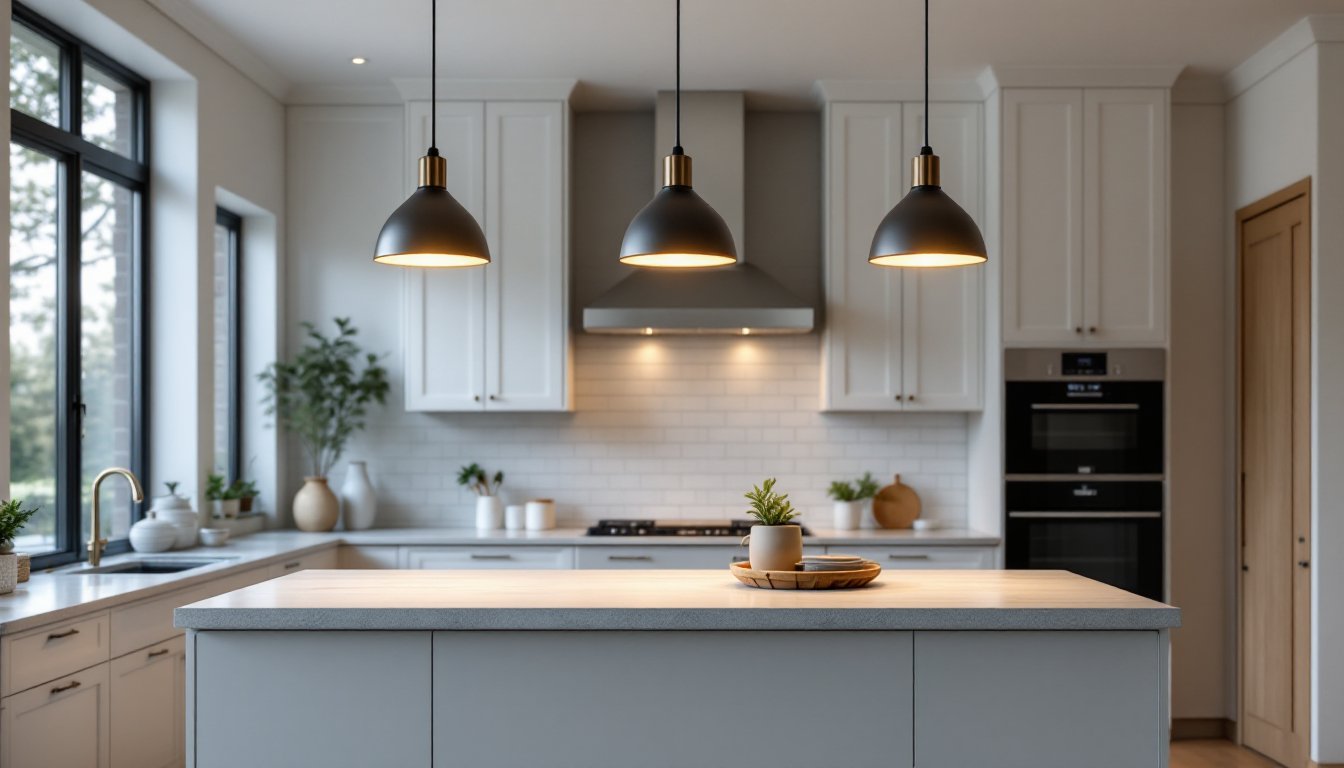
Pendant lights remain the most popular choice for islands because they’re versatile, affordable, and easy to upgrade. A cluster of three 8-inch pendant shades spaced evenly over a 4-foot island creates clean symmetry. Styles range from industrial Edison bulbs and farmhouse rustic to sleek modern dome shades and glass globes. Materials like brass, brushed nickel, and matte black work in virtually any kitchen aesthetic.
If you’re drawn to a farmhouse pendant look with wrought iron or natural wood, pair it with warm white bulbs (around 2,700K color temperature) for cozy ambiance. Going modern? Chrome pendant lighting offers reflective surfaces that bounce light efficiently and complement stainless steel appliances.
Chandeliers work over islands too, especially in larger kitchens (islands 5 feet or wider) or open-concept spaces where you want a dramatic focal point. A small to medium chandelier (2 to 4 feet wide) with 4 to 6 arms strikes the balance between visual interest and functionality. Avoid heavy crystal chandeliers in tight kitchens, they overwhelm the space and collect grease splatters during cooking.
Track lighting for kitchens offers the most flexibility. Individual adjustable heads let you target light exactly where you need it, and you can add or reposition fixtures without rewiring. Track systems work beautifully over long or irregularly shaped islands. You can mix bright task lights over the prep zone with softer accent lights over the eating end.
Outer lights like solar outdoor lights and outdoor lights for patio aren’t relevant for indoor islands, but outdoor lights led technology, with its high efficiency and long lifespan, has influenced indoor fixture design. Modern island lights increasingly use integrated LED modules for similar benefits: low heat, energy savings, and minimal maintenance.
Sizing and Positioning Your Island Lights
Get the measurements right and installation becomes much smoother. Measure your island’s length and width first. A general rule: hang one fixture every 2 to 3 feet of island length. A 4-foot island works well with 2 or 3 pendants: a 6-foot island needs 3 or 4.
Spacing matters equally. If you’re installing three pendants, position them 12 to 18 inches in from each end, then space the middle one equidistant. For example, on a 48-inch island, place the first pendant 12 inches from the left edge, the third pendant 12 inches from the right edge, leaving 24 inches between each pendant. This centering prevents the fixtures from looking awkwardly clustered at one end or too spread out.
Height is critical for safety and functionality. Hang fixtures 30 to 36 inches above the island countertop. This clears most adults’ heads during work while keeping light focused on the surface. If your kitchen has vaulted or cathedral ceilings, you can go higher, up to 40 inches, but lower ceilings (8 feet or less) may need fixtures closer to the 30-inch mark.
Consider your ceiling structure. If your island sits directly beneath exposed ductwork, beams, or structural elements, you may need to offset fixtures slightly or choose a lower-profile pendant lighting option. Test the sightline from your primary viewing angles, dining areas, entryways, and the kitchen entrance. Fixtures should be visible and beautiful, not hidden behind support posts or in dead zones.
Lumen output depends on your island size and kitchen brightness. Aim for 15 to 20 lumens per square foot of island surface. A 4 × 2 foot island (8 square feet) needs roughly 120 to 160 lumens total. With three pendants, that’s 40 to 50 lumens each, bright enough for safe food prep without glare.
Installation Tips for DIY Homeowners
Before you drill, know what’s above your island. Most kitchen islands mount to floor joists underneath the countertop, but you need to locate the electrical path, typically running through the ceiling cavity above or beside the island.
Materials and tools you’ll need:
- Voltage tester (non-negotiable safety tool)
- Drill with bits sized for your ceiling anchors
- Wire strippers and electrical tape
- Swag hooks or a low-voltage power supply (if using track lighting)
- Drywall anchors rated for the weight of your fixtures
- Adjustable wrench and screwdriver set
If your kitchen doesn’t already have an overhead circuit above the island, installing one requires running wiring through walls or ceilings, work best left to a licensed electrician, especially if your home predates modern electrical codes. Tying into an existing ceiling fixture circuit often works if your home’s breaker capacity allows it: your electrician will assess this.
Once wiring is confirmed safe, turn off the circuit breaker, test with a voltage tester to confirm power is off, then remove the old fixture if present. Mount the new bracket per manufacturer instructions, use toggle bolts or expansion anchors rated for your ceiling weight. Heavy chandeliers (over 50 pounds) may need a reinforced ceiling brace: drywall alone won’t hold them.
Wire the new fixture by connecting the black (hot) wire to black, white (neutral) to white, and the ground wire (bare copper or green) to ground. Secure connections with wire nuts, fold wires into the junction box, and attach the fixture canopy. Test the light before calling it done.
For renters or temporary solutions, pendant lighting kits with plug-in cords sidestep hardwiring entirely. You hang the fixture mechanically and plug it in, no electrician needed.
Styling Your Island Lights for Impact
Your island lights don’t exist in a vacuum, they’re a visual anchor that should speak to your kitchen’s overall design language. If you’re working with neutral cabinetry, a bold pendant color (deep green, navy, or terracotta) adds personality without overwhelming. Brass and gold fixtures warm up contemporary spaces: matte black and chrome suit industrial or modern kitchens.
Mixing and matching is trendy but risky. If you pair mismatched pendants, ensure they’re the same height, scale, and brightness level, or the effect feels accidental rather than intentional. A better approach: use identical fixtures in different colors or finishes, three matching dome shades in brass, brushed nickel, and matte black, for example, feel cohesive when lined up.
Kitchen lighting ideas often include layered lighting. Island pendants handle task lighting: add under-cabinet strips or a soffit for indirect ambient glow, and you’ve created depth and flexibility. A dimmer switch on your island circuit lets you shift from bright work mode to softer entertaining mode without moving a thing.
Bulb choice matters aesthetically and functionally. Warm white (2,700K) creates a cozy, inviting feel and is forgiving on tired morning faces. Cool white (4,000K to 5,000K) mimics daylight and is sharper for detailed work like baking or food prep. Color-changing smart bulbs let you adjust throughout the day, though they add complexity and cost.
Accessorize thoughtfully. A large, modern island deserves pendants with some visual weight, glass globes, drum shades, or sculptural designs. Smaller islands suit delicate, refined fixtures. If your island houses bar seating, make sure your hanging height doesn’t block sightlines, a short fixture or one with an open bottom keeps the space feeling connected. Designs from curated sources like Remodelista‘s pendant collection show how top designers balance style and function in real kitchens.