Chrome pendant lighting is the Swiss Army knife of overhead fixtures, versatile, reflective, and almost universally compatible with modern, transitional, and even industrial spaces. Unlike brass or bronze that anchor a specific era, chrome’s reflective neutrality complements nearly any palette. It bounces light around a room, making small kitchens feel bigger and dim corners suddenly usable. For homeowners upgrading from builder-grade fixtures or designing a new space, chrome pendants offer a clean, contemporary look without the price tag of custom metalwork. This guide walks through types, selection criteria, and installation steps, covering everything from mounting hardware to electrical code basics.
Table of Contents
ToggleKey Takeaways
- Chrome pendant lighting offers versatile, reflective neutrality that complements modern, transitional, and industrial interiors while costing 15–30% less than brass or hand-forged fixtures.
- Proper sizing and placement are critical: mini pendants should hang 30–36 inches above kitchen islands (one per 24–30 inches of length), while drum pendants over dining tables require 30–34 inches clearance to maintain functionality and sightlines.
- LED bulbs produce superior light output (800–1,000 lumens at 10–12 watts) compared to incandescent equivalents, so prioritize lumens over wattage when selecting chrome pendant fixtures for task lighting areas.
- Bathroom chrome pendants within 3 feet of a tub or shower must be wet-rated with GFCI protection per electrical code, making fixture ratings and compliance non-negotiable safety requirements.
- Installation success depends on verifying junction box support (metal fan-rated boxes for pendants over 5 pounds), confirming power is off with a voltage tester, and leaving 6 inches of wire inside the canopy for secure connections.
- Match chrome finish consistency—pairing polished chrome with polished hardware and brushed chrome with brushed nickel—to create intentional, cohesive design rather than accidental mismatches.
What Is Chrome Pendant Lighting and Why It’s Popular
A chrome pendant light is a ceiling-mounted fixture suspended by a cord, chain, or rigid rod, featuring chrome-plated metal components. Chrome is an electroplated finish applied to steel or brass, giving a mirror-like, highly reflective surface that resists tarnish better than raw metals. The finish ranges from polished chrome (bright, reflective) to brushed chrome (satin, less glare) and matte chrome (flat, industrial).
Chrome’s popularity stems from three factors: versatility, light reflection, and ease of maintenance. It pairs seamlessly with stainless appliances, white quartz countertops, and subway tile, staples in contemporary kitchens. The reflective surface amplifies light output, which matters in task areas like islands or dining tables. And unlike oil-rubbed bronze, chrome doesn’t require periodic waxing to maintain its finish. A damp microfiber cloth handles fingerprints and water spots.
Designers often spec chrome pendants in open-concept homes where sightlines cross multiple rooms. The neutral tone won’t clash with adjacent spaces, and the reflective quality keeps the fixture from visually dominating. According to contemporary lighting trends, chrome finishes remain popular in minimalist and Scandinavian-inspired interiors where hardware needs to recede rather than anchor the space. It’s also budget-friendly, chrome-plated fixtures typically cost 15–30% less than solid brass or hand-forged options.
Types of Chrome Pendant Lights for Different Spaces
Kitchen and Dining Room Pendants
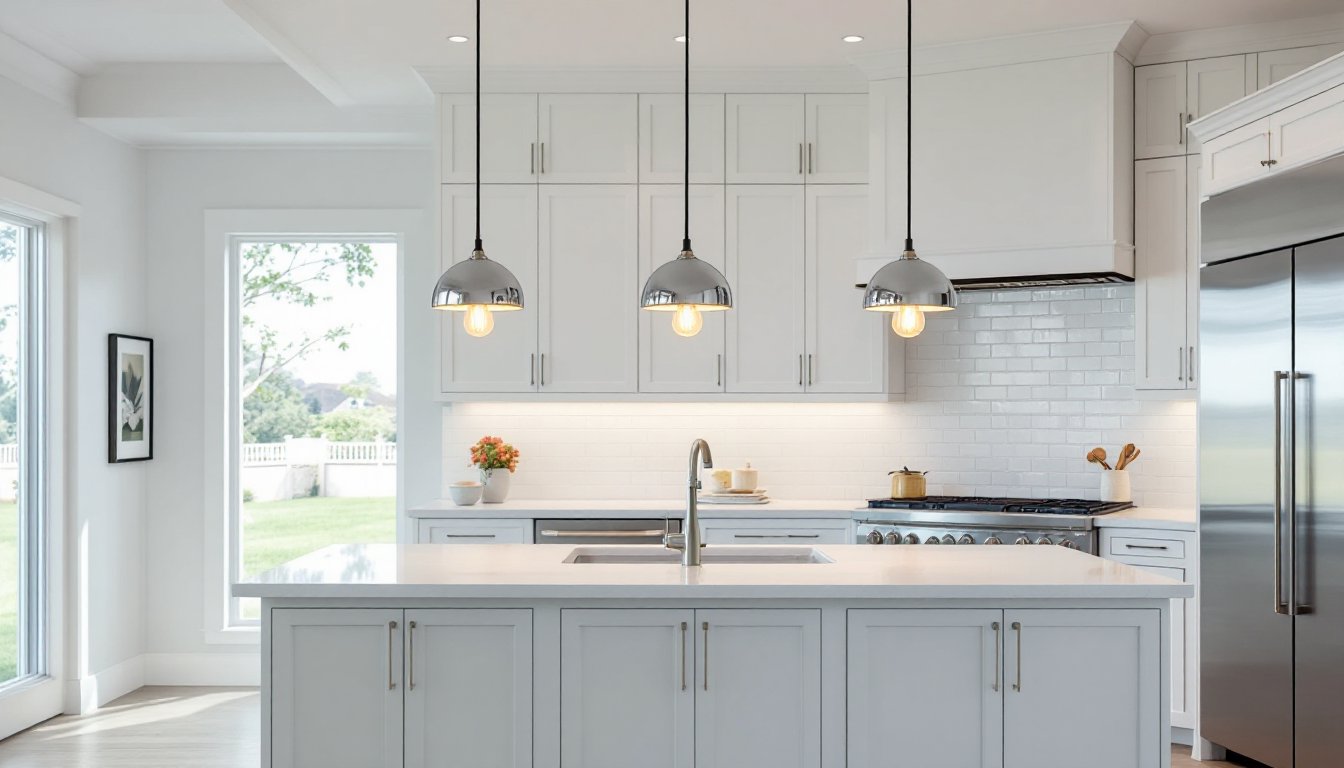
Mini pendants (6–10 inches in diameter) are the workhorse for kitchen islands. Standard practice is one pendant per 24–30 inches of island length, hung 30–36 inches above the countertop. Lower than 30 inches and tall household members will bump heads: higher than 36 inches and task lighting suffers. For an 8-foot island, three evenly spaced mini pendants provide balanced illumination.
Drum pendants (12–18 inches in diameter) suit dining tables. Hang the bottom of the shade 30–34 inches above the table surface, low enough to create intimacy without blocking sightlines across the table. A 60-inch round table pairs well with a single 16-inch drum: rectangular tables over 72 inches may need two pendants spaced 30–36 inches apart. Chrome drum shades with white fabric or frosted glass diffusers reduce glare while maintaining the metallic accent.
Multi-light linear pendants distribute multiple chrome shades along a single canopy, ideal for long islands or breakfast bars. These fixtures simplify wiring (one junction box instead of three) and ensure perfect spacing. Look for adjustable-height cords, most homes have 9-foot ceilings, but vaulted or 10-foot ceilings require longer drops. Some models offer industrial cage accents that pair chrome with Edison-style bulbs for a modern-industrial hybrid.
Bathroom and Bedroom Options
Globe pendants (8–12 inches) work in bathrooms with adequate ceiling height, minimum 7 feet clearance to the floor per IRC guidelines. Hang them flanking a freestanding tub or centered over a vanity if the mirror extends only partway up the wall. Use damp-rated or wet-rated fixtures (check the UL listing) depending on proximity to the shower. Chrome globe pendants with opal glass shades provide even, shadow-free light, critical for grooming tasks.
In bedrooms, adjustable or swing-arm chrome pendants serve as space-saving nightstand alternatives. Mount them 18–24 inches above mattress height on each side of the bed. Hardwire them to a wall switch or use plug-in canopy kits if running new wire isn’t feasible. Chrome’s reflectivity can cause glare: opt for shades that direct light downward or use a frosted bulb.
Wet-rated fixtures have sealed housings and gaskets: damp-rated fixtures handle humidity but not direct water spray. For a pendant within 3 feet of a tub or shower, wet-rated is mandatory. Chrome is naturally water-resistant, but the electrical components aren’t, verify the fixture’s rating before purchase.
How to Choose the Right Chrome Pendant for Your Home
Start with room dimensions and ceiling height. A pendant’s diameter should be roughly one-third the width of the surface it illuminates. For a 36-inch-wide island, pendants in the 10–14 inch range feel proportional. In rooms with 8-foot ceilings, avoid pendants that drop more than 18–24 inches from the ceiling: longer drops work in spaces with 10+ foot ceilings or over tables.
Lumens matter more than wattage. LED bulbs produce 800–1,000 lumens at 10–12 watts, while old incandescents needed 60–75 watts for the same output. For task lighting (islands, dining tables), aim for 35–50 lumens per square foot. A 15-square-foot island needs roughly 525–750 lumens total, split across multiple pendants. Dimmer-compatible fixtures add flexibility, install a 3-way or electronic low-voltage (ELV) dimmer for LEDs to avoid buzzing or flickering.
Shade material affects light quality. Clear glass or open chrome cages produce bright, focused light but can create glare. Frosted or seeded glass diffuses light more evenly, reducing harsh shadows. Metal shades (like spun chrome bowls) direct light downward, efficient for tasks but less ambient. If the room lacks other light sources, choose pendants with translucent shades that allow some uplight.
Match the chrome finish to existing hardware. Polished chrome pairs with polished faucets and cabinet pulls: brushed chrome complements brushed nickel (they’re close enough in tone). Mixing polished and brushed finishes in the same sightline looks unintentional. Platforms like Houzz show real-world installations where homeowners photograph their fixture and hardware pairings, useful for visualizing finish compatibility.
Cord vs. chain vs. rigid rod: Cord is least expensive and adjustable but looks casual. Chain adds a traditional or industrial feel. Rigid rods (downrods) give a clean, modern profile and work best with drum or globe shapes. For sloped ceilings, buy a slope adapter canopy, it adjusts up to 45 degrees so the pendant hangs plumb.
Budget $75–$200 per mini pendant: $150–$400 for larger drum or multi-light fixtures. Prices vary by region and material quality. Chrome-plated steel is cheaper than chrome-plated brass but may chip if scratched. Read reviews for finish durability, cheap plating can peel within a year.
Installation Tips for Chrome Pendant Lighting
Safety first: Turn off power at the breaker, not just the wall switch. Use a non-contact voltage tester to confirm the circuit is dead before touching any wires. Wear safety glasses when drilling or working overhead, ceiling dust and debris fall directly into your eyes.
Verify junction box support. Standard plastic nail-on boxes aren’t rated for fixtures heavier than 5 pounds. Pendants with glass shades or multiple lights often exceed that. Replace with a metal fan-rated box (rated for 50–70 pounds) or a pancake box if headroom is tight. The box must be fastened to a ceiling joist or a fan-rated brace bar installed between joists. If there’s attic access above, this is a straightforward swap: otherwise, you may need to cut and patch drywall.
Pendant height adjustment: Most pendants ship with 10–12 feet of cord or chain. Measure from ceiling to desired hanging height, then cut the excess. For cord pendants, loosen the strain relief at the canopy, pull the cord to the desired length, and trim excess wire inside the canopy. Leave 6 inches of wire inside for connections. For chain, remove links with pliers, don’t cut the electrical wire inside the chain: instead, coil excess wire in the canopy.
Wiring follows standard practice: black (hot) to black, white (neutral) to white, bare copper (ground) to green or bare ground screw. Secure connections with wire nuts rated for the wire gauge (typically 14 or 12 AWG for lighting circuits). Tuck wires neatly into the box, don’t let them sit on top of the canopy or they’ll prevent it from sitting flush.
For multiple pendants on one circuit, homeowners have two options:
- Separate junction boxes for each pendant (requires running new wire between boxes, advanced DIY or electrician territory).
- Linear multi-light fixtures with one canopy (simpler install, same visual impact).
If the room lacks a ceiling box where you want a pendant, retrofitting one typically requires an electrician unless you’re comfortable running new 14/2 or 12/2 Romex from an existing switch or outlet. Wireless “pendant conversion kits” exist but rely on plug-in cords routed to an outlet, acceptable for rentals, less so for permanent installations.
Code considerations: Pendant lights over kitchen islands or dining tables don’t require GFCI protection (unlike countertop receptacles). But, bathroom pendants within 3 feet horizontal and 8 feet vertical of a tub or shower require GFCI and wet/damp ratings per NEC 410.10(D). Always check local amendments, some jurisdictions have stricter rules.
After installation, turn on power and test. If a dimmer is involved, program the low-end trim per the manufacturer’s instructions to prevent LED flicker. Chrome shows fingerprints, so handle the fixture by the mounting hardware during install and wipe with a microfiber cloth afterward.
Many contemporary interiors now layer chrome pendants with vintage-inspired fixtures in adjacent rooms to create visual flow without monotony. The reflective quality of chrome bridges the gap between modern and traditional spaces.
Conclusion
Chrome pendant lighting delivers a high-impact upgrade with relatively low effort, provided the assignments happens upfront. Measure twice, test for power, and size fixtures to the space. Whether it’s mini pendants over an island or a sculptural drum above a dining table, chrome’s reflective neutrality and durability make it a practical choice for homeowners who want a fixture that works now and adapts later. And if the installation involves new wiring or structural box upgrades, calling a licensed electrician isn’t a shortcut, it’s the code-compliant move.