Solar yard lights have come a long way from dim, novelty stakes. Today’s models deliver legitimate landscape illumination without wiring headaches or monthly electric bills. Whether you’re lighting a pathway, highlighting a garden bed, or adding ambiance to a patio, solar yard lamps offer flexibility, safety, and low operating costs that traditional hardwired systems can’t match. This guide covers the types of solar lights available, how to pick the right ones for your space, and the installation and maintenance steps that keep them running year after year.
Table of Contents
ToggleKey Takeaways
- Solar lights for yard eliminate expensive wiring, trenching, and monthly electricity costs while offering simple installation that takes minutes instead of hours.
- Choose solar yard lights based on brightness (lumens), beam pattern, color temperature, and battery runtime to match your specific landscape and lighting needs.
- Position solar panels to receive 6–8 hours of direct daily sunlight and space pathway lights 4–8 feet apart for optimal performance and consistent illumination.
- Clean solar panels every few months and replace rechargeable batteries every 2–3 years to maintain brightness and extend fixture lifespan.
- Modern solar yard light models offer smart features like app control, motion sensors, and adjustable brightness modes that can run for 12–14 hours or longer on a full charge.
Why Solar Yard Lights Are Worth the Investment
Solar yard lights eliminate the need for buried cable runs, trenching permits, and electrician calls. Since they’re powered by photovoltaic panels and integrated rechargeable batteries, operating costs drop to nearly zero after the initial purchase. You won’t be paying monthly electricity fees or dealing with replacement wiring in five years.
The practical benefits run deeper than cost. Without buried wires, you sidestep the risk of hitting cables while digging for new landscaping or repairs, a common and expensive mistake with hardwired systems. Installation takes minutes instead of hours. If your landscape changes or you want to relocate fixtures, just pull them up and move them: no rewiring required.
Modern solar lawn light units also run for extended periods. After a full sunny day, most deliver dusk-to-dawn operation with adjustable brightness modes that can stretch runtime to 12–14 hours or longer. Advanced models add app control, schedules, motion sensing, and even color-changing capabilities for holiday displays.
Types of Solar Lights for Outdoor Spaces
Solar Pathway Lights and Stake Lights
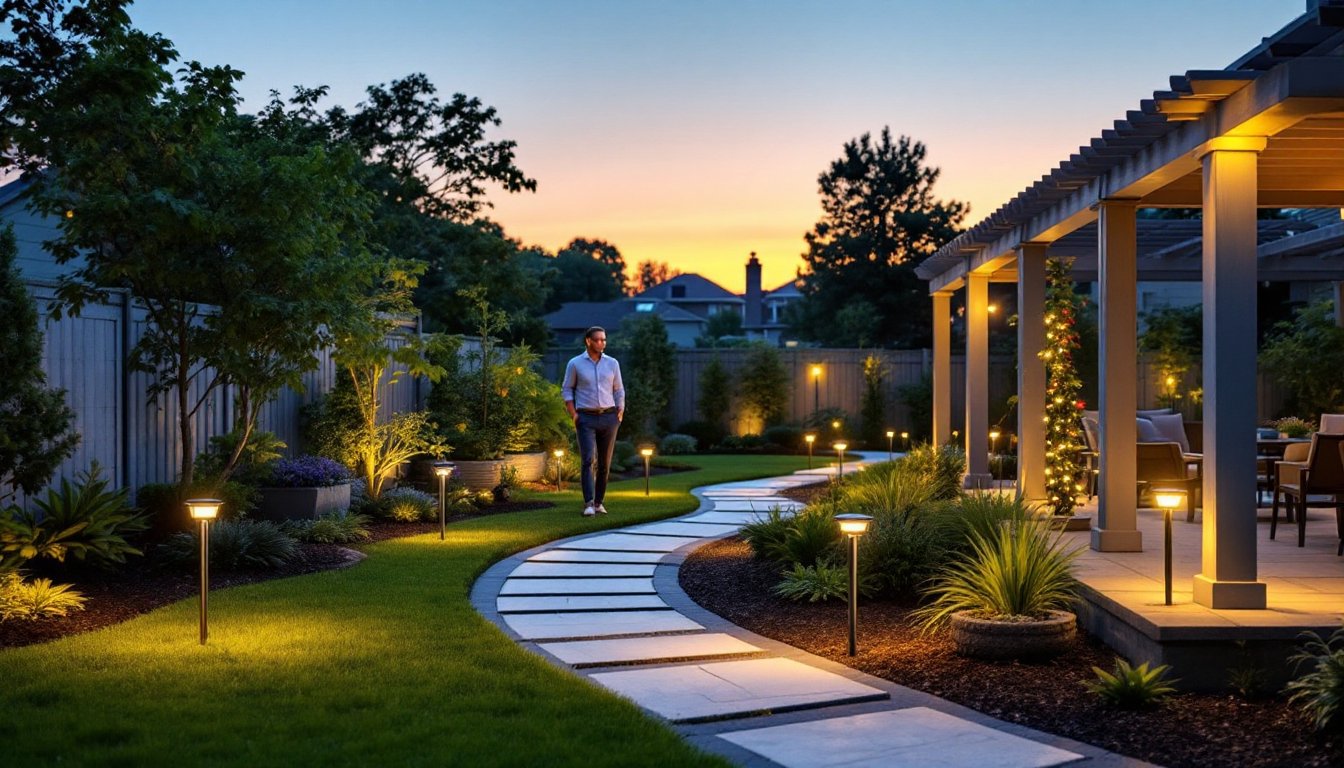
Pathway and stake lights are the workhorse of solar yard lighting. You install them by pushing a stake into loose soil or garden beds along walkways, borders, and driveways. Most emit a soft circular pool of light immediately around the fixture, useful for marking edges without flooding the entire yard.
Spot-style stake lights focus their beam in one direction, making them ideal for highlighting trees, signs, or architectural features. Installation is straightforward: loosen hard soil with a hand spade if needed, push the stake straight down to avoid cracking the housing, and position the solar panel toward open sky. Spacing typically runs 4–8 feet apart depending on brightness and how much overlap you want.
Solar String Lights and Accent Fixtures
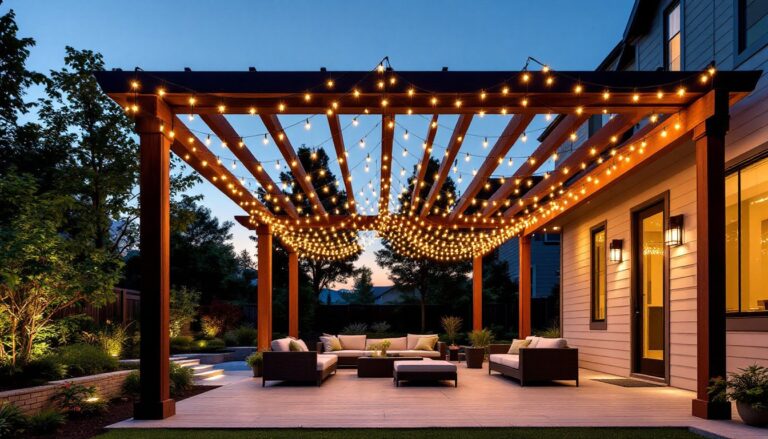
String lights hang from pergolas, trees, fences, and umbrellas for decorative ambiance rather than task lighting. They mount using clips, hooks, or ties, with the solar panel positioned in a sunny spot (often a corner of the pergola or post). Because they emphasize aesthetics over brightness, color temperature and warm-white tones matter more.
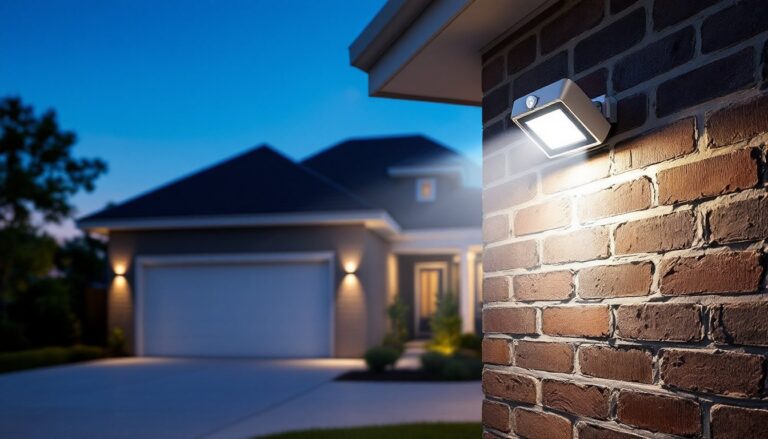
Accent fixtures, wall-mounted lanterns, post-cap lights, and decorative bollards, blend functionality with design. They cast light similar to low-watt traditional fixtures, suitable for patios, decks, and entryways. Island kitchen lights mounted outdoors, while less common, follow the same principle: a focused light source with solar charging capability.
How to Choose the Right Solar Lights for Your Needs
Start with brightness measured in lumens. Soft accent and path glow range from 5–50 lumens, while brighter path, security, and spotlighting fixtures deliver 50–200+ lumens. The more lumens, the larger and more expensive the unit, balance your needs against budget and panel size.
Beam pattern matters too. Wide, diffuse beams work well for paths and decks, spreading light evenly across surfaces. Narrow, focused beams suit spotlighting trees, signs, or architectural details. Check product specs for beam angle: 100–120 degrees is typical for wide patterns, while 25–60 degrees gives tight focus.
Color temperature sets the mood. Warm white (2700–3000K) feels cozy and residential: neutral or cool white (4000–5000K) reads brighter and more “security-minded.” RGB models offer millions of color options and preset light shows for events. For most homeowners, warm white suits residential landscapes best.
Battery runtime and capacity determine how long lights stay on after sunset. Most modern models promise 8–12 hours on full charge: eco or dimmer modes can extend this. Larger batteries or adjustable brightness help match your actual sunset-to-bedtime window. If you live in a cloudy climate, look for models with USB charging backup.
Smart features range from simple dusk-to-dawn switches to app-controlled schedules, motion sensors, and grouping for coordinated effects. Higher-end systems offer color tuning and even music synchronization, though basic models serve most homeowners well.
Durability is critical. Look for UV-resistant plastics or metal housings, weather ratings of at least IP65 (dust and rain protected), and designs with replaceable AA or AAA NiMH batteries rather than sealed units. When batteries eventually decline, typically after 2–3 years, a simple swap keeps lights running without replacing the entire fixture.
Installation and Placement Tips for Maximum Performance
Sun exposure is the foundation of solar performance. Position solar panels where they receive 6–8 hours of direct sun daily: avoid dense shade, overhanging branches, or structures that block morning or afternoon rays. Angle panels toward the sun per manufacturer guidance, many models have adjustable mounting tabs.
When installing stake lights, pre-loosen hard or rocky soil with a garden spade: pushing a stake into compacted earth risks cracking the housing. Insert stakes straight, not at an angle, and ensure the soil settles snugly around the base. For soft or sandy soil, tamp gently with your boot.
Space path lights 4–8 feet apart based on brightness and desired overlap. If you want continuous illumination with no dark gaps, choose brighter fixtures and place them closer. Lower-lumen models can stretch spacing to 8 feet while still marking the path.
For spotlights and directional lights, aim beams at target surfaces and avoid shining directly into neighbors’ eyes or windows, a courtesy that also prevents complaints. If your yard sits on a slope, angle fixtures to compensate for terrain.
Deck and string lights demand corrosion-resistant hardware. Use stainless steel or coated screws and clips to prevent rust and fixture failure. For smart lighting systems, add and group fixtures in the app before sealing waterproof caps: some manufacturers recommend this configuration step beforehand.
Also remember that outdoor deck lighting ideas often combine solar pathway lights with accent fixtures for layered illumination. Similarly, fence lighting designs frequently integrate solar string lights or post-cap models for boundary definition and style.
Maintaining Your Solar Yard Lights
Clean solar panels every few months with a damp microfiber cloth to remove dust, pollen, and debris. Buildup reduces charging efficiency, cutting runtime and brightness. A quick wipe keeps panels performing at spec.
Trim foliage that grows to shade panels as your landscape matures. A fixture that worked perfectly in spring may find itself in shadow by summer if shrubs or tree branches encroach. Move lights if necessary or prune back vegetation.
Battery care extends fixture lifespan. Most solar lights use standard AA or AAA NiMH rechargeable cells that last 2–3 years under normal use. When brightness drops noticeably, swap in fresh batteries from any hardware store, no proprietary parts required (verify this in your manual first). Store batteries or entire fixtures indoors at room temperature during winter in cold climates where snow covers the ground: freezing temperatures degrade battery chemistry.
Check gaskets and waterproof caps periodically. Re-seat or tighten as needed to maintain water resistance, especially after heavy rain or if seals visibly loosen. A compromised seal invites moisture damage that can ruin circuitry.
For advanced systems with app control, ensure firmware updates are installed when available, manufacturers release performance improvements and bug fixes regularly. These updates often boost efficiency and extend feature functionality. Recent research from Digital Trends highlights how smart home components benefit from regular updates, a principle that applies equally to solar lighting systems.
Consider that LED landscape lighting and landscape lighting ideas often emphasize seasonal adjustments. Solar systems benefit from the same mindset, rotating fixtures, adjusting panel angles with seasons, and reviewing brightness settings as daylight hours shift.