A well-lit deck isn’t just a nicety, it’s a safety requirement and an invitation to use outdoor space after dark. Whether the goal is to grill safely after sunset, host evening gatherings, or simply create a welcoming transition from yard to home, the right lighting turns a deck from a daytime-only zone into a functional, attractive extension of living space. This guide walks through proven outdoor deck lighting ideas, from flush-mount fixtures to solar options, with practical installation notes and product types that work for various budgets and skill levels.
Table of Contents
ToggleKey Takeaways
- Outdoor deck lighting ideas improve both safety and ambiance by preventing trips and falls while making your deck usable after sunset, with warm-toned LEDs (2700K–3000K) creating inviting atmospheres.
- Recessed or flush-mount lights offer a sleek, modern aesthetic when installed 3–4 feet apart along stair risers and edges, though retrofitting labor can be intensive compared to new builds.
- String lights and bistro bulbs are the fastest, renter-friendly way to add character and warmth, with commercial-grade dimmable LED options providing longevity and energy savings over budget alternatives.
- Post cap and railing lights define deck edges and guide foot traffic safely, with solar options requiring adequate sunlight and low-voltage systems delivering consistent year-round brightness.
- Plan low-voltage wiring and transformer sizing before installation, ensuring transformers have at least 20% headroom above total fixture wattage to prevent overheating.
- Layering ambient, task, and accent lighting—such as combining recessed stair lights with string lights and uplights—creates a professional, multi-functional outdoor space that extends usability well into the evening.
Why Deck Lighting Matters for Safety and Ambiance
Deck lighting serves two primary roles: preventing trips and falls, and making outdoor spaces usable once the sun goes down. The National Safety Council lists uneven outdoor surfaces and stairs as leading causes of home injuries, and a dark deck checks both boxes.
From a code perspective, the International Residential Code (IRC) doesn’t mandate deck lighting in all cases, but it does require illumination for exterior stairways with more than four risers. Local jurisdictions often interpret this broadly, especially for elevated decks. Even if not required, lighting stair treads, changes in elevation, and edges dramatically reduces liability and makes the space safer for guests.
Beyond safety, lighting sets the mood. Warm-toned LEDs (2700K–3000K) create a cozy, inviting glow, while cooler tones (4000K+) feel clinical. The right fixtures highlight architectural details, define boundaries, and extend the deck’s usability well into the evening. For inspiration on outdoor spaces and layouts, consider how lighting integrates with the overall design from the start.
Recessed Deck Lights for a Sleek, Modern Look
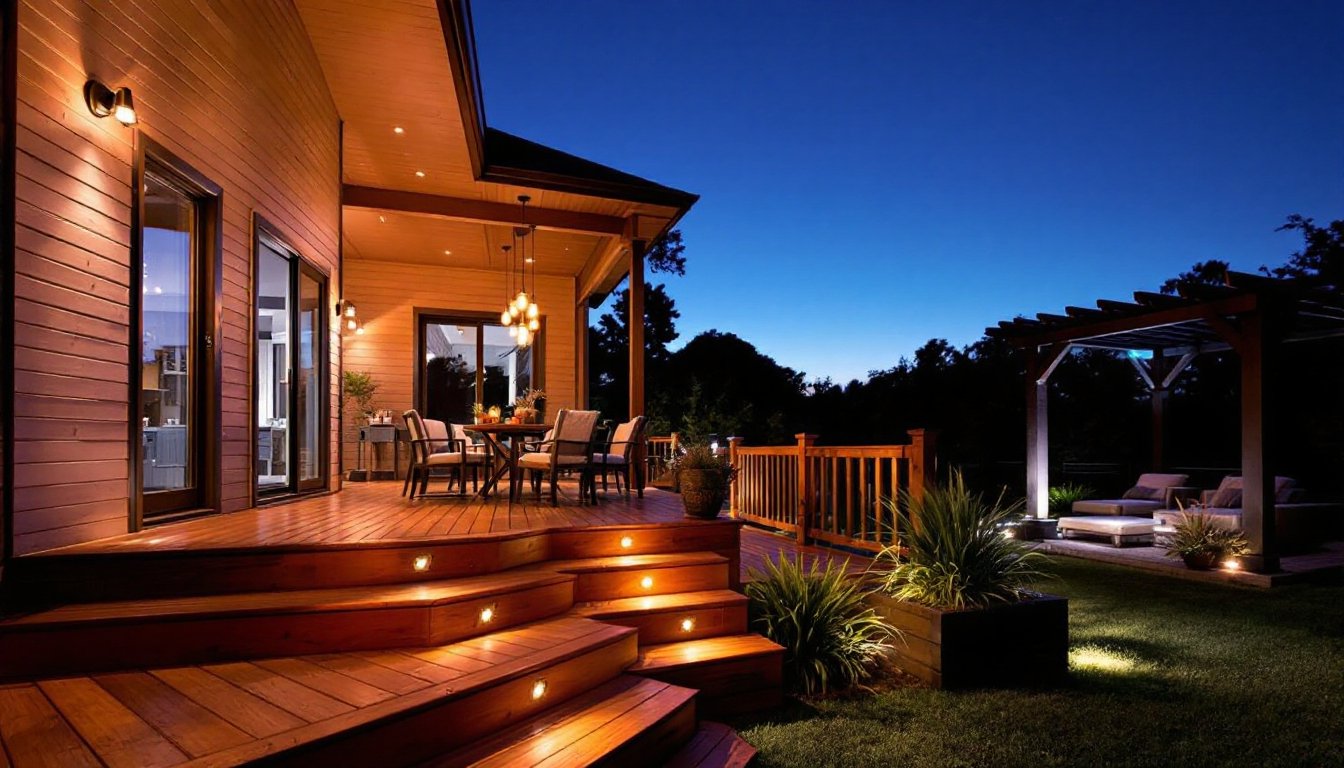
Recessed lights, also called flush-mount or puck lights, install directly into deck boards, stair risers, or fascia, sitting nearly flush with the surface. They’re ideal for modern, minimalist designs where visible fixtures would clutter the aesthetic.
Installation Notes:
- Most recessed deck lights are 3–4 inches in diameter and require a hole saw and a router or jigsaw for cutouts.
- Run low-voltage wiring (12V or 24V) beneath the deck before installing boards, or retrofit by fishing wire through joist bays. Low-voltage systems are safer and easier to DIY than 120V line-voltage installs.
- Space lights 3–4 feet apart along stair risers and perimeter edges for even coverage without hot spots.
- Use IP65-rated or higher fixtures to handle rain, snow, and humidity.
Material Considerations:
Composite decking is straightforward, cut the hole, drop in the light, and secure with the manufacturer’s clips. Solid wood decking requires more care: seal cut edges with exterior wood sealer to prevent rot, especially with pressure-treated lumber that’s prone to moisture intrusion at cut ends.
Pros: Clean look, durable, targeted illumination.
Cons: Retrofit installations are labor-intensive: wiring mistakes are harder to fix once boards are down.
For detailed lighting placement strategies, a layout tool can help map fixture spacing before committing to drilling.
String Lights and Bistro Bulbs for a Cozy Atmosphere
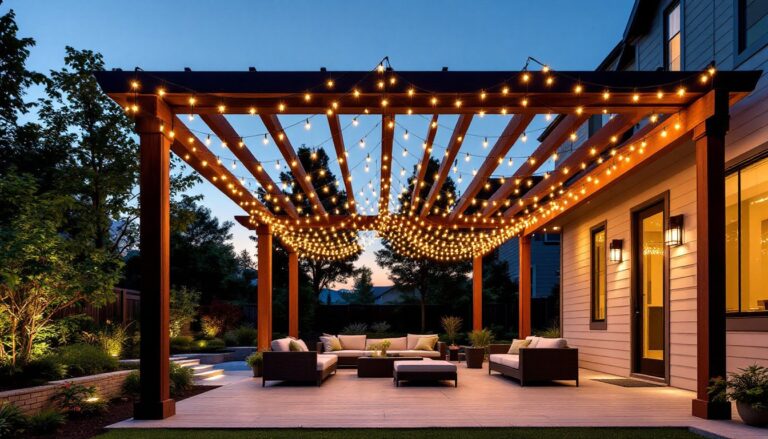
String lights are the fastest way to add character and warmth to a deck. They’re flexible, renter-friendly (if mounted to posts rather than fascia), and create instant ambiance for gatherings.
Types:
- Edison-style bistro bulbs: Large filament bulbs (often LED now) spaced 12–24 inches apart on a heavy-duty cord. They throw soft, diffused light and work well over dining areas.
- Mini globe strings: Smaller bulbs, closer spacing, more decorative than functional. Best as accent lighting rather than primary illumination.
Mounting Options:
- Deck posts: Use screw-in hooks or eye bolts rated for outdoor use. If posts are synthetic, pre-drill pilot holes to avoid cracking.
- Overhead structures: Pergolas, gazebos, and patio covers are natural anchor points. Run cables in a zigzag or parallel pattern depending on the desired look.
- Freestanding poles: If the deck lacks overhead structure, install 8- to 10-foot posts in planters or deck-mounted bases to create anchor points.
Electrical Considerations:
Most string lights plug into a standard 120V outlet. If the deck lacks exterior GFCI-protected receptacles, hire a licensed electrician, outdoor outlets require weatherproof boxes and must meet National Electrical Code (NEC) Article 210.8 for GFCI protection. DIYers comfortable with basic wiring can add a GFCI outlet to an existing circuit, but pull a permit if code requires it.
Maintenance:
Check bulbs and connections seasonally. Cheap string lights from big-box stores often fail after one season: commercial-grade sets (like those used in restaurants) cost more upfront but last years. According to outdoor lighting best practices, dimmable LED strings offer energy savings and adjustable ambiance.
Post Cap and Railing Lights for Defined Pathways
Post cap lights sit atop deck posts (typically 4×4 or 6×6 nominal size, actual 3.5×3.5 or 5.5×5.5 inches), while railing lights mount under handrails or along balusters. Both types define deck edges and guide foot traffic without glaring directly at eye level.
Post Cap Lights:
- Solar vs. low-voltage: Solar caps are self-contained, no wiring, just slide over the post. They work well in sunny climates but dim in winter or shaded areas. Low-voltage caps connect to a central transformer and provide consistent brightness year-round.
- Sizing: Measure post tops carefully. A 4×4 post cap won’t fit a 6×6 post, and vice versa. Some caps are universal with adapters: others are sized specifically.
- Materials: Copper and stainless steel caps resist corrosion. Plastic caps are budget-friendly but fade and crack after a few seasons.
Railing Lights:
- Mount under the handrail with clips or screws, aiming light downward to illuminate deck boards and steps.
- Space them 4–6 feet apart for continuous coverage.
- Low-voltage railing lights often daisy-chain, simplifying wiring, run a main feed line, then tap each fixture in sequence.
Installation Tips:
- For new deck builds, plan post cap and railing light wiring before setting posts. Drill a hole through the center of each post from bottom to top, fish wire through, and cap with the light fixture.
- Retrofits require surface-mount conduit or creative routing through joist bays. It’s doable but slower.
Safety Note:
Always use a transformer rated for the total wattage of all fixtures combined, with at least 20% headroom. A 300-watt transformer should power no more than 240 watts of lights to avoid overheating and fire risk. For homeowners planning multiple outdoor lighting systems, a dedicated circuit may be necessary.
Solar-Powered Lighting Solutions for Eco-Friendly Decks
Solar deck lights have improved dramatically in the past five years. Modern solar LEDs with lithium-ion batteries and efficient photovoltaic cells now rival low-voltage systems in brightness and reliability, provided they get adequate sunlight.
How They Work:
Solar panels (integrated or separate) charge batteries during the day. At dusk, a light sensor triggers the LEDs. Most run 6–8 hours per charge in summer, less in winter due to shorter days and weaker sun angles.
Best Use Cases:
- Post caps and step lights: Small, self-contained units work well here. No wiring, easy replacement.
- Pathway markers: Solar stake lights along deck perimeters or stairs.
- Accent lighting: Highlighting planters, railings, or decorative features.
Limitations:
- Shaded decks: If the deck sits under tree cover or north-facing eaves, solar lights won’t charge adequately. Consider low-voltage instead.
- Brightness: Even high-end solar fixtures max out around 10–20 lumens per unit, sufficient for accent or safety lighting but not task lighting (like grilling areas).
- Battery lifespan: Expect to replace batteries every 2–3 years. Some units have replaceable batteries: others are sealed and disposable.
Installation:
Most solar lights are DIY-friendly, mount with screws or adhesive, orient panels toward the sun, and they’re done. No permits, no electrician. For homeowners considering eco-friendly upgrades across multiple outdoor projects, solar lighting is a low-risk entry point.
Pro Tip: Clean solar panels monthly with a damp cloth. Dust, pollen, and bird droppings cut efficiency by 20% or more.
Accent and Landscape Lighting to Highlight Deck Features
Accent lighting draws attention to specific deck elements, built-in planters, pergola columns, water features, or architectural details. It’s less about illumination and more about creating visual interest and depth.
Fixture Types:
- Uplights: Placed at ground level, aimed upward to wash a post, wall, or tree trunk with light. Use narrow beam angles (15–30 degrees) for drama.
- Spotlights: Directional fixtures mounted on deck framing or nearby landscape to highlight focal points.
- Strip lights: Flexible LED tape (12V or 24V) runs along deck edges, under benches, or inside built-in seating. Cut to length and powered by a low-voltage transformer.
Design Principles:
- Layering: Combine ambient lighting (string lights, post caps) with task lighting (recessed stair lights) and accent lighting for a professional look.
- Color temperature consistency: Mix warm and cool tones intentionally, not accidentally. Stick to 2700K–3000K for residential outdoor spaces unless going for a modern, commercial vibe.
- Avoid glare: Fixtures should light objects, not shine in eyes. Use shields, hoods, or low-profile mounts.
Wiring and Power:
Like other low-voltage systems, accent lights connect to a transformer. For larger setups, consider a transformer with multiple zones and a timer or photocell, this allows independent control of deck, landscape, and accent lighting.
Example Layout:
On a 12×16-foot deck with a pergola, use recessed lights in stair risers, post cap lights on perimeter posts, string lights overhead, and two uplights at the base of pergola posts. This creates safe navigation, general ambiance, and architectural highlight, all on one system. Platforms like Houzz offer photo galleries for real-world inspiration and decorative lighting ideas that translate well to outdoor settings.
Conclusion
Deck lighting is one of the highest-return DIY upgrades: it’s relatively low-cost, doesn’t require structural changes, and immediately improves safety and usability. Start with code-compliant stair and edge lighting, then layer in ambient and accent fixtures to match the space’s function and style. Low-voltage systems offer the best balance of safety, flexibility, and DIY-friendliness, while solar works well for supplemental lighting in sunny locations. Plan wiring early, size transformers correctly, and don’t skip weatherproof ratings, outdoor fixtures take a beating.