Motion sensor outdoor lights are one of those upgrades that sit at the intersection of security, convenience, and energy savings. Unlike traditional porch lights that burn all night whether you need them or not, motion-activated fixtures turn on only when movement is detected, cutting electricity costs while keeping intruders guessing. Whether you’re protecting a dark driveway, illuminating a pathway, or adding an extra layer of security around entry points, motion sensor lights work quietly in the background until they’re needed. This guide walks you through the types available, how to pick the right ones for your setup, and where to mount them for maximum effectiveness.
Table of Contents
ToggleKey Takeaways
- Motion sensor outdoor lights deter intruders through unpredictability while reducing electricity costs by operating only when movement is detected, cutting traditional lighting expenses by up to 80%.
- Choose between three power sources: solar lights for easy installation in sunny areas, hardwired fixtures for unlimited power and bright security, or battery-operated models for flexible rental-friendly placement.
- Proper placement at 8–12 feet high pointing away from trees and streets prevents false alarms while maximizing coverage at entry doors, garages, and driveways where security gaps matter most.
- Brightness measured in lumens ranges from 400–800 for pathways to 1000+ for security floodlights, and PIR sensors are preferred over microwave sensors for fewer false triggers in residential settings.
- Motion sensor outdoor lights come in five main types: floodlights for wide coverage, wall-mounted fixtures for style and function, dual-head security lights for adjustable aiming, pathway lights for subtle coverage, and dusk-to-dawn models for continuous ambient light with motion boost.
Why Motion Sensor Lights Are Essential for Home Security and Energy Savings
A motion sensor light deterrent works because it’s unpredictable. Intruders prefer cover of darkness and an easy escape route. When a light suddenly floods a corner or doorway, the psychological effect is immediate, they move to an easier target. Beyond security, motion-activated fixtures address a real problem: outdoor lighting left on all night wastes money. A 100-watt floodlight running 12 hours daily costs roughly $50–80 per year per fixture. Motion sensors cut that dramatically since they operate only when needed.
For homeowners, the payoff is especially clear around high-traffic areas. Entry doors, garages, driveways, and walkways all benefit from instant illumination. You don’t fumble for keys in darkness, guests can see the path to your front door, and package deliveries happen on well-lit ground. Motion sensor outdoor lights also reduce false security risks, dark corners and blind spots become visible the moment someone approaches. In many cases, this peace of mind alone justifies the installation.
Types of Motion Sensor Outdoor Lights to Consider
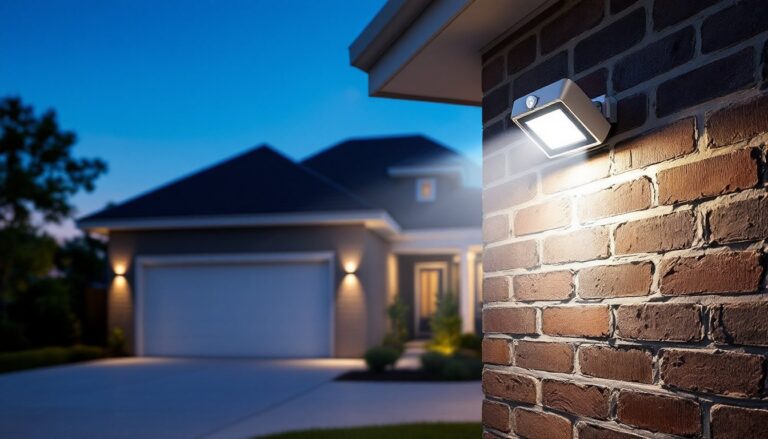
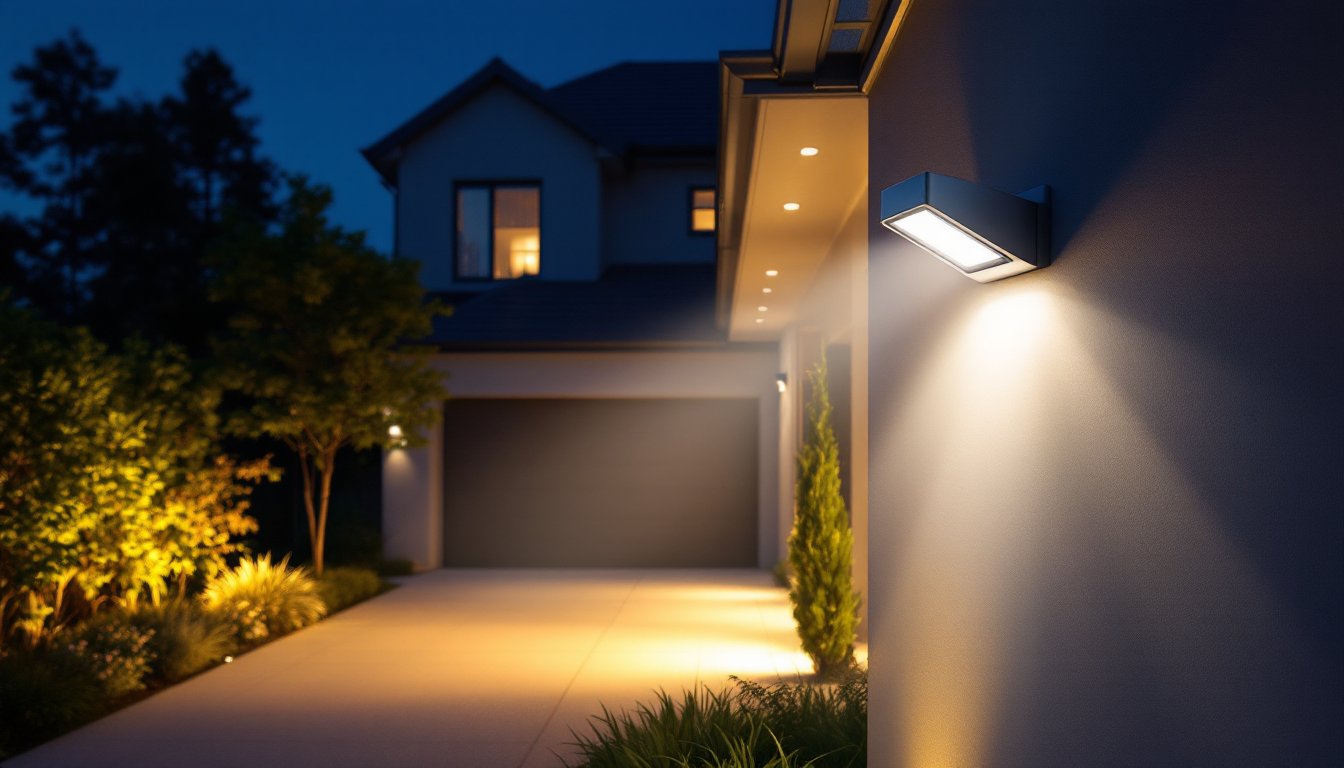
Motion-activated outdoor lights come in several configurations, each suited to different jobs. Motion-activated floodlights are the workhorse, they mount high and throw broad, bright coverage over large areas like driveways and backyards. Outdoor wall lights with motion sensors combine style and function, sitting flush against the house and lighting entry doors. Dual-head security lights mount a pair of bright fixtures on the same bracket, giving you adjustable aiming for corners and problem areas. Pathway and patio motion sensor lights are lower-profile options for gardens and deck edges. Dusk-to-dawn lights with motion boost stay on dimly at night but brighten when movement is detected, good for continuous ambient light without constant triggering.
Each type has trade-offs: floodlights deliver brightness but can look industrial: wall-mounted fixtures integrate better aesthetically but cover less ground. Pathway lights are subtle but may not provide enough security coverage alone.
Solar-Powered Options
Solar motion sensor lights recharge during the day and operate on battery power at night. They’re the easiest to install because no wiring is needed, just mount and let the sun do the work. They suit pathways, deck railings, fence posts, and perimeter areas where sunlight exposure is good. The trade-off: brightness is moderate, and batteries degrade over time (typically 2–5 years). Solar units need 6–8 hours of direct sunlight daily to charge fully. In cloudy climates or shaded yards, they underperform. Solar lights for yard applications work best in open, southern-facing locations.
Hardwired and Battery-Operated Models
Hardwired motion sensor lights connect directly to your home’s electrical panel via conduit, the same way you’d run power to a new outlet. They provide unlimited, continuous power and never need battery replacement. They’re the standard for serious security and bright floodlights. The drawback: installation requires running wire, possibly a permit, and ideally a licensed electrician if you’re tapping into your main panel.
Battery-operated models offer middle ground. They mount anywhere without wiring, on a wall, under an eave, or a fence, and run on standard or rechargeable batteries. Batteries typically last 12–18 months before replacement. They’re ideal for rental properties or temporary placement. Some homeowners use battery models alongside hardwired fixtures for added coverage.
How to Choose the Right Motion Sensor Lights for Your Home
Start with three core questions: What area do you need to light? Measure the space. A small entry door needs far less coverage than a 50-foot driveway. What’s your power source preference? Solar is easiest: hardwired is most reliable: battery-operated is flexible. What’s your budget? Quality varies widely, expect $30–80 for solar pathway lights, $60–150 for battery-operated wall fixtures, and $100–300+ for hardwired floodlights.
Next, check the detection range (typically 20–40 feet) and sensor angle (usually 90–180 degrees). A sensor with 180-degree coverage catches movement from the sides: narrower angles focus on a specific approach. Brightness matters, measured in lumens. For pathways, 400–800 lumens is plenty. For security floodlights, 1000+ lumens is standard. Darker skin tones and distance require higher lumen counts.
Sensor type affects reliability. PIR (passive infrared) sensors detect body heat and are common in residential fixtures. Microwave sensors emit a signal and detect reflections, they penetrate objects better but can trigger on movement beyond your target area. Most homeowners prefer PIR for fewer false alarms.
Adjustable sensitivity is crucial. A light pointing at a busy street or tree line will trigger constantly as cars and wind-blown branches move. Look for fixtures that let you dial sensitivity down to reduce false activations. Dusk-to-dawn controls let the light operate only at night, saving energy during daylight. Match the fixture style to your home’s aesthetic, modern, traditional, or industrial designs all exist. A sleek contemporary wall light looks jarring on a colonial-era house, and vice versa. Solar lights for yard applications pair well with landscape features, while floodlights suit utilitarian spaces.
Installation Tips and Best Placement Strategies
Location is everything. Place motion sensors where they address your actual security gaps. Entry doors, garage doors, dark side yards, and driveway approaches are priorities. Mount lights 8–12 feet high for wide, even coverage, too low and they illuminate only the base of a tall person: too high and you lose detail.
Point sensors away from trees, bushes, and streets. A shrub branch swaying in wind or a neighbor’s car passing triggers false alarms constantly. Aim the sensor field directly at the area you want to protect, entryways, walkways, or the perimeter of your property. For large properties, use multiple fixtures rather than one powerful light. Two wall-mounted lights covering entry doors plus a floodlight on the garage and a pathway light down the driveway creates layered security without dark gaps.
For hardwired installation: Plan the wire route before running conduit. Bury conduit underground where possible (12 inches deep) or run it along fascia boards and under eaves to hide it. Shut off power at the breaker when connecting to the electrical panel, this is non-negotiable. If you’re not comfortable with electrical work, hire a licensed electrician. Permits are often required for new outdoor circuits. Check your local code.
For solar units: Ensure they receive 6+ hours of unobstructed direct sunlight. Mount them clear of overhanging branches or roof shade. Clean the solar panels quarterly: dust and pollen reduce charging efficiency. Test battery health annually: if a light dims noticeably or stops working, replace the battery.
For battery-operated fixtures: Use alkaline or lithium batteries for best performance in cold climates (alkaline fails below 40°F: lithium works down to -20°F). Check batteries every 6 months. A corroded contact ruins a fixture, so inspect terminals if lights stop working suddenly. Island kitchen lights and interior fixtures don’t face weather challenges, but outdoor motion sensors endure rain, temperature swings, and humidity, buy fixtures rated for your climate zone.
Safety basics: Wear eye protection when working at height. Use a sturdy ladder, never an unstable chair. If climbing isn’t comfortable, that’s a sign to bring in help. Hardwired work requires turning off power, use a non-contact voltage tester to confirm the wire is dead before touching it. Installation reviews from Today’s Homeowner and Family Handyman offer detailed walkthroughs if you’re tackling the job yourself.
Conclusion
Motion sensor outdoor lights earn their place on any home by delivering security, convenience, and genuine energy savings. The best choice depends on your property layout, budget, and power source preference. Solar units suit yards with good sun exposure: hardwired floodlights provide the brightest, most reliable security: battery-operated fixtures offer flexible, rental-friendly placement. Proper sensor positioning and sensitivity adjustment prevent false alarms while maximizing coverage where you need it. Install them thoughtfully, maintain them seasonally, and they’ll work quietly in the background for years, until the moment someone approaches your property, and suddenly it’s lit like noon.