The shift to LED has quietly rewritten the rules of outdoor home lighting. What used to be a chore of swapping burnt-out incandescents every season has turned into a long-term install that sips electricity and shrugs off winter. Whether a homeowner is planning pathway markers, security floods, or layered landscape accents, today’s outdoor lights LED options offer brighter output, smarter controls, and longer life than anything on the shelf five years ago. This guide walks through the why, the what, and the how, so the next project lands right the first time.
Table of Contents
ToggleKey Takeaways
- LED outdoor lights consume 75% less energy than incandescent bulbs and last 15,000 to 50,000 hours, reducing replacement costs and long-term maintenance.
- Match your outdoor LED light type to its purpose—pathway lights for walkways, floodlights for security, and landscape accents for architectural features—to create a polished exterior.
- Plan your outdoor lighting layout in three tiers: ambient (15%), task (25%), and accent (60%) to achieve professional-looking layering that enhances both safety and atmosphere.
- Always call 811 before digging, use waterproof connectors and a dedicated GFCI outlet for transformers, and bury low-voltage cable at least 6 inches deep to ensure durability and safety.
- Check lumens (brightness), color temperature (Kelvin), IP rating, and CRI before purchasing to ensure your fixtures match your home’s conditions and desired aesthetic.
- Over-lighting diminishes impact—a modest, well-planned system with properly matched color temperatures reads more expensive than scattered bright fixtures.
Why LED Has Become the Gold Standard for Outdoor Lighting
LEDs draw roughly 75% less energy than incandescent bulbs and last 15,000 to 50,000 hours, depending on the fixture grade. For an outdoor light running six hours a night, that’s a decade-plus before replacement.
They also handle the rough stuff better. LEDs don’t have a fragile filament, so vibration, cold snaps, and the occasional weed-whacker bump rarely take them out. Most quality outdoor units carry an IP65 rating or higher, meaning they’re sealed against dust and rain.
Then there’s control. Modern drivers support dimming, color temperature shifts (2700K warm to 5000K daylight), and smart-home integration, none of which the old halogen flood could touch. Sites like recent reviews from CNET consistently rank LED fixtures above legacy options on lifetime cost.
Types of Outdoor LED Lights and Where They Work Best
Not every fixture belongs in every spot. Matching the light type to its job is what separates a polished exterior from a runway.
Pathway, String, and Landscape Lights
Pathway lights mark walkways and driveway edges, typically spaced 6 to 8 feet apart at 1 to 3 watts each. Low-voltage (12V) systems are the DIY favorite since they don’t require a licensed electrician for the run between fixtures, just a transformer plugged into a GFCI outlet.
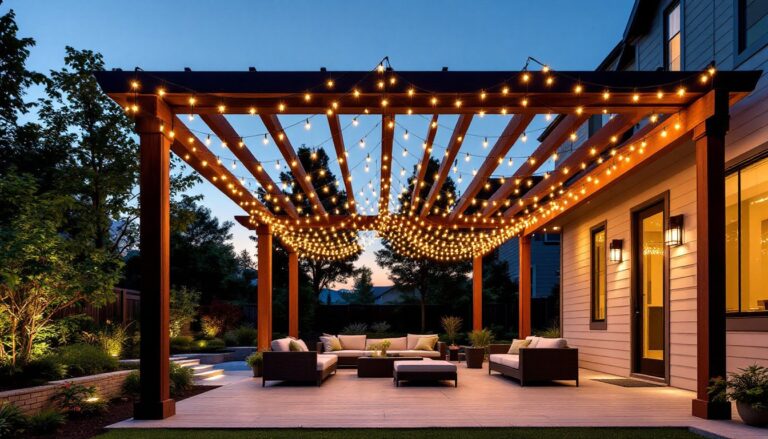
String lights have graduated from party gear to permanent decor. A guide to creative patio string lights breaks down catenary cable mounting for spans over 20 feet, which prevents sag. For backyards that double as entertaining zones, layered outdoor string lighting setups pair well with uplit trees.
Landscape lights, the broad category covering well lights, spotlights, and bullets, highlight architecture and planting beds. Solar Christmas outdoor lights fall into the seasonal subset here, useful for short-term displays without running extension cords through the snow.
Floodlights, Security, and Wall-Mounted Fixtures
Floodlights, Security, and Wall-Mounted Fixtures
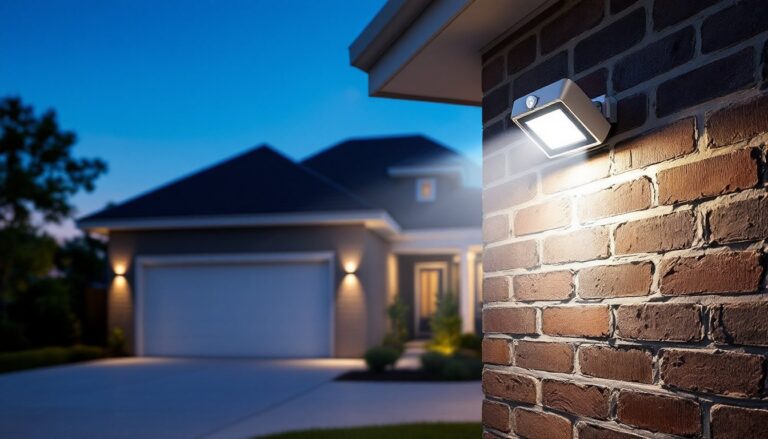
Floodlights deliver wide, high-lumen coverage, typically 1,200 to 5,000 lumens per head. Motion-activated versions are standard for driveways and side yards, and many now include integrated cameras tied to apps. Coverage from smart home outdoor reviews is worth scanning before committing to an ecosystem.
Wall-mounted sconces flank doors and garages. A well-chosen outdoor sconce lighting fixture handles two jobs at once, framing the entry and lighting the threshold. For homeowners who want a finish that ages gracefully, solid brass landscape lighting develops a patina rather than peeling like painted aluminum.
Security-specific fixtures should sit 8 to 10 feet off the ground, angled slightly downward to avoid glare bombing the neighbors.
Key Features to Compare Before You Buy
Spec sheets matter more than packaging photos. Before adding a fixture to the cart, check:
- Lumens, not watts. Watts measure draw: lumens measure brightness. A 9W LED can easily out-throw a 60W incandescent.
- Color temperature (Kelvin). 2700K–3000K reads warm and residential. 4000K+ feels commercial. Mix carefully.
- IP rating. IP65 for general exposure, IP67 for buried or submerged units like well lights.
- CRI (Color Rendering Index). 80+ for landscapes, 90+ if accurate plant and brick color matters.
- Voltage. 120V line-voltage requires conduit and code compliance. 12V low-voltage is forgiving for DIYers.
- Warranty. Five years is the floor for quality fixtures: better brands offer lifetime on housings.
Searching “outdoor landscape lighting near me” will surface local suppliers, but the spec checklist travels with the buyer regardless of where they shop.
Planning Your Outdoor LED Lighting Layout
A sketch beats guesswork every time. Homeowners should walk the property at dusk with a notepad and mark three categories: safety zones (steps, transitions, drop-offs), focal points (specimen trees, water features, house facade), and task zones (grill area, seating, doorways).
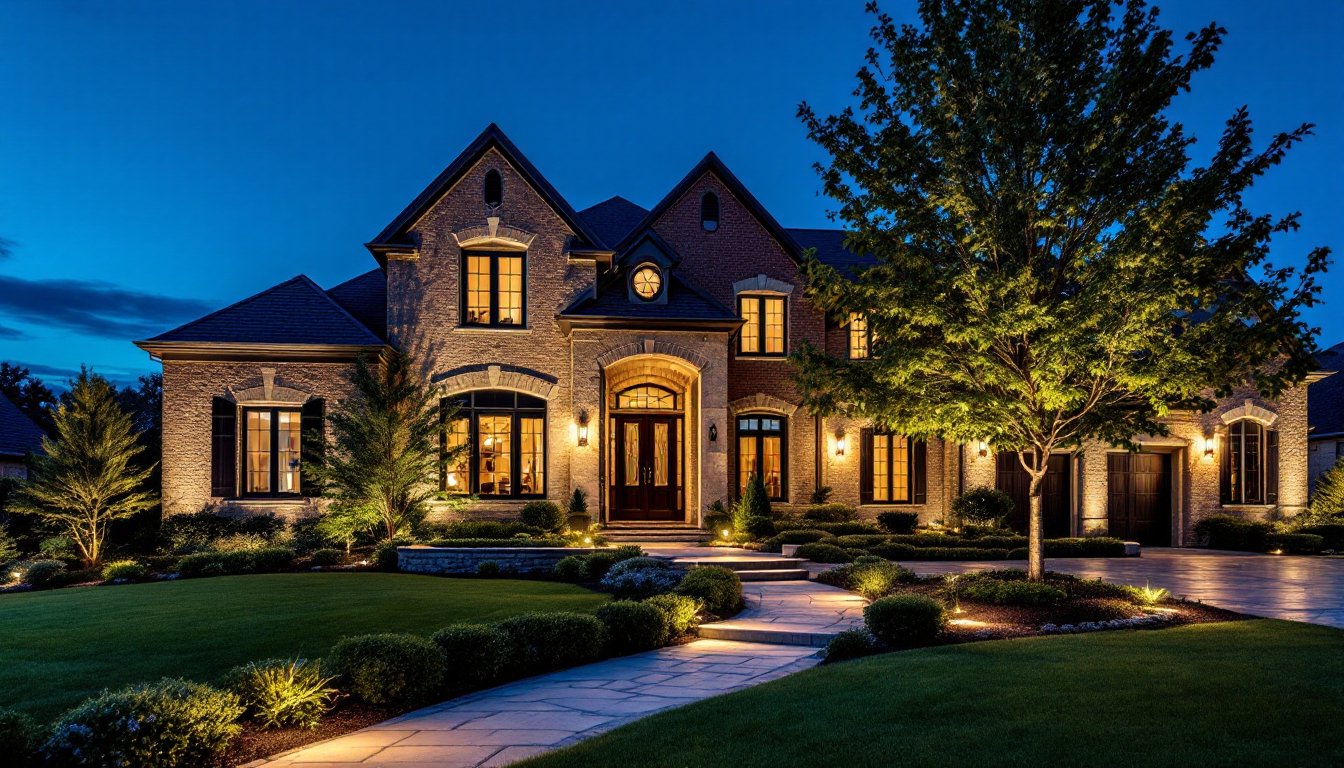
Layering is the principle that separates pro installs from spotty ones. Think of it as three tiers: ambient (overall fill), task (functional), and accent (drama). A balanced low voltage landscape lighting plan typically uses 60% accent, 25% task, and 15% ambient.
Calculate transformer load by adding total wattage of all fixtures, then size the unit at 125% of that load to leave headroom. A 200W transformer handles roughly 160W of fixtures comfortably. For longer runs, drop to 14- or 12-gauge cable to limit voltage drop past 50 feet.
Installation Tips and Common Mistakes to Avoid
Most DIY outdoor lighting installs are achievable in a weekend if the prep is done right. A few ground rules:
- Call 811 before digging. Free utility locating service. Non-negotiable.
- Use a dedicated GFCI outlet for the transformer, mounted at least 12 inches above grade.
- Bury low-voltage cable 6 inches deep in landscape beds, deeper across lawns where aerators run.
- Use waterproof wire connectors (gel-filled or silicone). Twist nuts wrapped in electrical tape will fail by year two.
- Aim fixtures before backfilling. Test at night, adjust, then set permanently.
For 120V work, anything beyond replacing an existing fixture on an existing circuit generally requires a permit and, in many jurisdictions, a licensed electrician. The NEC governs outdoor circuits, but local amendments vary, so a quick call to the building department saves headaches.
Common mistakes worth dodging: over-lighting (more fixtures isn’t better: aim for atmosphere), mismatched color temperatures across the property, and forgetting to seasonally trim shrubs that grow into fixture beams. Detailed walkthroughs on exterior LED lighting fixtures and eco-friendly solar illumination cover edge cases worth reviewing before the shovel hits dirt. Step-by-step wiring photos on maker tutorials at Instructables help visual learners.
PPE reminder: safety glasses when drilling masonry, gloves for handling cable ends, and a voltage tester before touching any junction box assumed to be dead.
Final Thoughts
Outdoor LED lighting rewards patience in planning more than money in fixtures. A modest, well-laid system reads more expensive than a scattered pile of bright lights. Start with the safety zones, layer in accents, and pick fixtures with specs that match the conditions, not just the catalog photo. Done right, the install will outlast the next two roof replacements and still look intentional.