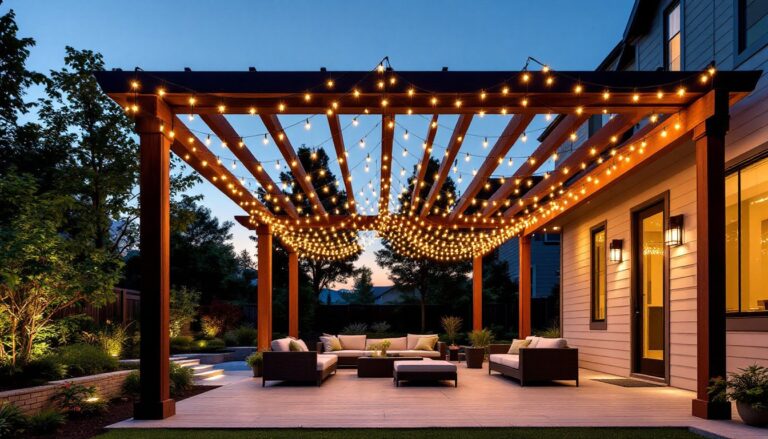
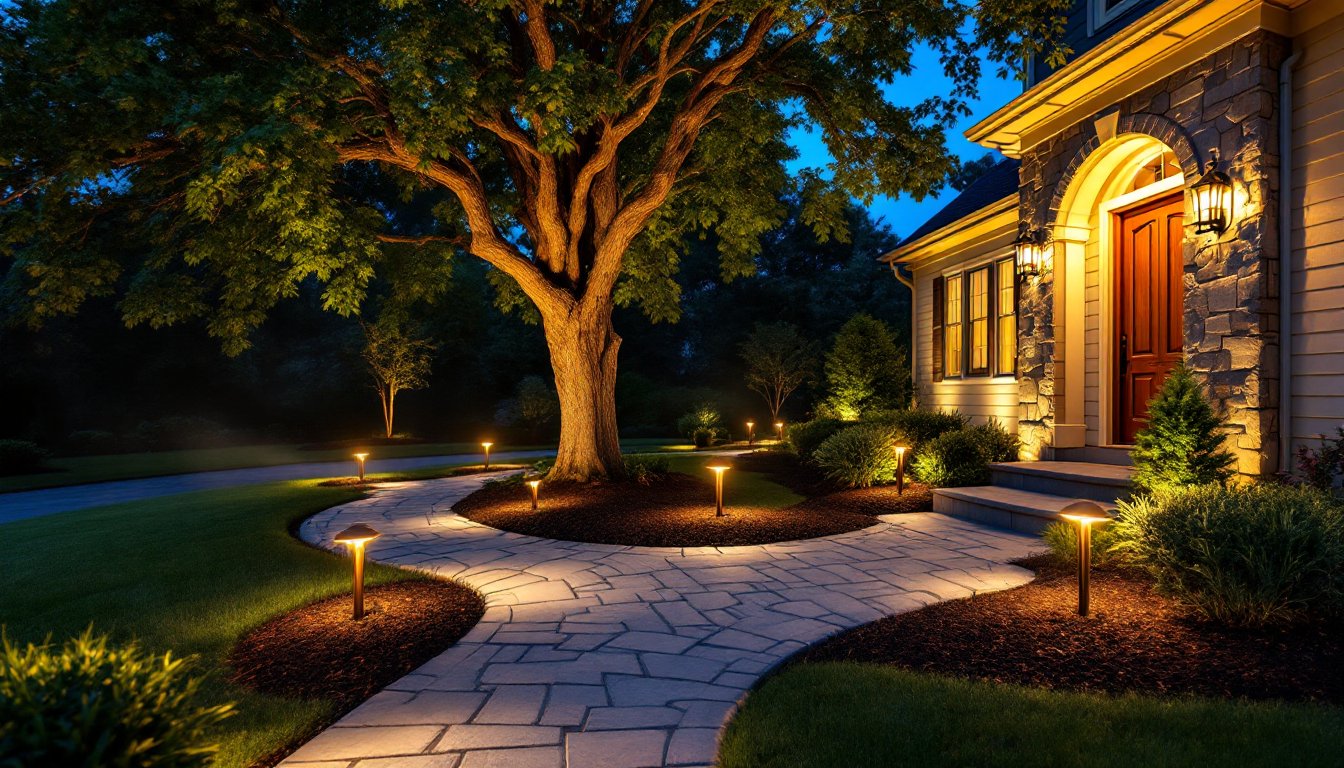
Commercial low voltage landscape lighting brings professional-grade durability and performance to residential outdoor spaces without the complexity or hazards of line voltage systems. These systems operate at 12 volts instead of the standard 120 volts, making them safer to install, easier to maintain, and more energy-efficient than traditional landscape lighting. Whether illuminating walkways, highlighting architectural features, or creating security lighting for a property, low voltage systems offer homeowners a flexible, scalable solution that doesn’t require an electrician’s license to install in most jurisdictions, though local codes always take precedence.
Table of Contents
ToggleKey Takeaways
- Commercial low voltage landscape lighting operates at 12 volts instead of 120 volts, making it safer, easier to install, and more energy-efficient for homeowners without requiring an electrician’s license in most jurisdictions.
- Low voltage systems use LED modules rated between 3–9 watts per fixture (200–600 lumens) and can run a typical 300-watt transformer with 25–30 fixtures for only $3–5 per month in electricity costs compared to $15–25 for line voltage equivalents.
- Commercial-grade components include 10- or 12-gauge direct-burial wiring, corrosion-resistant brass or copper fixtures, and waterproof gel-filled connectors that allow DIY installation, seasonal relocation, and troubleshooting with basic tools.
- Proper transformer selection with multi-tap outputs (12V–15V) and careful voltage drop planning—using thicker wire on long runs and splitting runs into branches—ensures even light distribution across the entire system.
- Path and walkway lighting, architectural uplighting, security fixtures, and water features are popular commercial landscape lighting applications that enhance safety, curb appeal, and property resale value.
- Regular maintenance including lens cleaning, connection inspection, and LED module replacement (when needed after 20,000–50,000 hours) keeps a system performing reliably for 9–23+ years.
What Is Commercial Low Voltage Landscape Lighting?
Commercial low voltage landscape lighting refers to outdoor lighting systems designed with the durability, weather resistance, and build quality typically found in professional installations, but scaled for residential use. These systems run on 12-volt DC or AC power, stepped down from standard household current via a transformer.
The “commercial” designation doesn’t mean these systems are for businesses only. It signals heavier-gauge wiring, corrosion-resistant fixtures (often brass, copper, or marine-grade aluminum), and higher-lumen LED modules compared to big-box budget kits. Expect thicker wire (10- or 12-gauge vs. the 14- or 16-gauge in economy sets), sealed connectors, and fixtures rated for 3,000+ hours of operation.
Most systems use LED lamps rated between 3 and 9 watts per fixture, delivering 200–600 lumens depending on application. This is a far cry from the old halogen days when a single 20-watt bulb could overheat housings and drain transformers. LEDs also offer color temperature control, from warm 2700K (amber) to cool 5000K (daylight), letting homeowners match architectural style.
Why Choose Low Voltage Over Standard Voltage for Landscape Lighting
Safety is the headline reason. At 12 volts, accidental contact with a cut wire won’t cause shock, a critical advantage in wet soil and around sprinkler zones. Standard 120-volt systems require GFCI protection, conduit burial at 18–24 inches deep (per NEC Article 300), and often a permit plus licensed electrician. Low voltage cable can be buried 6 inches deep or simply staked along the surface under mulch in many jurisdictions (always confirm local codes).
Energy efficiency is another win. A typical 300-watt low voltage transformer can power 25–30 LED fixtures for about the same draw as three incandescent bulbs. That translates to roughly $3–5 per month in electricity for an average system running dusk-to-dawn, compared to $15–25 for line voltage equivalents (costs vary by regional rates).
Flexibility matters for DIYers. Low voltage systems are modular, add fixtures mid-run using quick-splice connectors, relocate lights seasonally without re-trenching, and troubleshoot with a basic multimeter. Line voltage systems are rigid once installed. If a homeowner wants to add three uplights under a new tree, low voltage means an afternoon project. Line voltage means calling an electrician.
Finally, resale appeal. Many best outdoor lights for 2026 emphasize low voltage LED systems for their blend of performance and safety, a selling point buyers notice during evening showings.
Key Components of a Commercial Low Voltage Lighting System
Transformer: The system’s power hub, converting 120V household current to 12V output. Commercial-grade units range from 150 watts to 900+ watts capacity. Look for models with multi-tap outputs (12V, 13V, 14V, 15V) to compensate for voltage drop on long runs. A built-in photocell and timer eliminates the need for separate controls. Stainless steel or powder-coated steel enclosures resist rust better than plastic.
Wiring: Use 10-gauge or 12-gauge direct-burial cable rated for wet locations. Thicker wire reduces voltage drop, critical on runs over 50 feet. A 100-foot run of 12-gauge wire will lose roughly 3 volts with a 10-amp load: bump to 10-gauge and that drops to under 2 volts. Never splice wire underground without waterproof, gel-filled connectors.
Fixtures: Commercial-grade housings use brass, copper, or marine-grade aluminum with silicone gaskets and tempered glass lenses. Stake-mount spotlights, path lights, well lights (for uplighting trees), hardscape lights (recessed in steps or walls), and flood fixtures each serve specific roles. Check for replaceable LED modules rather than integrated units, when the LED eventually dims after 20,000–50,000 hours, you swap the module instead of the entire fixture.
Connectors: Quick-splice connectors with silicone gel prevent corrosion. Better systems use hub connectors at the transformer, splitting the main feed into multiple branch runs. This distributes load evenly and simplifies troubleshooting.
Lamps/Modules: LED dominates for efficiency and lifespan. Choose between warm white (2700K–3000K), neutral (3500K–4000K), or cool white (5000K+). Beam angles range from 15° spot (accent lighting) to 120° flood (wide wash).
Popular Applications for Commercial-Grade Landscape Lighting
Path and walkway lighting: Low-profile path lights (typically 18–24 inches tall) with downward-facing lenses prevent glare while illuminating safe footing. Space fixtures 8–10 feet apart along walkways for even coverage. Brass or copper housings blend into landscaping better than black plastic.
Architectural uplighting: Well lights recessed in planting beds or hardscape throw light upward to highlight tree canopies, stone facades, or columns. Use narrow 15°–25° beams for tall trees: 35°–60° beams for shorter shrubs or wide walls. Position fixtures 2–3 feet from the base of the target to avoid harsh shadows.
Security and task lighting: Downlights mounted under eaves or in soffits provide functional illumination for entryways, garage doors, and patios. Pair with motion sensors for energy savings. Flood fixtures with 90°–120° beams work well here: aim for 300–500 lumens per fixture.
Water feature and deck lighting: Submersible low voltage fixtures (rated IP68) safely light ponds, fountains, or pool perimeters. For deck and stair lighting, recessed hardscape lights install flush in risers or posts. Many outdoor smart lights now include RGBW LEDs and app control, letting homeowners shift from warm white for dinner parties to colored accents for holidays.
Commercial-style area lighting: For larger properties, low voltage bollards (24–36 inches tall) or small post lights provide ambient security along driveways or parking areas. These don’t replace high-intensity line voltage floods but offer a softer, less intrusive alternative.
Installation Tips for Homeowners and DIY Enthusiasts
Plan the layout on paper first. Sketch the property, mark fixture locations, and calculate total wattage. Add 20% headroom to transformer capacity, don’t max it out. For example, if fixtures total 240 watts, use a 300-watt transformer minimum.
Voltage drop is the silent killer. Use the multi-tap feature on the transformer to boost output to 14V or 15V on long runs, so fixtures at the far end still receive close to 12V. Alternatively, split one long run into two shorter ones, each with its own tap.
Bury cable properly. Dig a trench 6 inches deep (check local code). Lay cable in a gentle curve, never pull it tight. Leave 6–12 inches of slack at each fixture for future adjustments. Backfill with soil, not rocks that might cut the jacket.
Use waterproof connectors exclusively. Twist-on wire nuts fail underground. Gel-filled or heat-shrink connectors seal out moisture. Keep all connections above grade if possible, inside fixture bases or under removable caps.
Test before burying. Connect the entire system above ground, power it on at dusk, and walk the property. Adjust fixture angles, check for voltage drop (use a multimeter at the last fixture, reading should be 10.8V or higher), and confirm even light distribution. Only then should you bury cable.
Secure the transformer properly. Mount it on an exterior wall near a GFCI-protected outlet, at least 12 inches above grade to prevent submersion during heavy rain or snow melt. Use stainless steel screws: the transformer will be there for a decade.
Consider phased installation. Many low-voltage landscape lighting ideas suggest starting with high-priority zones (entryway, path to front door) and expanding later. Commercial systems support this approach with modular hub connectors.
Maintenance and Troubleshooting Your Low Voltage System
Annual tasks: Clean lenses with a soft cloth and soapy water, oxidation and mineral deposits from sprinklers reduce output. Inspect wire connections for corrosion: reapply dielectric grease if needed. Check that fixtures are level and stakes are secure: frost heave shifts them.
LED longevity: Quality modules last 20,000–50,000 hours. At 6 hours per night, that’s 9–23 years. When a fixture dims noticeably, replace the module (if modular) or the fixture. Mixing old and new LEDs creates uneven color temperature, if replacing several, do them all at once.
Common issues and fixes:
- Dim lights at the end of a run: Voltage drop. Check connections, upgrade to thicker wire, or split the run into two branches.
- One fixture out, rest fine: Bad lamp module or corroded socket. Swap the module: clean contacts with a wire brush and dielectric grease.
- Entire zone dead: Check the transformer tap, GFCI breaker, and photocell. Use a multimeter to confirm 12V output at the transformer terminals.
- Flickering lights: Loose connection or failing transformer. Tighten all connectors: if problem persists, test transformer output under load.
Seasonal adjustments: Timer settings that worked in summer may need tweaking in winter when dusk arrives earlier. Adjust photocell sensitivity if lights activate during cloudy afternoons.
Safety reminder: Always disconnect power at the transformer before handling connections or fixtures. Even at 12V, short circuits can arc and damage components.
Conclusion
Commercial low voltage landscape lighting delivers professional results without the permitting, installation costs, or safety concerns of line voltage systems. With the right transformer sizing, quality components, and attention to voltage drop, homeowners can create durable, energy-efficient outdoor lighting that rivals contractor-installed jobs, and adapt it over time as landscaping evolves.