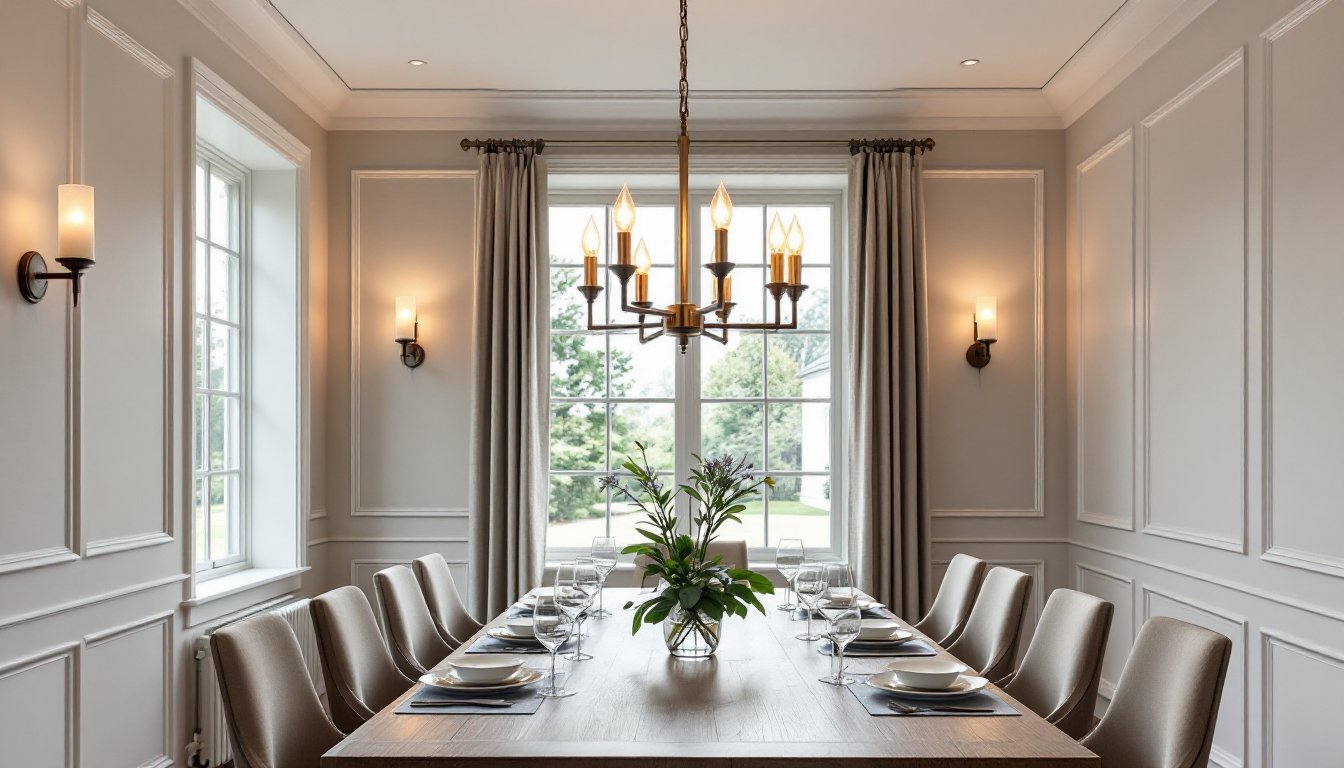
A well-chosen dining room chandelier does far more than light up dinner tables. It anchors the room’s entire aesthetic, sets the mood for gatherings, and often becomes the focal point guests notice first when they walk in. Yet many homeowners treat chandelier selection as an afterthought, picking something that fits the budget without considering scale, brightness, or how it integrates with their existing décor. The good news: selecting the right chandelier doesn’t require a design degree. By understanding a few practical factors, room size, ceiling height, style compatibility, and brightness levels, homeowners can confidently choose a fixture that looks stunning and functions perfectly for years to come.
Table of Contents
ToggleKey Takeaways
- Dining room chandeliers serve as both functional lighting and statement pieces that anchor your room’s aesthetic and set the mood for gatherings.
- Calculate the ideal chandelier diameter by adding your room’s length and width in feet, then converting to inches; hang it 30-36 inches above your dining table for optimal lighting and sightlines.
- Match your chandelier’s finish and style to existing décor elements—brass feels traditional and warm, nickel is contemporary, matte black is modern, and aged bronze works transitionally.
- LED bulbs with 2700K-3000K color temperature and 2,000-3,000 lumens are ideal for dining room chandeliers, providing warm, inviting light while using less electricity than incandescent options.
- Install a dimmer switch to adjust brightness for different occasions and extend bulb lifespan, and always hire a licensed electrician for hardwired installation to ensure safety and warranty compliance.
Why Dining Room Chandeliers Matter More Than You Think
Dining room chandeliers aren’t optional décor add-ons. They’re essential infrastructure that defines how people experience your space. A properly scaled, well-lit chandelier encourages guests to linger over meals, makes food look appetizing, and creates an inviting atmosphere. Conversely, a chandelier that’s too small looks dinky and leaves dark corners: one that’s too large overwhelms the space and creates glare on the table.
Beyond functionality, a chandelier is a statement piece. Unlike a recessed light or a simple flush mount, a chandelier draws the eye, reflects your taste, and can tie together your entire dining area’s design language. Whether you’re going for traditional elegance, modern minimalism, or eclectic charm, the chandelier reinforces that message. For these reasons, investing time in selection pays dividends, both aesthetically and in day-to-day usability.
Many homeowners don’t realize that contemporary dining room lighting offers far more flexibility than it did even five years ago. Today’s chandeliers come in an enormous range of sizes, finishes, and brightness levels, making it easier than ever to find something that fits both your home and your lifestyle.
Key Factors to Consider Before Buying
Before clicking “add to cart,” nail down the specifics of your space and your needs. This groundwork prevents costly returns and regret.
Room Size and Ceiling Height
Chandeliers scale matters. A fixture that dazzles in a showroom can look absurdly small in your actual dining room, or so large it becomes a ceiling hazard. The rule of thumb: add your room’s length and width (in feet), then convert that number to inches for the chandelier’s diameter. A 12×14-foot dining room, for example, should have a chandelier roughly 26 inches wide. This isn’t gospel, but it’s a solid starting point.
Ceiling height is equally critical. Standard dining room ceilings are 8 to 9 feet tall. A chandelier should hang roughly 30 to 36 inches above the table surface, which places the fixture at about 60 to 66 inches from the floor when the table is a standard 30 inches high. If your ceiling is vaulted or cathedral-style, you have more flexibility and can hang the chandelier lower for drama. Measure twice, note your exact dimensions, and use these numbers when shopping online or visiting showrooms.
Style and Design Compatibility
Your chandelier should whisper rather than shout. If your dining room leans traditional, think dark wood, crown molding, and classic proportions, a sleek glass and chrome fixture will feel out of place. Conversely, a heavy brass arm chandelier in a minimalist, Scandinavian-inspired space creates cognitive dissonance. Look at existing elements: your paint color, flooring, wall treatments, and any other fixtures or furniture. Does the chandelier you’re considering echo those materials and lines?
Color and finish matter immensely. Polished brass, brushed nickel, matte black, and aged bronze all convey different moods. Brass feels warm and traditional: nickel is contemporary and clean: matte black is bold and modern: aged bronze is transitional and forgiving. If you’re uncertain, transitional styles, those blending traditional and modern elements, tend to age well and work across different décor evolutions.
Installation and Placement Tips
Installation logistics matter before purchase. Most chandeliers are hardwired into the ceiling, which means routing power through the ceiling box and securing the fixture to a mounting bracket attached to a ceiling joist or brace. If your home doesn’t already have an electrical box in the right spot, you’ll need to cut into the ceiling, locate a joist, install a new fixture box, and run electrical wire, work best left to a licensed electrician, especially if the circuit needs upgrading for dimming or additional load.
Placement should be centered over your dining table, not over the room itself. This ensures balanced light distribution across the table surface and creates a visual anchor above where people actually gather. If your table is off-center in the room (common in open-concept homes), hang the chandelier over the table, even if it’s not geometrically centered in the dining space.
Hang height is critical for safety and sightline. As mentioned, aim for 30 to 36 inches above the table. This is high enough that diners don’t bump their heads or feel like the fixture is crowding them, but low enough that its light reaches the table effectively. Use a dimmer switch whenever possible, it lets you adjust brightness for intimate dinners versus family gatherings and extends bulb life.
If you’re not comfortable with electrical work, budget $200 to $500 for a professional electrician. The cost is small compared to the fixture itself and ensures safety and warranty compliance.
Lighting Design and Brightness Levels
Brightness, measured in lumens, is where many homeowners go wrong. A chandelier’s visual appeal can blind you to whether it actually lights your table adequately. As a baseline, dining areas need about 30 to 40 footcandles of light on the table surface. For a standard dining table, a chandelier with 2,000 to 3,000 lumens works well, depending on bulb type and how many lights the chandelier has.
LED bulbs have transformed the game. They produce more light per watt, run cooler, and last 20,000+ hours compared to incandescent bulbs’ 1,000 hours. When shopping, look for “dimmable” LEDs (not all are), and check the color temperature in Kelvins (K). For dining, 2700K to 3000K is warm and inviting: 4000K+ feels clinical and is better for kitchens or offices. Many homeowners are surprised that a few well-placed LED bulbs can outnumber older multi-bulb fixtures in perceived brightness while using a fraction of the electricity.
Consider your dining light fixtures as part of a layered lighting plan. A chandelier provides ambient light, but adding table lamps, wall sconces, or recessed lights gives you flexibility and mood control. Dimmers are non-negotiable, they let you set the chandelier’s output to match the occasion, and they extend bulb lifespan significantly.
If your dining room is also a workspace (remote work area, assignments station), you may want a chandelier that delivers more lumens or the ability to add supplemental task lighting via under-cabinet or directional fixtures. Conversely, if your dining area is purely for entertaining, a slightly dimmer, more atmospheric chandelier works beautifully, and softens any imperfections in the room’s décor.
Conclusion
Choosing a dining room chandelier boils down to three core decisions: Does it fit your space’s scale? Does it match your style? And does it provide adequate, dimmable light? Measure your room, know your ceiling height, clarify your design direction, and test brightness before committing. A chandelier is a multi-year investment, it’s worth spending an extra hour in the planning phase to get it right. Once installed correctly, it’ll become the fixture guests admire and the centerpiece that ties your dining room together for years to come.