A poorly lit patio is wasted square footage. When darkness falls, an underlit outdoor space becomes a no-go zone, no matter how well-designed the furniture or landscaping. The right patio lamps and outdoor lighting setup transforms your backyard into a functional, inviting space you’ll actually use after sunset. Whether you’re hosting a dinner party, reading with a cold drink, or just enjoying fresh air, proper outdoor home lighting sets the mood and keeps everyone safe. This guide walks you through choosing, installing, and designing patio lamps and outdoor lighting for any style, budget, and space, without the contractor jargon getting in the way.
Table of Contents
ToggleKey Takeaways
- Patio lamps and outdoor lighting transform underutilized backyards into functional spaces perfect for entertaining, reading, or relaxing after sunset.
- String lights and bistro lamps are affordable and versatile, while wall-mounted sconces and pendant fixtures offer fixed, directional lighting for permanent installations.
- Brightness is measured in lumens, not watts—aim for 300–500 lumens for ambient lighting and 600–1,000 lumens for task areas to avoid dark corners.
- LED bulbs use 75–80% less energy than incandescent options while lasting 25,000+ hours, making them the most cost-effective choice over time.
- Layered lighting combining ambient, task, and accent fixtures prevents flat-looking patios and improves both safety and usability after dark.
- Solar-powered outdoor lighting works best in sunny, unshaded areas; hybrid systems combining solar and plug-in fixtures offer year-round reliability.
Types of Patio Lamps for Every Style and Space
String Lights and Bistro Lamps
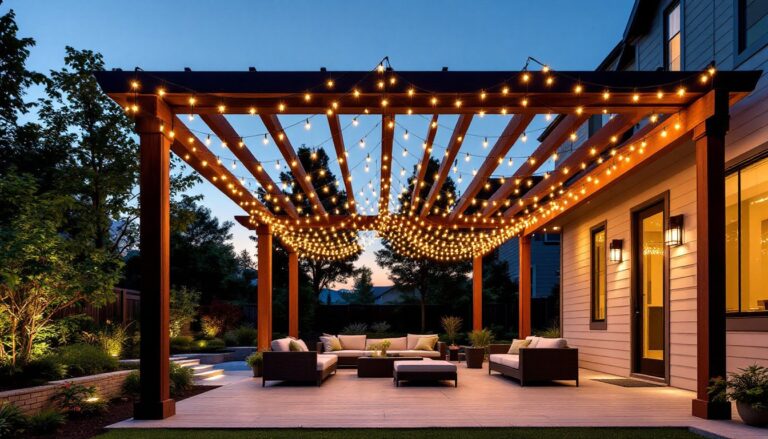
String lights remain the most popular choice for patios because they’re affordable, versatile, and genuinely transformative. These fixtures, typically using vintage-style Edison bulbs or warm LEDs strung along cables, add character while distributing light across wide areas. Bistro lamps, which hang market-umbrella-style from a single overhead point, concentrate light more tightly over a dining table or seating cluster.
When shopping, choose between incandescent (warm but power-hungry), LED (efficient and long-lasting), and solar-hybrid bulbs. LED string lights now match the warm color temperature of incandescent without the energy waste. Spacing matters: hang strings 8-12 feet apart for ambient light, closer for task lighting. String lights have evolved that rival hardwired installations when installed with proper sag and support.
Bistro lamps work best over 4–6 foot tables. Secure the base firmly, wind can topple them, especially if they’re top-heavy. Many bistro lamps run on standard 120V plug-in power, so plan your patio layout around accessible outlets.
Wall-Mounted and Pendant Fixtures
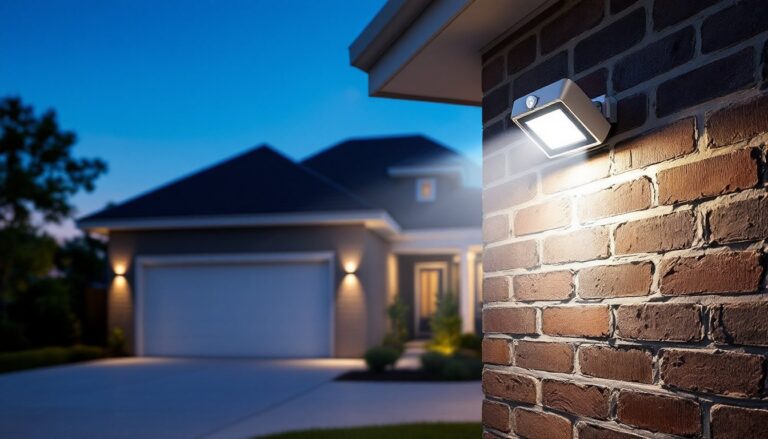
Wall-mounted sconces and hanging pendant lamps provide fixed, directional light. Unlike string lights, these don’t sag or require draping, making them ideal for finished patios attached to the house. Sconces mount beside doors or along railings, offering up and down light (uplighting and downlighting). Pendant fixtures hang from pergolas, arbors, or overhead beams.
Installation requires basic wiring skills or a licensed electrician. If your patio doesn’t have existing wiring, running a new circuit and outlet means cutting into siding or running conduit, a job best left to a pro unless you’re already comfortable with home electrical work. Pendant fixtures typically draw 60–100 watts (incandescent) or 8–15 watts (LED), so one or two fixtures on a standard 15-amp circuit pose no load issue.
For pendant and sconce placement, aim for fixtures 7–8 feet above the patio surface. This keeps the light bright enough for safety and tasks but avoids harsh glare in eyes when seated. Finish options (bronze, stainless steel, matte black) should match your home’s trim and hardware.
Choosing the Right Brightness and Color Temperature
Brightness is measured in lumens, not watts. A common mistake is buying fixtures based on wattage alone. Modern LED bulbs deliver 80–100 lumens per watt, so a 10-watt LED bulb produces the same light as a 60-watt incandescent, but with a smaller power footprint.
For patios, aim for 300–500 lumens per fixture for ambient lighting. Task areas (dining tables, seating zones) benefit from 600–1,000 lumens. A 15×20-foot patio typically needs two or three overhead fixtures or a combination of string lights and accent lamps to avoid dark corners.
Color temperature, measured in Kelvins (K), matters as much as brightness. Warm light (2700K, yellowish) feels cozy and intimate: cool light (5000K and above, bluish) feels alert and energetic. For patios, stick to 2700K–3000K unless you’re installing security-focused flood lights. Warm outdoor home lighting naturally draws people outdoors and creates the ambiance most homeowners want.
Dim compatibility matters if you’re planning mood adjustments. Not all LED bulbs work with standard dimmer switches. Look for “dimmable” labels on the packaging. Cheap LEDs flicker when dimmed, ruining the effect. Spending 20–30% more upfront on dimmable, warm-color LEDs saves frustration later.
Ultraviolet (UV) output affects insects. Bulbs emitting little to no UV (yellower light) attract fewer bugs, a real advantage on bug-heavy summer nights. LED fixtures with amber or warm yellow output perform much better than cool white in this regard.
Installation Tips for Safe and Effective Outdoor Lighting
Before installing anything, check local building codes. Many jurisdictions require low voltage landscape lighting (under 30 volts) for certain outdoor fixtures or limit how outlets and wiring can be exposed. Check your city’s building department or hire an inspector if you’re uncertain. Permits cost $50–150 but prevent costly fines.
For plug-in fixtures (string lights, bistro lamps, solar lights), ensure your outdoor outlets are GFCI-protected (Ground Fault Circuit Interrupter). These outlets shut off instantly if water is detected, preventing electrocution. Most modern outdoor outlets come GFCI-equipped, but verify yours are.
Hardwired fixtures (wall sconces, pendant lights) need proper conduit and 14 or 12 gauge wire run through weatherproof boxes. Exposed wiring deteriorates within a year. Use UF-B cable (underground, sunlight-resistant) rated for outdoor burial if running wire across the patio floor or underground. Splice connections must sit in weatherproof junction boxes rated for wet locations.
When installing sconces or pendants, secure mounting brackets into solid framing, studs on the house, or lag bolts into beam ends. Hollow drywall anchors won’t hold outdoor fixtures, especially in wind. Use stainless steel or galvanized fasteners: regular steel rusts.
Test all wiring before closing walls or burying conduit. Use a non-contact voltage tester ($10–20) to confirm power is off before working on any circuit. Personal protective equipment, gloves and safety glasses, keeps fingers and eyes safe during installation. If hardwiring feels beyond your comfort level, hire a licensed electrician. The cost ($150–300 per fixture) is worth the peace of mind.
Energy-Efficient and Solar-Powered Options
LED bulbs consume 75–80% less energy than incandescent fixtures while lasting 25,000+ hours (roughly 25 years of nightly use). Over a decade, this savings offsets the higher upfront cost. A 10-watt LED string with 24 bulbs costs pennies monthly to run: a comparable incandescent rig costs $3–5 per month.
Solar-powered outdoor lighting has matured significantly. Today’s solar outdoor lighting no longer means dim novelty stakes, legitimate solar landscape lighting now delivers meaningful illumination for patios and walkways. Premium solar fixtures with larger panels and lithium batteries output 500+ lumens and run 8–10 hours nightly.
Solar string lights and solar pathway stakes work best in unshaded areas. If your patio faces north or sits under trees, solar performance drops sharply. Dust and pollen also reduce panel efficiency: clean solar fixtures monthly for peak output. Battery quality matters, cheap solar lamps use nickel-cadmium batteries that degrade fast: lithium iron phosphate (LiFePO4) batteries last twice as long.
Hybrid systems work too. Plug in a solar/LED string light during winter or shady months: it’ll charge from house current during the day and solar power on sunny days. This approach avoids the seasonal disappointment of pure solar systems in darker months.
For year-round outdoor home lighting without the grid cost, pair solar fixtures with low voltage landscape lighting design. Low voltage systems run cooler and safer than 120V, making them ideal for patios near plants or seating areas.
Lighting Design Ideas to Transform Your Patio
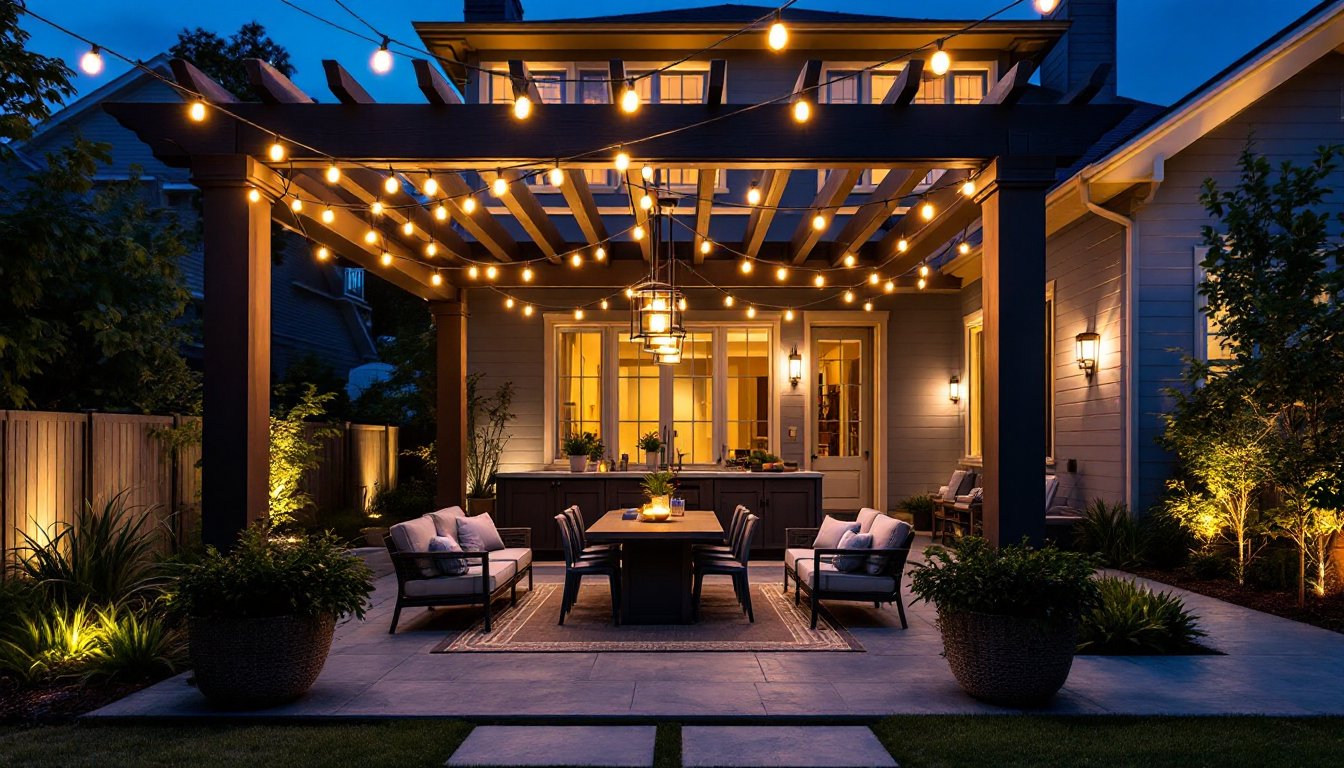
Layered lighting, combining ambient, task, and accent fixtures, prevents a one-dimensional patio from feeling flat. Ambient light (string lights overhead) sets the baseline. Task lights (pendant over a dining table, wall sconce near seating) add function. Accent lights (uplighting on plants, color-changing lights in a border bed) create atmosphere.
Start by mapping your patio zones on paper: dining area, lounge seating, entry, pathways. Assign lighting to each. A 12×16-foot patio might use a bistro lamp over the table (task), two pendant lights on the pergola (ambient), and solar path lights along the walkway (safety and accent). This blend feels cohesive without overwhelming the space.
Height and angle matter. Fixtures hung too high wash out a patio: too low and they glare in guests’ eyes. Aim for 7–8 feet above seating surfaces for pendants and sconces. Use uplighting, fixtures angled upward, to graze the underside of pergola beams and add depth without creating hotspots.
Color scheme consistency helps. If your house has bronze hardware, choose bronze outdoor fixtures. Mismatched metals (bronze, chrome, black) read as chaotic. One or two metals, repeated, look intentional.
Consider seasonal adjustments. Summer calls for bug-repellent warm lighting: winter benefits from brighter fixtures that compensate for lower sun angles and earlier sunsets. Solar fixtures gain charging advantage in spring and summer but struggle in darker months. Design flexibility, mixing solar and plug-in fixtures, or installing dimmers, lets you adapt without major rewiring.
Layered lighting also improves safety. Well-designed outdoor ceiling lighting, reducing trips and stumbles while creating usable living space. It’s not just pretty, it’s functional.