Good breakfast room lighting does more than chase away the morning shadows, it sets the tone for the whole day. Whether you’re squinting at your coffee or prepping a full family spread, the right light fixture makes all the difference between a dark, cramped corner and an inviting gathering space. Unlike a formal dining room, your breakfast area often doubles as a casual workspace, assignments spot, or quick snack station, so it needs flexible, practical illumination that still looks intentional. This guide walks you through selecting, installing, and maintaining breakfast room light fixtures that work for your space, your budget, and your lifestyle.
Table of Contents
ToggleKey Takeaways
- Breakfast room light fixtures should balance ambient brightness with character, casting a warm 2700K–3000K glow that makes the space inviting while ensuring safety around furniture and appliances.
- Position pendant lights 12 to 18 inches above dining tables or 18 to 24 inches above counters, and space multiple fixtures 24 to 36 inches apart for optimal task lighting without glare or head hazards.
- Choose fixture types based on ceiling height: pendants suit standard 8-foot ceilings, while flush-mount or semi-flush options work better for lower or sloped ceilings.
- LED bulbs are the modern choice for breakfast room lighting, offering durability and energy efficiency; verify dimmer compatibility before installation to avoid flickering.
- If your existing wiring doesn’t accommodate your desired fixture location, hire a licensed electrician to run new circuits and ensure compliance with local electrical codes.
- Regular maintenance of breakfast room light fixtures is minimal—dust monthly and check wire connections annually—making LED-equipped designs a practical, long-lasting investment.
Why Breakfast Room Lighting Matters
Breakfast rooms sit in a gray zone between kitchen and dining space. They’re smaller, more intimate, and often tucked into a corner or nook rather than a dedicated formal room. This means lighting needs to be both functional and atmospheric, bright enough to see what you’re eating, warm enough to feel welcoming.
Poor lighting in a breakfast area creates visual strain and makes the space feel cramped or dingy. Conversely, the right fixture(s) can expand the perceived space, highlight architectural details, and create a gathering point for morning routines and casual meals. Proper illumination also affects safety: you’re navigating a space with furniture, appliances, and often a dining table where spills happen.
Unlike overhead kitchen lighting, which typically emphasizes task visibility, breakfast room lighting should balance general ambient light with a touch of character. Many homeowners overlook this space during a remodel, defaulting to whatever fixture came with the house. Taking time to choose thoughtfully, whether it’s a modern fixture that complements your décor or a functional solution that brightens a dim corner, pays dividends in daily comfort and resale perception.
Types of Breakfast Room Light Fixtures
Breakfast rooms work best with a combination of light sources: one overhead statement fixture and supporting task or ambient lighting. Understanding your options helps you make a choice that fits both form and function.
Pendant Lights and Hanging Fixtures
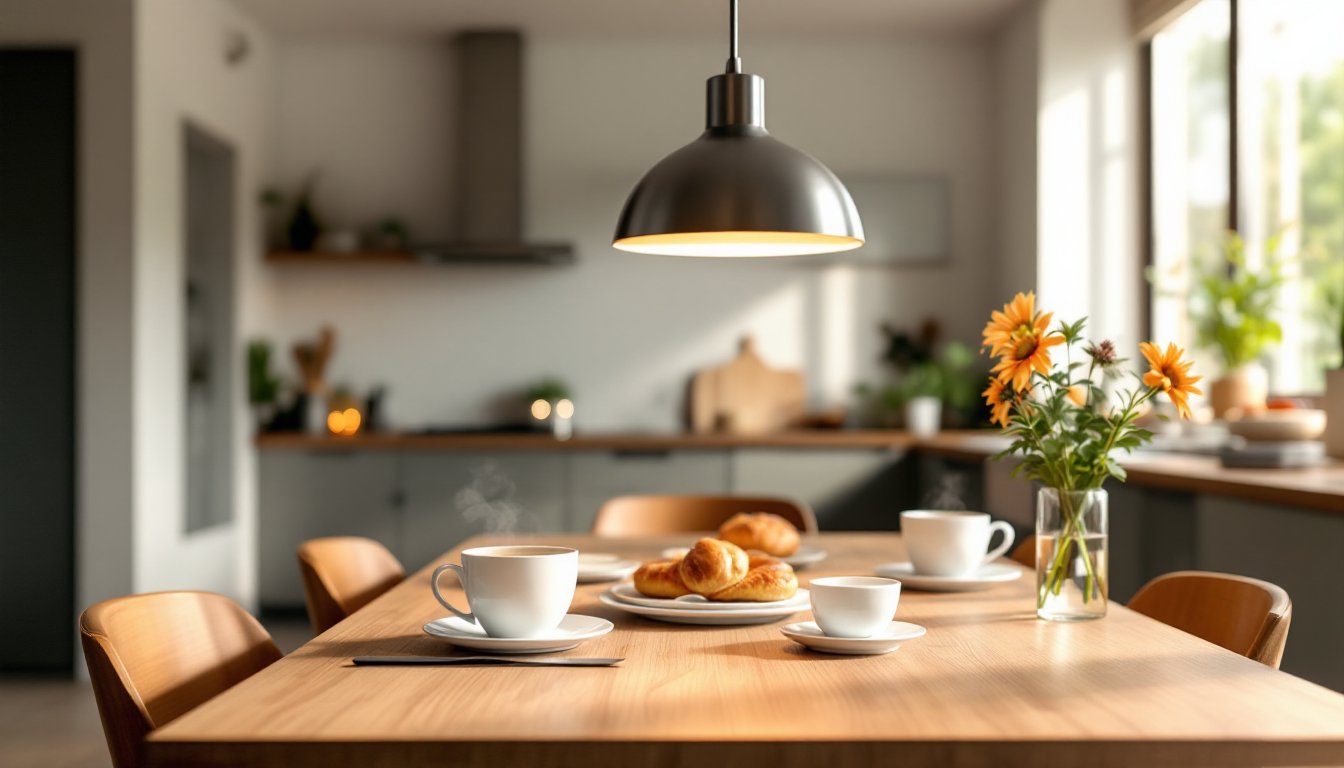
Pendant lights are the workhorse of breakfast rooms. They hang from a single cord, chain, or rod, casting light downward in a focused cone or spread pattern. This makes them ideal for tables or eating counters where you need visibility without glare.
For breakfast spaces, stick to single pendants over smaller surfaces (3 to 4 feet wide) or multiples spaced 24 to 36 inches apart over longer counters or bars. Pendant height matters: aim for the bottom of the fixture to sit 12 to 18 inches above your table or counter surface. Too high, and you lose task lighting: too low, and they become a head hazard and visual obstruction.
Various styles work: industrial metal, frosted glass, ceramic, or fabric shades all suit breakfast rooms. Choose bulbs in the 2700K to 3000K range (warm white) for a breakfast-friendly glow. Pendant lighting fixtures for kitchen islands often follow similar spacing and height rules, so those principles translate directly.
Flush Mount and Semi-Flush Options
If your breakfast room has a lower ceiling (8 feet or less) or limited headroom, flush-mount or semi-flush fixtures are practical alternatives. Flush mounts sit flat against the ceiling: semi-flush hang down 4 to 8 inches, offering a middle ground.
These work well for smaller breakfast nooks or when the fixture doubles as general ambient light for an adjacent kitchen or living area. Look for designs with frosted diffusers or multiple bulbs to avoid harsh shadows. 3-light or 4-light clusters often distribute light more evenly than a single central fixture.
Semi-flush options are less dramatic than pendant lights but still add visual interest. They’re also easier to pair with recessed lighting or under-cabinet task lights if you want to layer your illumination. If you’re pairing a ceiling fixture with a larger kitchen space, contemporary dining room lighting approaches, mixing overhead and accent fixtures, can inspire a cohesive look.
Choosing the Right Fixture for Your Space
Size, style, and electrical capacity all factor into your choice. Start with the room’s dimensions and ceiling height.
Measure your breakfast area width and depth. If the space is 10 feet by 12 feet, a single statement pendant or small chandelier works. Anything wider than 12 feet benefits from two pendants or a multi-light fixture to avoid dark corners.
Ceiling height is crucial. Standard ceilings are 8 feet: high ceilings (9 to 10 feet) can accommodate longer hanging chains and larger fixtures. Conversely, lower or sloped ceilings require flush or semi-flush designs. In vaulted spaces, consider adjustable-length hanging fixtures so you can dial in the perfect height post-installation.
Check your electrical setup. Most breakfast rooms have a single ceiling outlet wired to a wall switch. If your current wiring doesn’t reach where you want the fixture, you’ll need to run new circuit wiring, a job for a licensed electrician unless you’re confident with home electrical work. Running new circuits requires opening walls and meeting local electrical codes, so budget time and expense accordingly.
Match your aesthetic. A modern, minimalist kitchen suits chrome or geometric pendant designs: a farmhouse breakfast nook works better with rustic metal or glass shades. Square recessed lighting offers a sleek backdrop if you’re layering fixtures, while chrome pendant designs complement contemporary palettes.
Bulb type and color temperature matter. LED bulbs are standard now, durable, energy-efficient, and available in warm (2700K) or neutral white (4000K+) tones. For breakfast rooms, warm white creates a cozier, more inviting morning atmosphere. If you prefer a brighter, task-focused feel, neutral white works too: just test a bulb before committing.
Consider utility. Some fixtures include built-in dimmers, allowing you to adjust brightness from breakfast service to evening wind-down. Others have shades that direct light downward, minimizing glare on tables. A fixture with a diffuser or frosted shade beats bare bulbs that create harsh shadows and eye strain.
Installation and Maintenance Tips
Installing a breakfast room light fixture is a medium-difficulty DIY task if you’re simply replacing an existing fixture. If you’re adding new wiring, call an electrician.
Before you start: Turn off power at the breaker box and use a voltage tester to confirm the circuit is dead. Never skip this step. Wear safety glasses to protect against falling debris or wire fragments. If you’re uncomfortable working with electrical components, outsource installation to a licensed professional.
Basic replacement steps:
- Remove the old fixture (usually held by a mounting bracket and wire connectors).
- Install the new mounting bracket, ensuring it’s level.
- Connect the new fixture’s wires to your circuit wires using wire connectors (black to black, white to white, copper or green to ground).
- Secure the fixture canopy to the bracket.
- Install your chosen bulbs and test the switch.
Hanging height for breakfast room light fixtures: If the fixture is over a dining table or eating counter, position the bottom 12 to 18 inches above the surface. Over a kitchen counter (where you’re standing), go a bit higher, 18 to 24 inches, to minimize head bumping.
Maintenance is minimal with LED bulbs. Dust the shade monthly with a soft cloth (unplug first). Check wire connections annually to ensure nothing has loosened. Most fixtures require no other upkeep beyond occasional bulb replacement (though LEDs last 15,000+ hours, so that’s years away).
If you have a dimmer switch: Make sure your bulbs and fixture are dimmable-compatible. Not all LED bulbs work smoothly with older dimmers, so check the packaging. Flickering or buzzing means the combo isn’t working: swap for dimmable-rated bulbs or upgrade to a modern dimmer switch.
For breakfast nooks or areas that see high moisture (near a dishwasher or window), check your fixture’s rating periodically. Any corrosion or discoloration signals time for a replacement, especially around water-sensitive components.
Conclusion
Choosing the right breakfast room light fixture comes down to balancing function, style, and your room’s physical constraints. Whether you opt for a dramatic pendant, a practical flush mount, or a dimmer-controlled semi-flush design, the goal is a space that feels bright, welcoming, and safe, somewhere you actually want to linger over coffee on a Tuesday morning. Measure twice, consider your electrical layout, and don’t shy away from seeking professional help if wiring is involved. With the right fixture in place, your breakfast room transforms from an afterthought into a genuine hub of your home.