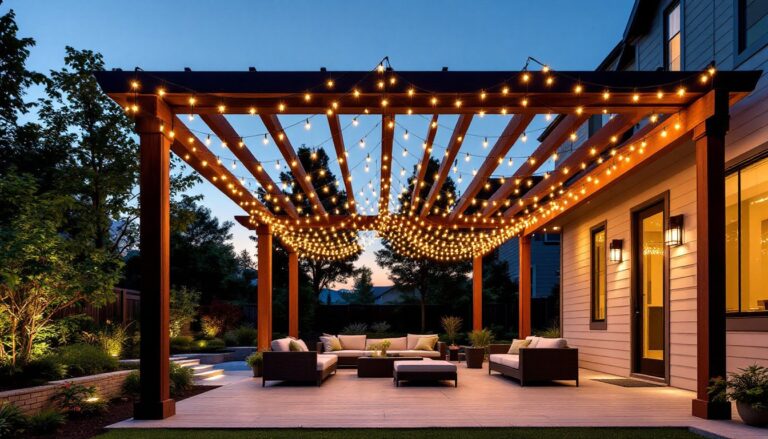
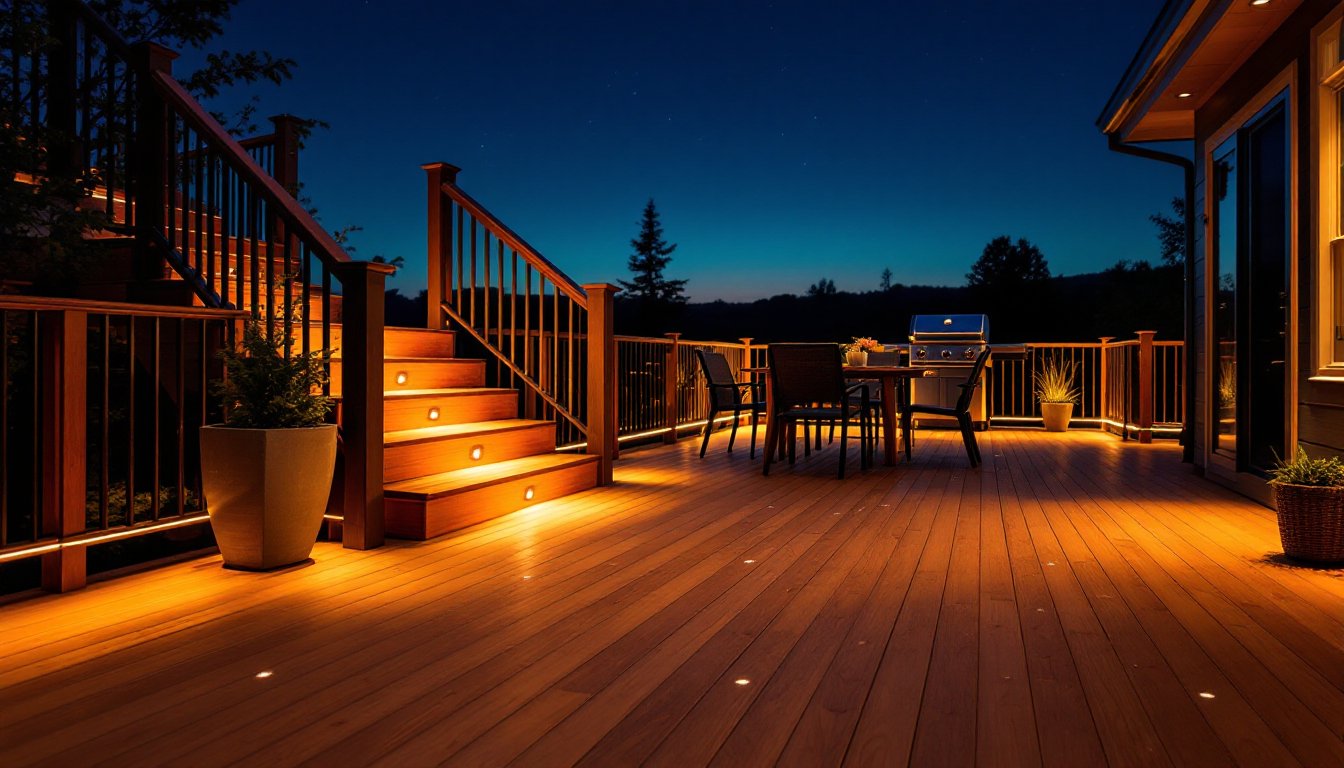
Adding lighting to a deck floor isn’t just about visibility, it’s about creating usable outdoor space after dark. Floor-level illumination reduces trip hazards, highlights architectural features, and extends the hours a family can enjoy their deck. Whether someone’s hosting evening gatherings or simply wants safe passage to the grill, strategically placed lights turn a functional structure into an inviting retreat. This guide walks through the types, planning, and installation basics for deck floor lighting that actually works.
Table of Contents
ToggleKey Takeaways
- Deck floor lighting improves safety by illuminating stairs and transitions, reduces trip hazards, and extends your deck’s usability into evening hours.
- Recessed deck lights, strip lights, and rope lights each serve different purposes—recessed fixtures work best for accent lighting on risers, while strips excel at perimeter definition and ambient glow.
- A successful deck floor lighting layout requires three zones: safety zones (stairs with fixtures 4 feet apart), task zones (grills and dining areas), and ambient zones (perimeters with low-output fixtures).
- Low-voltage LED systems offer the best balance of safety, brightness, and energy efficiency for professional-grade deck floor lighting installations.
- Always mount transformers in dry, ventilated locations with GFCI protection, run wiring through joist bays with insulated staples, and test your entire system before securing final trim pieces.
- Solar-powered fixtures work well for decorative accents but can’t reliably meet building code requirements for stair safety lighting due to battery limitations.
Why Install Deck Floor Lighting?
Deck floor lighting addresses three main concerns: safety, aesthetics, and functionality. From a safety perspective, illuminated steps and transitions prevent falls, particularly important when wet conditions or alcohol are involved. Many jurisdictions’ building codes now recommend (though don’t always mandate) lighting for stairs and elevation changes exceeding a certain height.
Aesthetically, floor lighting creates depth and dimension. Recessed fixtures wash light across decking boards, emphasizing grain patterns and creating visual layers. Strip lights along perimeter joists can define boundaries and make a deck feel larger. The effect is subtle during daylight but transforms the space once the sun sets.
Functionally, floor lighting extends usability. A well-lit deck becomes an outdoor dining room, assignments station, or reading nook after dark. Unlike overhead fixtures that attract insects and cast harsh shadows, floor-level illumination provides ambient light without glare. For homeowners investing in outdoor living upgrades, lighting is the finishing touch that turns a structure into a living space.
It’s worth noting that deck lighting also adds property value. Buyers increasingly expect outdoor living features, and a professionally lit deck signals attention to detail. Even basic installations pay dividends in curb appeal and nighttime security.
Types of Deck Floor Lighting to Consider
Recessed Deck Lights
Recessed fixtures mount flush with the deck surface or within riser boards on stairs. They’re the most discreet option and handle foot traffic well. Most recessed lights are low-voltage LED, running on 12V or 24V systems that require a transformer.
When selecting recessed lights, pay attention to ingress protection (IP) ratings. An IP65 or higher rating ensures resistance to rain and hosing. Housing diameter typically ranges from 1¼ to 2 inches: verify the fixture fits within joist spacing (usually 16 inches on center for residential decks).
Installation requires cutting holes in decking or risers, so it’s easiest to incorporate during new construction. Retrofitting is possible but demands precision drilling and access to wiring channels. Most fixtures come with mounting brackets that secure to joists or blocking. Make sure to install blocking between joists if the decking spans don’t align with light placement.
Recessed lights work well along stair risers, at transitions between deck levels, and around perimeters. They’re less effective for general illumination, think accent lighting rather than floodlights. For broader coverage, similar to home lighting strategies indoors, spacing fixtures 3 to 4 feet apart creates even ambiance.
Strip and Rope Lights
LED strip lights and rope lights offer flexibility for custom layouts. Strips consist of individual LEDs on a flexible circuit board, while rope lights encase LEDs in a flexible plastic tube. Both attach to joist undersides, rim boards, or perimeter fascia.
Strip lights provide brighter, more directional output than rope lights. They’re ideal for task lighting near cooking areas or highlighting specific features. Rope lights deliver softer, diffused illumination better suited for ambient applications.
Most strip and rope lights come in 16-foot or 32-foot reels with adhesive backing or mounting clips. Cut points (usually every 2 to 6 inches) allow customization to deck dimensions. Silicone-coated or IP-rated versions withstand moisture and UV exposure better than bare strips.
Installation is straightforward: clean the mounting surface, peel the adhesive backing, and press into place. For permanent installations, supplement adhesive with aluminum channels or mounting clips every 12 inches. Run wiring through joist bays or conduit to protect connections from the elements.
Strips and rope lights excel at perimeter definition and under-railing glow. They’re less suitable for stair lighting unless paired with recessed fixtures on risers. One advantage: they’re easy to remove and reconfigure if the deck layout changes.
Planning Your Deck Floor Lighting Layout
Start by sketching the deck footprint on graph paper, noting stairs, posts, railings, and furniture placement. Identify three lighting zones: safety zones (stairs, transitions, gates), task zones (grills, dining areas, seating), and ambient zones (perimeters, landscaping edges).
Safety zones require the brightest output. Code-compliant stair lighting typically means one fixture per riser or a continuous strip along the stringer. Calculate the number of fixtures by counting risers and adding one for the top landing. Space fixtures no more than 4 feet apart horizontally to avoid dark patches.
Task zones benefit from adjustable or dimmable fixtures. A 400-lumen output per fixture suffices for food prep areas: less for conversational seating. Avoid placing lights where they’ll shine directly into seated guests’ eyes. When integrating task lighting, a lighting layout tool helps visualize fixture placement and beam angles.
Ambient zones set the mood. Low-output fixtures (50 to 150 lumens each) spaced 6 to 8 feet apart create soft perimeter definition. Consider warm white LEDs (2700K to 3000K) for a cozy feel: cooler temperatures read as clinical outdoors.
Map the wiring path next. Low-voltage systems allow longer wire runs but suffer from voltage drop beyond 50 to 100 feet (depending on gauge). Plan the transformer location near an outdoor-rated GFCI outlet, ideally central to the lighting zones. Use 12-gauge or 14-gauge wire for main runs: lighter gauge suffices for short fixture leads.
If the deck lacks accessible joist bays for wiring, surface-mount conduit or wire channels may be necessary. This affects aesthetics, so route them where they’re least visible, under railings, behind fascia, or within planter boxes.
Installation Tips for DIY Deck Floor Lighting
Before drilling or cutting, confirm the decking material. Composite decking requires special hole saws to prevent chipping: wood decking tolerates standard bits but benefits from a countersink to prevent splintering. Always drill pilot holes and work from the finished side to minimize tearout.
For recessed fixtures, measure twice. Mark hole centers with a punch, then check underneath for obstructions, plumbing, electrical, or structural members. Use a spade bit or hole saw sized to the fixture housing, not the trim ring. Test-fit before running wiring.
Wiring for low-voltage systems is forgiving but still demands care. Strip wire ends cleanly with a wire stripper (not a knife), and use waterproof wire connectors or heat-shrink butt splices. Avoid twisted wire nuts outdoors, they trap moisture and corrode.
Run wiring through joist bays where possible. Staple cables to joists every 16 inches using insulated staples: standard staples can nick insulation. Leave 6 to 8 inches of slack at each fixture for servicing. Label wire runs at the transformer if multiple zones exist.
Transformer placement matters. Mount it in a dry, ventilated location, under a deck is acceptable if protected from standing water. Transformers generate heat, so allow 6 inches of clearance on all sides. Plug into a GFCI-protected outlet: if one doesn’t exist, hire an electrician. Installing a new outdoor outlet involves running 12/2 NM cable through walls and requires a permit in most areas.
For solar fixtures, placement trumps wiring. Solar panels need 4 to 6 hours of direct sunlight daily: shaded decks perform poorly with solar. Many outdoor lighting installations combine wired fixtures in high-use areas with solar accents in peripheral zones.
Test the system before securing trim rings or covers. Walk the deck at night to assess brightness and spacing. Adjust fixture angles or add/remove units as needed. Once satisfied, seal fixture housings with clear silicone caulk where they meet decking, capillary action can wick water into screw holes otherwise.
Choosing the Right Power Source: Solar vs. Low-Voltage vs. LED
Solar-powered fixtures appeal to DIYers avoiding wiring. Each unit contains a photovoltaic panel, rechargeable battery, and LED. They’re autonomous but limited by battery capacity and sunlight availability. Expect 4 to 8 hours of runtime per charge: output dims as the battery drains. Solar works for accent lighting and low-traffic areas but struggles to meet code requirements for stair safety lighting.
Installation is trivial: stake or screw the fixture in place, ensuring the panel faces south (in the Northern Hemisphere). No tools beyond a screwdriver. Maintenance involves cleaning panels seasonally and replacing batteries every 2 to 3 years.
Low-voltage LED systems (12V or 24V) dominate professional installations. They balance safety, brightness, and energy efficiency. A typical system includes a plug-in transformer (50W to 300W capacity), outdoor-rated cable, and fixtures rated for the system voltage.
Low-voltage systems require wiring but pose minimal shock risk. Transformers step down 120V household current to safe levels: even accidental contact with bare wires is unlikely to cause injury (though it’s still poor practice). This makes them suitable for DIY installation, though running new 120V circuits to power the transformer is a job for a licensed electrician.
Brightness and consistency are advantages. Low-voltage LEDs maintain output as long as voltage remains stable. Budget 3 to 5 watts per fixture for recessed lights, 10 to 20 watts for strips. Total wattage determines transformer size: add 20% overhead to prevent overload.
Line-voltage LED fixtures (120V) are less common for deck floors. They’re brighter and support longer wire runs without voltage drop, but installation must meet National Electrical Code (NEC) Article 410 requirements. This typically means rigid conduit, junction boxes, and permits, beyond most DIYers’ comfort level.
When comparing options, consider long-term costs. Solar fixtures have higher upfront costs per lumen but zero operating expense. Low-voltage systems cost more to install but deliver reliable performance. A 100W low-voltage system running 4 hours nightly costs roughly $15 annually at average electricity rates. Many homeowners blend approaches: low-voltage for primary lighting, solar for decorative accents that enhance ambiance without critical function.
LED technology is standard across all power sources. Avoid older halogen or incandescent deck lights, they run hot, consume excessive energy, and require frequent bulb replacement. Quality LEDs last 25,000 to 50,000 hours and tolerate temperature extremes. When selecting, emphasize designs that take inspiration from floor and decor principles where aesthetics and function meet.