Wall outdoor lights are one of the most practical and transformative upgrades a homeowner can make. They illuminate entry points for safety, boost curb appeal after dark, and frame architectural details that deserve attention. Whether you’re installing motion-sensitive outdoor lights by a garage, adding ambient sconces by a patio entrance, or choosing motion activated outdoor light fixtures for security, the right wall-mounted lighting changes how your home looks and functions when the sun sets. This guide walks you through the types, brightness levels, installation steps, and maintenance needed to get professional results without hiring an electrician.
Table of Contents
ToggleKey Takeaways
- Wall outdoor lights enhance both security and curb appeal by illuminating entry points, framing architectural details, and transforming your home’s exterior after dark.
- Choose the right lumen output and color temperature for each zone: 100–200 lumens for ambient sconces, 300–700 for motion-activated security fixtures, and warm 2700–3000K for residential entries.
- Layer your lighting by combining wall sconces, uplights, and floodlights to eliminate shadows and create visual interest—avoid relying on a single fixture to light your entire entry.
- All outdoor wall lights must meet National Electrical Code requirements with damp or wet-location ratings, GFCI protection, and outdoor-rated electrical boxes sealed against water intrusion.
- LED outdoor lighting fixtures dramatically reduce maintenance costs through longer lifespan (15,000–50,000 hours), minimal heat output, and less frequent relamping compared to incandescent bulbs.
- Inspect seals, gaskets, and fasteners twice yearly and replace damaged caulk immediately—water intrusion is the primary threat to fixture durability and electrical safety.
Types Of Wall Outdoor Lights
Sconces And Uplighting Fixtures
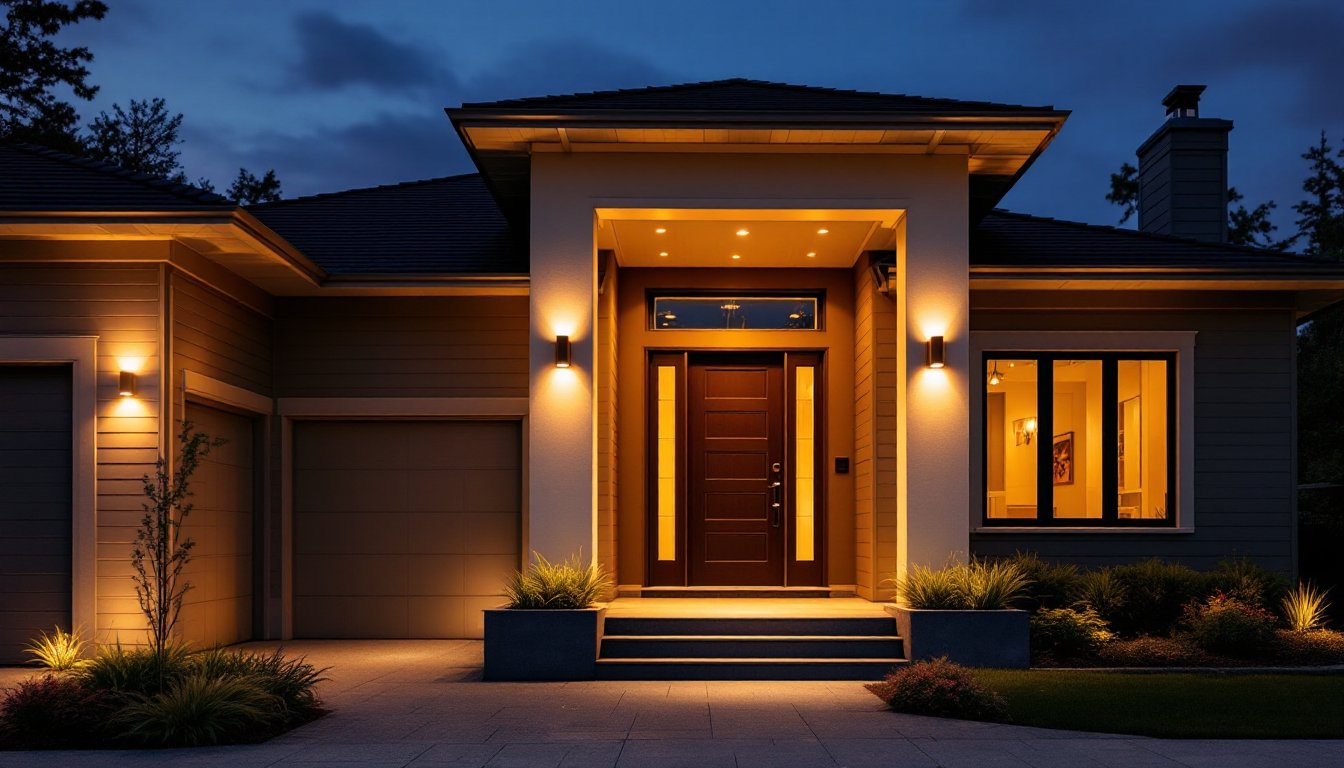
Wall sconces are the workhorse of outdoor lighting. These are any wall-mounted decorative fixtures that sit beside doors, porches, patios, or over entry steps. A sconce typically mounts 66–72 inches above finished grade and spreads light in a controlled, ambient pattern. The style options, traditional lanterns, contemporary cylinders, barn lights, gooseneck fixtures, and craftsman designs, let you match your home’s architecture.
Uplighting fixtures take sconces a step further by casting light upward or both up and down the wall. This technique highlights columns, siding textures, and facade details, creating visual drama and depth after dark. Uplights draw the eye vertically, making a facade appear taller and more intentional. Unlike downward-facing lights alone, up-down sconces create a balanced, layered look that professional landscape designers rely on.
Wall lanterns, mounted flush or on short arms beside doors and garages, provide both ambient light and decorative appeal. They’re proportionate to door width, a standard entry door (36 inches) pairs well with a 10–14 inch lantern. These fixtures work in traditional, cottage, and contemporary styles depending on material and finish.
Flood And Spotlight Options
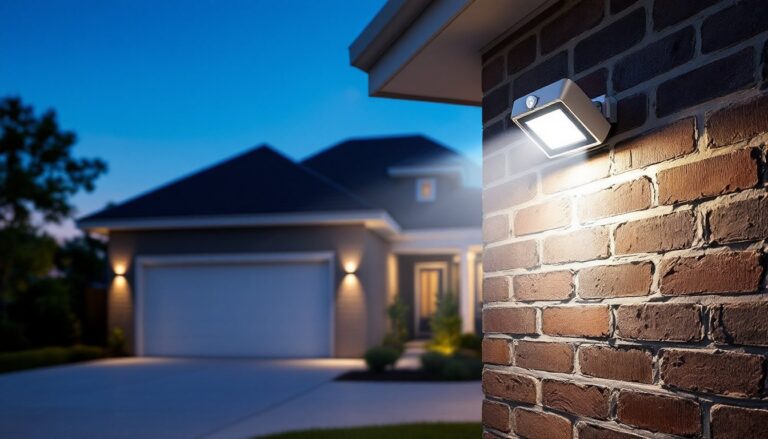
Floodlights deliver high-output, wide-beam illumination across driveways, yards, and security zones. Most residential flood fixtures range from 700–1300 lumens, depending on coverage area. Motion activated outdoor light models with built-in sensors detect movement within 30–40 feet and trigger full brightness instantly, making them ideal for entries and parking areas. Choose damp or wet-rated fixtures to withstand weather exposure.
Spotlights cast a narrower beam to accent specific features, a specimen tree, decorative shrub, or landscape signage. Wall-mounted spotlights work well when combined with a layered lighting plan that includes sconces and uplights. Many motion sensitive outdoor lights blend floodlight brightness with spotlight focus, adjusting beam width for the space. For example, a motion sensor floodlight over a garage bay might be 1100+ lumens on a 60-degree beam, while an accent uplighter across a garden bed runs 200–400 lumens on a 15-degree beam.
Choosing The Right Brightness And Color Temperature
Lumens (light output) and Kelvin temperature (color tone) are the two numbers that make or break a lighting install. Get them wrong, and your entryway feels harsh or underlit.
Lumen output depends on the fixture’s job. Accent and ambient wall lights, sconces framing a porch, typically need 100–200 lumens. They’re meant to look inviting, not blast the space with industrial brightness. Motion-activated fixtures covering a driveway or entry require 300–700 lumens to detect movement and light the area safely. High-output floodlights for security across a larger yard reach 700–1300 lumens depending on the distance and area size.
A common mistake is oversizing lumens. A 1000-lumen sconce next to your front door won’t feel welcoming: it’ll feel like a gas station pump. Start with the fixture type and intended mood, then choose lumens to match.
Color temperature (measured in Kelvin) sets the mood. Warm light (2700–3000K) has a golden, cozy tone, perfect for residential entries, patios, and gathering areas. It doesn’t wash out skin tones and signals “home.” Neutral light (3000–4000K) is versatile for general outdoor areas, decks, and mixed-use zones. Cool light (4000–5000K) skews blue-white and works for task lighting, security areas, and commercial-style spaces.
For outdoor home lighting around entries and living areas, stick with 2700–3000K. For driveways and security, 3000–4000K works. Outdoor LED lighting fixtures let you dial in color temperature precisely, and many support adjustable or dimmable models if you want flexibility for different moods.
Installation Tips For Maximum Impact
Proper installation starts with the right fixture rating and code compliance. All outdoor wall lights must be rated for damp or wet locations per the National Electrical Code (NEC). Damp-rated fixtures (listed as “Damp Location”) suit covered patios and soffits. Wet-rated fixtures (“Wet Location”) handle direct rain and coastal spray. If you’re unsure, go wet-rated, it covers more scenarios.
Mount entry sconces proportionate to the door. Standard practice is 66–72 inches from finished grade to the center of the fixture, flanking the door 2–3 feet to each side if installing a pair. Barn lights and gooseneck fixtures typically mount higher, around 8–10 feet, over garage bays or deep overhangs. Always consult the fixture’s installation instructions: spacing and height recommendations vary by design.
Layered lighting is key to professional results. Don’t rely on a single wall light to cover your entire entry or yard. Combine wall sconces with pendant lights, post lights, and landscape uplights. This variety eliminates dark shadows and creates visual interest. For example, pair sconces beside the front door with outdoor sconce lighting fixtures that frame the entryway, add a soffit downlight to wash the door itself, and use landscape lighting ideas to light nearby plantings.
Electrical work requires care. Outdoor circuits must use GFCI (ground fault circuit interrupter) protection, a circuit breaker or outlet that cuts power instantly if it detects a ground fault. Mount fixtures in outdoor-rated electrical boxes with gaskets and caulk to seal against water intrusion. If running new circuits or adding fixtures to existing lines, consult local code or hire a licensed electrician. Permits vary by jurisdiction: some areas require permits for any outdoor lighting work, others only for new circuits. Check before you start.
For outdoor LED lighting fixtures, use exterior-rated wire and junction boxes. LED fixtures draw minimal current, so adding a few sconces to an existing circuit is often feasible, but verify your circuit load and local code first.
Maintenance And Durability Considerations
A $60 fixture that fails in two years is cheaper than a $200 fixture that lasts ten, but only if you factor in replacement labor and frustration. Durability starts with material choices. Corrosion-resistant metals (powder-coated aluminum, stainless steel, marine-grade brass) withstand moisture, salt spray, and UV exposure far better than raw steel or unfinished finishes. If you live near the coast or in a wet climate, choose materials explicitly rated for harsh environments.
LED lamps and fixtures reduce relamping frequency and heat output. Incandescent and halogen bulbs in outdoor fixtures need replacement every 1–2 years in heavy-use applications: LEDs last 15,000–50,000 hours (15+ years in residential settings). The upfront cost is higher, but total cost of ownership drops dramatically. Plus, LEDs run cooler and safer, especially in covered spaces where heat buildup matters.
Seal and inspect regularly. Check fixture gaskets, caulking around the mounting area, and fastener tightness twice yearly, before the rainy season and again in spring. If you notice water inside a fixture’s lens, tighten the bezel nut (the ring holding the lens in place) or reseal with exterior-grade silicone caulk. Corrosion on fasteners signals moisture intrusion: swap corroded bolts for stainless steel alternatives.
Clean lenses and housings annually or as needed. Salt spray, pollen, and dust dull optical output and can trap moisture. Use a soft brush or cloth and mild soap: avoid abrasive cleaners on plastic lenses. For brass fixtures, a light polish (like brass landscape lighting) maintains appearance and extends finish life. Consider motion sensitive outdoor lights with sealed LED modules (no removable bulbs or exposed circuitry) for maximum weather resistance.
Replace damaged caulk and gaskets as soon as you spot gaps. Water is your fixture’s enemy, and a failed seal leads to corrosion and electrical hazards. A 15-minute refresh now prevents a costly replacement later.
Conclusion
Wall outdoor lights transform your home’s exterior from dark and unwelcoming to safe, secure, and stunning. Choosing the right fixture type, sconces, uplights, floodlights, or a mix, combined with proper lumen and color temperature levels, code-compliant installation, and durable, exterior-rated materials gives you reliable performance for years. Start with a clear plan: identify entry points, security zones, and architectural features worth highlighting. Layer your fixtures, seal against weather, and maintain seals and finishes annually. Done right, your outdoor lighting system becomes invisible infrastructure that simply works, every night, while making your home look intentional and inviting.