
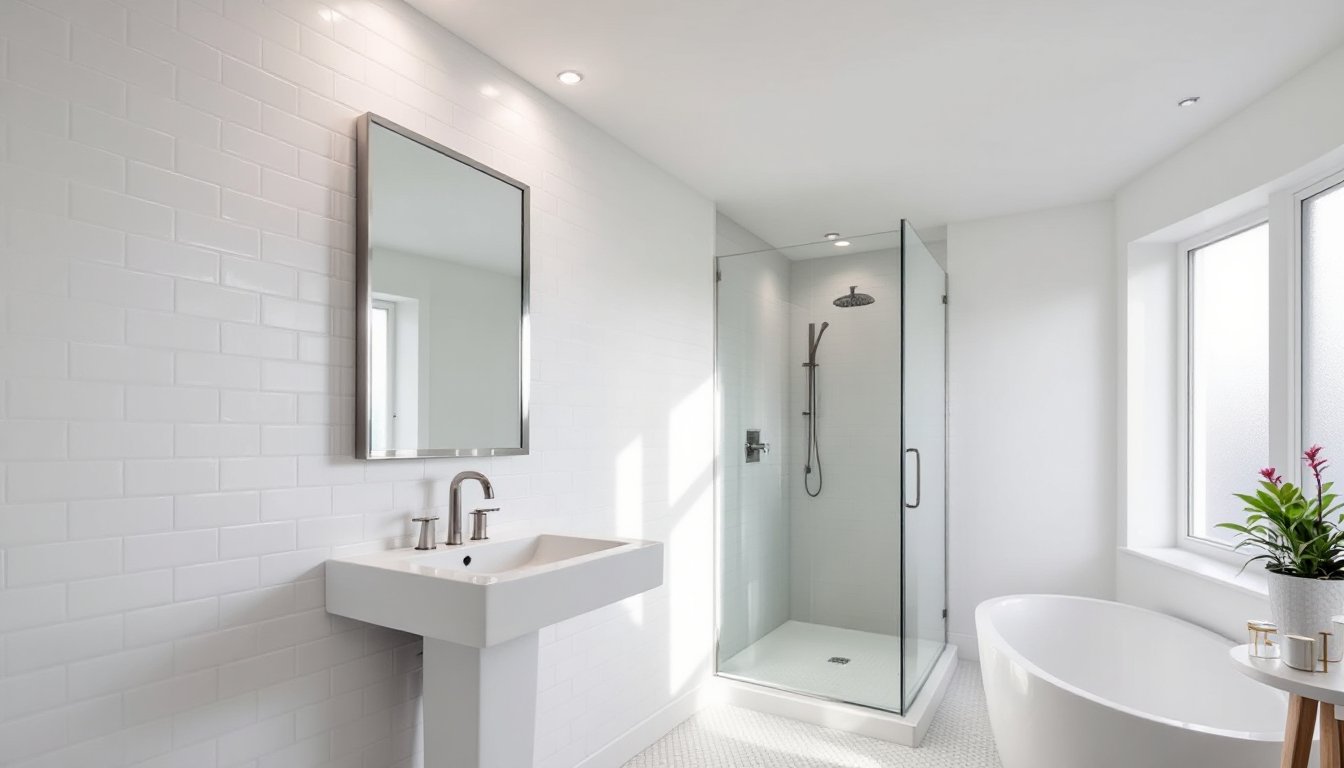
Good bathroom lighting isn’t just about avoiding a stubbed toe at 2 a.m., it’s about layering function, safety, and visibility into one of the busiest rooms in your home. Overhead lighting serves as the foundation of that system, providing general illumination for everything from morning routines to late-night cleanups. But walk into any big-box store’s lighting aisle and you’ll face a wall of options: flush mounts, recessed cans, color temperatures, lumens, IP ratings. Which fixture fits your space? What brightness won’t turn your bathroom into an interrogation room? And can you install it yourself without hiring an electrician? This guide breaks down the essentials, from fixture types to installation tips, so you can make a confident choice and get the job done right.
Table of Contents
ToggleKey Takeaways
- Bathroom overhead lighting serves as the foundation for safe, even illumination and must carry UL damp or wet-location ratings to prevent corrosion and fixture failure in moist environments.
- Choose between flush-mount and recessed lighting based on ceiling height and installation access—flush mounts work best for ceilings under 8 feet, while recessed lights suit modern aesthetics and require accessible attic space or remodel housings.
- Aim for 50 to 75 lumens per square foot with a color temperature of 3500K to 4100K neutral white for accurate task lighting and realistic color rendering without harsh, clinical effects.
- LED bulbs with a CRI of 90 or higher and dimmable compatibility provide flexible, long-lasting overhead lighting solutions that pair well with vanity and accent lighting layers.
- Always verify power is off before installation, use appropriate wire gauges and NEC-compliant cable routing, and check local building codes for permits before adding new circuits or working in wet-rated shower zones.
Why Overhead Lighting Matters in Your Bathroom
Overhead lighting does the heavy lifting in a bathroom. It illuminates the entire space evenly, reducing shadows that can make tasks like shaving or applying makeup difficult. Unlike vanity lights that focus on the mirror zone, overhead fixtures cast broad, ambient light across floors, shower enclosures, and toilet areas, critical for safety on wet tile.
Bathrooms also demand fixtures rated for moisture. The National Electrical Code (NEC) requires that lights installed within certain zones near showers and tubs carry a UL damp or wet location rating. Overhead fixtures in enclosed shower ceilings need wet-rated housings: those outside the direct spray zone typically need damp ratings. Ignoring these ratings can lead to corrosion, shorts, or fixture failure.
Proper overhead lighting also affects perceived room size. A well-lit ceiling makes low ceilings feel taller and small bathrooms feel more open. Pair it with task lighting at the vanity and accent lighting in niches, and you’ve got a layered system that handles every need without relying on a single, overworked fixture.
Types of Bathroom Overhead Lighting Fixtures
Choosing the right fixture type depends on ceiling height, existing wiring, moisture exposure, and the look you want. The two most common categories for bathroom overhead lighting are surface-mounted fixtures and recessed lights. Each has trade-offs in installation complexity, light distribution, and code compliance.
Flush Mount and Semi-Flush Mount Ceiling Lights
Flush mount fixtures sit directly against the ceiling with no visible gap. They’re ideal for bathrooms with ceilings under 8 feet, where a hanging fixture would feel cramped or create a head-knock hazard. Most flush mounts use a circular or square canopy that covers the electrical box, and the diffuser (glass or acrylic) spreads light evenly without glare.
Semi-flush mounts hang a few inches below the ceiling on a short stem or rod. They provide slightly more focused downlight and a bit of visual interest, making them a good fit for powder rooms or bathrooms with 8- to 9-foot ceilings. Both types are available in damp- and wet-rated versions, check the fixture’s UL listing before buying.
Installation is straightforward if you’re replacing an existing ceiling fixture. Turn off power at the breaker, remove the old fixture, and connect the new one to the existing hot, neutral, and ground wires using wire nuts. If your ceiling box is plastic and the new fixture is heavy (over 50 pounds, rare for bathroom fixtures), replace it with a metal box rated for the fixture’s weight. Most flush and semi-flush mounts weigh under 10 pounds and work fine with standard round or octagonal boxes.
One downside: surface-mounted fixtures can cast shadows if placed too far from the vanity. Combine them with dedicated vanity lights for balanced task lighting.
Recessed Lighting and Downlights
Recessed lights (also called can lights or downlights) install flush with the ceiling plane, making them nearly invisible. They’re popular in modern and minimalist bathrooms where a clean ceiling line is a priority. Standard recessed housings are 4, 5, or 6 inches in diameter: bathrooms typically use 4-inch or 5-inch cans for general lighting.
If your bathroom has an accessible attic or crawl space above, installing recessed lights is a manageable DIY project. You’ll cut holes in the drywall using a hole saw, fish wiring to each location, and secure IC-rated housings (Insulation Contact) if insulation is present. Non-IC cans must maintain a 3-inch clearance from insulation to prevent overheating. Always use housings rated for damp or wet locations depending on proximity to the shower.
For remodel work without attic access, use remodel housings with spring clips that grip the drywall from below. These are easier to install but slightly less secure than new-construction housings nailed to joists.
Recessed lights offer excellent adjustability. You can space multiple cans for even coverage or aim adjustable trims toward specific zones. But, they require more labor than swapping a surface fixture, and cutting into a finished ceiling demands accuracy, measure twice, cut once. A home lighting strategy that includes recessed options can dramatically improve both function and aesthetics in tight spaces.
Be aware: recessed lights can create dark spots if spaced too far apart. A general rule is to space cans about 4 to 6 feet apart for 4- to 6-inch housings. In a small bathroom, two or three cans usually suffice.
Choosing the Right Brightness and Color Temperature
Lumens measure light output: watts measure energy use. For general bathroom overhead lighting, aim for 50 to 75 lumens per square foot. A 50-square-foot bathroom (e.g., 5′ × 10′) needs 2,500 to 3,750 total lumens. If using a single flush mount, look for a fixture with an integrated LED array or sockets that accept bulbs totaling that range. For recessed lights, divide the total by the number of cans, three 5-inch recessed lights might each use a 900- to 1,250-lumen bulb.
Don’t confuse brightness with harshness. High lumens with the wrong color temperature can make a bathroom feel clinical. Color temperature is measured in Kelvin (K):
- 2700K to 3000K (warm white): Soft, yellowish light similar to incandescent bulbs. Comfortable but can distort makeup colors.
- 3500K to 4100K (neutral white): Balanced light that renders skin tones accurately without feeling cold. A safe choice for most bathrooms.
- 5000K to 6500K (daylight/cool white): Crisp, blue-toned light. Excellent for detail work but can feel sterile in smaller spaces.
For general overhead use, 3500K to 4000K hits the sweet spot. If you’re installing both overhead and vanity lights, match color temperatures to avoid a jarring contrast. Dimmers add flexibility, letting you dial down brightness for evening baths or ramp up for morning grooming.
CRI (Color Rendering Index) matters too. A bulb with a CRI of 90 or higher reveals true colors, which is critical for applying makeup or matching clothing. Most quality LED bulbs list CRI on the packaging, don’t settle for anything below 80.
LED bulbs dominate the market for good reason: they last 15,000 to 50,000 hours, produce minimal heat, and work in damp-rated fixtures. Many modern bathroom fixtures come with integrated LEDs. These aren’t user-replaceable, but they often outlast the fixture’s style relevance. If you prefer swappable bulbs, choose fixtures with standard E26 (medium base) sockets.
Installation Tips for DIY Bathroom Lighting Projects
Before touching any wiring, turn off the circuit breaker and use a non-contact voltage tester to confirm power is off. Bathrooms often share circuits with other rooms, so verify the correct breaker by testing the light switch.
If you’re replacing an existing fixture, removal is usually straightforward: unscrew the canopy or trim, disconnect wire nuts, and detach the mounting bracket from the electrical box. Wear safety glasses, old fixtures can shed dust and debris.
When connecting a new fixture, match wire colors: black (hot) to black, white (neutral) to white, and bare copper or green (ground) to the ground screw or wire. Twist wires clockwise, secure with wire nuts, and tug gently to confirm connections. Tuck wires neatly into the box to prevent pinching when you mount the fixture.
For recessed lights, cut holes precisely using a hole saw sized to the housing’s template. Mark joist locations with a stud finder to avoid cutting into framing. Run 14/2 or 12/2 NM-B (Romex) cable from the switch box to each can, depending on whether the circuit is 15-amp or 20-amp. Strip sheathing carefully with a utility knife, leaving about 1/4 inch of sheathing visible inside each junction box. Secure cable with staples within 8 inches of each box and every 4.5 feet along the run, per NEC requirements.
If your project involves adding new circuits, running cable through walls, or working in wet-rated shower zones, check local building codes. Many jurisdictions require permits for new electrical circuits, and some mandate licensed electrician involvement. For guidance on broader remodeling considerations, resources like Bob Vila offer project breakdowns and contractor recommendations.
Dimmer installation is another common upgrade. Not all LED fixtures are dimmable, so verify compatibility before buying a dimmer switch. ELV (electronic low-voltage) or LED-specific dimmers prevent flickering and buzzing. Swap the existing switch by turning off power, removing the old switch, and connecting the dimmer’s leads to the circuit’s hot wires. Most dimmers have short pigtail wires, use wire nuts to join them to the circuit wires.
Always restore power and test the fixture before sealing up drywall or applying finish trim. If the light doesn’t turn on, recheck connections and confirm the bulb is seated properly.
Conclusion
Overhead lighting anchors a functional, safe bathroom. Whether you choose a sleek flush mount or a grid of recessed cans, prioritize moisture ratings, appropriate brightness, and correct installation techniques. Match lumens to room size, pick a color temperature that supports your tasks, and don’t skip the dimmer if you want flexibility. With the right fixture and a bit of careful wiring work, you’ll transform a dim, outdated bathroom into a well-lit space that handles every morning rush and late-night routine with ease.