If you’re looking to upgrade your home’s lighting game, 8 inch LED recessed lights deliver the kind of clean, powerful illumination that can transform a dim room into a bright, welcoming space. These larger fixtures pack serious output while maintaining the sleek, flush-mount profile that makes recessed lighting so popular. Whether you’re remodeling a kitchen, finishing a basement, or updating a living room, understanding how to select and install 8 inch LED cans will save you headaches and deliver professional-looking results. This guide walks through everything from fixture selection to installation tips, so you can light up your space with confidence.
Table of Contents
ToggleKey Takeaways
- 8 inch LED recessed lights consume 75% less energy than incandescent bulbs while lasting 25,000 to 50,000 hours, significantly reducing maintenance and operating costs.
- Proper spacing for 8 inch recessed lighting should follow the rule of dividing ceiling height by two—for a 9-foot ceiling, space fixtures approximately 4.5 feet apart for even coverage.
- Always verify IC (Insulation Contact) and airtight ratings before installation; IC-rated housings are required in insulated ceilings per code, and non-IC fixtures must maintain a 3-inch clearance from insulation.
- Choose between warm white (2700K–3000K) for cozy spaces, neutral white (3500K–4000K) for kitchens and baths, or daylight (5000K–6500K) for task areas based on room function and desired ambiance.
- 8 inch LED recessed lighting works best in kitchens, living rooms, basements, and bathrooms with higher ceilings, but should be avoided in small bedrooms, closets, or low-ceiling spaces where they appear oversized.
- Never skip permits and electrical inspections for 8 inch recessed light installation, as inspectors verify safe wiring, proper grounding, and code compliance to prevent fire hazards and electrocution risks.
What Is 8 Inch LED Recessed Lighting?
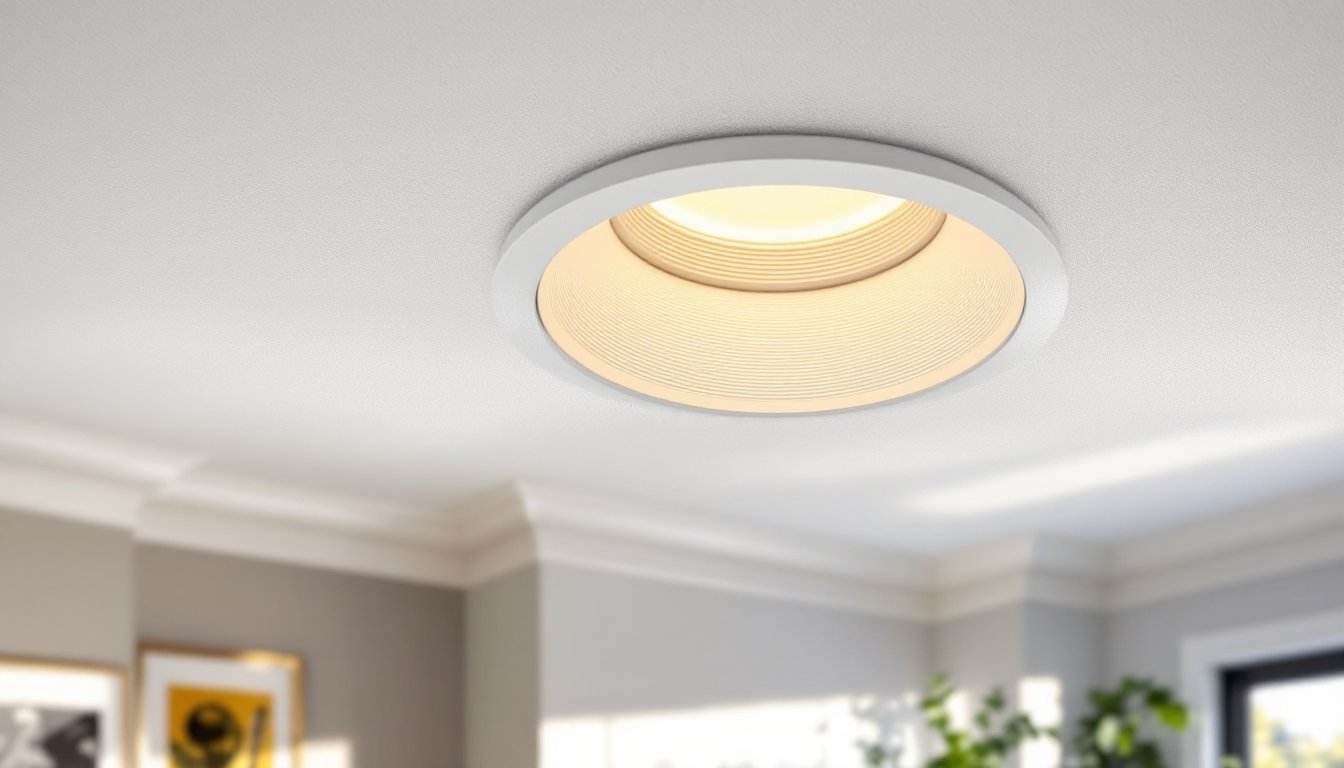
An 8 inch LED recessed light is a ceiling-mounted fixture with a housing diameter of approximately 8 inches (the actual opening is often closer to 7.5 inches to account for trim overlap). These fixtures sit inside the ceiling cavity, creating a flush, unobtrusive look that directs light downward without visible hardware hanging below the ceiling plane.
Unlike older incandescent or halogen recessed lights, LED recessed fixtures use light-emitting diodes that draw significantly less power, produce minimal heat, and last 25,000 to 50,000 hours or more. The 8 inch size is considered a larger format in the recessed lighting world, common sizes range from 4 to 6 inches, making it ideal for spaces that need broader light distribution or higher ceilings where smaller cans would look undersized.
Most 8 inch LED recessed lights come in two main configurations: new construction housings (installed before drywall goes up, with adjustable bars that span between joists) and remodel or retrofit housings (designed to fit into existing ceilings through a hole cut in the drywall, with spring clips or friction tabs to hold them in place). Some models use an integrated LED module built directly into the trim, while others have a separate housing and replaceable LED module or bulb.
Benefits of Choosing 8 Inch LED Recessed Lights
Switching to 8 inch LED recessed lights offers multiple advantages over older lighting technologies and smaller fixture sizes.
Energy Efficiency: A typical 8 inch LED recessed light consumes between 15 and 25 watts while producing light output equivalent to a 75- to 100-watt incandescent bulb. That translates to roughly 75% less energy consumption, which adds up over time, especially in homes with multiple fixtures running several hours a day.
Heat Reduction: LEDs generate far less heat than incandescent or halogen bulbs. This matters for fire safety, insulation contact ratings (look for IC-rated housings if insulation will touch the fixture), and comfort. You won’t feel a wave of heat when standing under an 8 inch LED can the way you would with an old-school recessed halogen.
Longevity: Quality LED lighting technology typically lasts 25,000 to 50,000 hours. At four hours of daily use, that’s roughly 17 to 34 years before you need to think about replacement. Compare that to the 1,000-hour lifespan of an incandescent bulb, and the maintenance savings become clear.
Light Quality and Control: Modern 8 inch LED recessed lights offer selectable color temperatures (measured in Kelvin), ranging from warm white (2700K–3000K) to daylight (5000K–6500K). Many models are also dimmable when paired with compatible LED dimmers, giving you full control over ambiance.
Broader Coverage: The 8 inch aperture provides a wider light spread than 4- or 6-inch fixtures, which means fewer fixtures are needed to achieve even illumination. This can simplify layout planning and reduce installation labor.
Where to Use 8 Inch Recessed Lighting in Your Home
The larger aperture and higher output of 8 inch LED recessed lights make them well-suited for specific applications throughout the home.
Kitchens: Use 8 inch cans for general ambient lighting in large kitchens, especially those with ceilings 9 feet or higher. Space fixtures approximately 4 to 5 feet apart for even coverage. Pair them with under-cabinet task lighting for optimal work surface illumination.
Living Rooms and Great Rooms: High ceilings and open floor plans benefit from 8 inch recessed lights. They provide ample downlight without the visual clutter of pendant fixtures or the space limitations of flush-mount ceiling lights. Consider installing them on dimmers to adjust brightness for different activities, movie watching, reading, or entertaining.
Basements: Finishing a basement often means working with lower ceilings and limited natural light. Eight-inch LED recessed lights deliver bright, even illumination that makes subterranean spaces feel more open. Retrofit housings work well here if you’re updating an already-finished basement.
Bathrooms: Larger bathrooms with separate tub or shower areas can use 8 inch recessed lights for general lighting. Make sure to select fixtures rated for damp or wet locations (UL-listed for damp/wet) depending on proximity to shower spray.
Hallways and Foyers: High-traffic transitional spaces with taller ceilings benefit from the broader light spread of 8 inch fixtures. Fewer fixtures mean less visual clutter overhead in narrow hallways.
Avoid using 8 inch recessed lights in small bedrooms, closets, or low-ceiling spaces where they’ll look oversized and provide excessive illumination. Standard 4- or 6-inch fixtures are better proportioned for those applications.
How to Choose the Right 8 Inch LED Recessed Lights
Selecting the right fixture involves more than picking a size. Here’s what to evaluate before you buy.
Housing Type: Determine whether you need new construction or remodel housings. New construction installs are easier and more secure but require access before drywall. Remodel housings work for existing ceilings but offer less flexibility in positioning, you’re limited by joist spacing and existing wiring.
IC Rating: If insulation will contact the fixture (common in attics or top-floor ceilings), choose an IC-rated (Insulation Contact) housing. Non-IC housings must maintain a 3-inch clearance from insulation to prevent overheating, even with cool-running LEDs. Many jurisdictions require IC-rated fixtures in insulated ceilings per the International Residential Code (IRC).
Airtight Housings: To meet modern energy codes and prevent conditioned air from leaking into unconditioned attic spaces, look for airtight-rated housings. These include gaskets and sealed construction that limit airflow. Some jurisdictions require airtight housings in climate zones 4 and higher.
Lumens and Wattage: Don’t just look at wattage, focus on lumens, which measure actual light output. For general ambient lighting, aim for 700 to 1,200 lumens per 8 inch fixture. Higher lumen output works for task-heavy areas: lower output suits accent or mood lighting.
Color Temperature: Choose based on room function and personal preference. Warm white (2700K–3000K) creates a cozy, inviting feel suitable for living rooms and bedrooms. Neutral white (3500K–4000K) balances warmth and clarity, ideal for kitchens and bathrooms. Daylight (5000K–6500K) offers crisp, cool light for workshops or task-focused spaces.
Dimmability: Verify that the fixture is dimmable if you plan to install it on a dimmer circuit. Not all LED fixtures dim smoothly: some flicker or buzz at low settings. Pair dimmable LEDs with a compatible LED-rated dimmer switch, standard incandescent dimmers often cause performance issues.
Trim Style: Trims come in several styles: baffle trim (ribbed interior that reduces glare), reflector trim (smooth, shiny surface that maximizes light output), and adjustable or gimbal trim (allows you to aim the light). Choose based on whether you need general ambient light or directional accent lighting.
Some manufacturers offer integrated retrofit kits that combine the LED module and trim in one unit, designed to screw into existing old-work housings. These are convenient for upgrading older recessed lights without replacing the entire housing.
Installation Tips for 8 Inch LED Recessed Lighting
Installing 8 inch LED recessed lights is a manageable DIY project if you’re comfortable working with electrical wiring and have the right tools. But, this work involves live electrical circuits and often requires a permit. Check with your local building department and follow National Electrical Code (NEC) requirements.
Safety First: Turn off power at the breaker panel before starting any electrical work. Use a non-contact voltage tester to confirm circuits are dead. Wear safety glasses and work gloves when cutting drywall or handling metal housings.
Layout Planning: Map your fixture locations before cutting any holes. A common spacing rule is to divide ceiling height by two to determine spacing between fixtures, so for a 9-foot ceiling, space fixtures about 4.5 feet apart. Keep fixtures at least 12 inches from walls to avoid harsh shadows and ensure even light distribution. Mark your layout with a pencil and tape measure, accounting for joist locations.
Cutting the Openings: For remodel installations, use the template provided with the housing (or trace the housing itself) to mark the hole. Cut carefully with a drywall saw or hole saw sized for 8 inch cans (typically 7.5 to 7.75 inches). Before cutting, check for obstructions, joists, electrical wiring, plumbing, or HVAC ducts. A stud finder with deep-scan capability helps here.
Running Cable: Most recessed lights are wired in series on a single circuit. Use 14/2 NM (Romex) cable for 15-amp circuits or 12/2 NM cable for 20-amp circuits. Run cable from the switch box to the first fixture, then from fixture to fixture. Leave about 18 inches of cable hanging through each hole for connections. Secure cable with staples within 8 inches of each box and every 4.5 feet along runs, per NEC requirements.
Wiring Connections: Most LED recessed lights have a junction box built into the housing. Strip cable sheathing and individual wire insulation carefully (about 1/2 inch of bare copper). Connect black (hot) to black, white (neutral) to white, and bare copper (ground) to the green ground screw or bare wire using wire nuts rated for the wire gauge. Tuck wires neatly into the junction box and secure the cover plate.
Mounting the Housing: For new construction, adjust the housing’s mounting bars to span between joists and nail or screw them in place. For remodel housings, slide the housing up through the ceiling opening and tighten the spring clips or mounting screws until the housing is flush and secure against the drywall.
Installing the Trim and Module: Most integrated LED trims push up into the housing and lock in place with spring clips or twist-lock mechanisms. Follow the manufacturer’s instructions, some trims require you to connect a plug inside the housing before snapping the trim in place.
Testing: Restore power at the breaker and test each fixture. If any lights flicker, buzz, or don’t illuminate, turn off power and recheck connections.
Inspection: If your project required a permit, schedule the final electrical inspection before closing up ceilings or walls. Inspectors verify proper wire sizing, grounding, box fill, and code compliance.
Common Mistakes to Avoid
Even experienced DIYers can run into trouble with recessed lighting installations. Here’s what to watch out for.
Ignoring IC and Airtight Ratings: Installing a non-IC housing where insulation contact is unavoidable creates a fire hazard and code violation. Similarly, skipping airtight housings in climate zones where they’re required will fail inspection and waste energy. Check your local codes and buy accordingly.
Poor Spacing and Layout: Placing fixtures too close together creates hot spots and wastes energy: spacing them too far apart leaves dark zones. Use the ceiling-height-divided-by-two rule as a starting point, and adjust based on room shape and function. Professional advice from home improvement experts can help with challenging layouts.
Overloading Circuits: Don’t add multiple 8 inch LED fixtures to an already crowded circuit. While LEDs draw minimal current, other loads on the same circuit (outlets, other lights) add up. A 15-amp circuit can safely handle about 1,440 watts of continuous load (80% of 1,800 watts). Even if your LEDs only draw 20 watts each, factor in everything else on that circuit.
Using the Wrong Dimmer: Standard rotary or slide dimmers designed for incandescent bulbs often cause LED fixtures to flicker, hum, or fail to dim smoothly. Install an LED-compatible dimmer rated for the total wattage of your fixtures. Some LEDs also have minimum load requirements, so check compatibility.
Cutting Holes Before Confirming Clear Space: Don’t assume ceiling cavities are clear. Always check for joists, wiring, ducts, and plumbing before cutting. Finding a joist in the middle of your planned hole means repositioning the fixture or reworking your layout, better to know before you cut.
Skipping Permits and Inspections: Electrical work typically requires a permit, and for good reason. Inspections catch unsafe wiring, improper grounding, and code violations that could cause fires or electrocution. DIY work done without permits can also complicate home sales and insurance claims.
Neglecting Attic Access: If you’re working on a top-floor ceiling, you’ll likely need attic access to run cable, position housings, and make connections. Plan for crawling around in insulation, wear long sleeves, gloves, a dust mask, and knee pads.
Conclusion
Eight-inch LED recessed lighting brings powerful, energy-efficient illumination to spaces that demand broad coverage and modern performance. By understanding housing types, light output, and installation best practices, homeowners can tackle these projects with confidence. Take the time to plan your layout, choose code-compliant fixtures, and follow safe wiring practices, you’ll end up with a lighting system that looks clean, performs reliably, and adds real value to your home.