
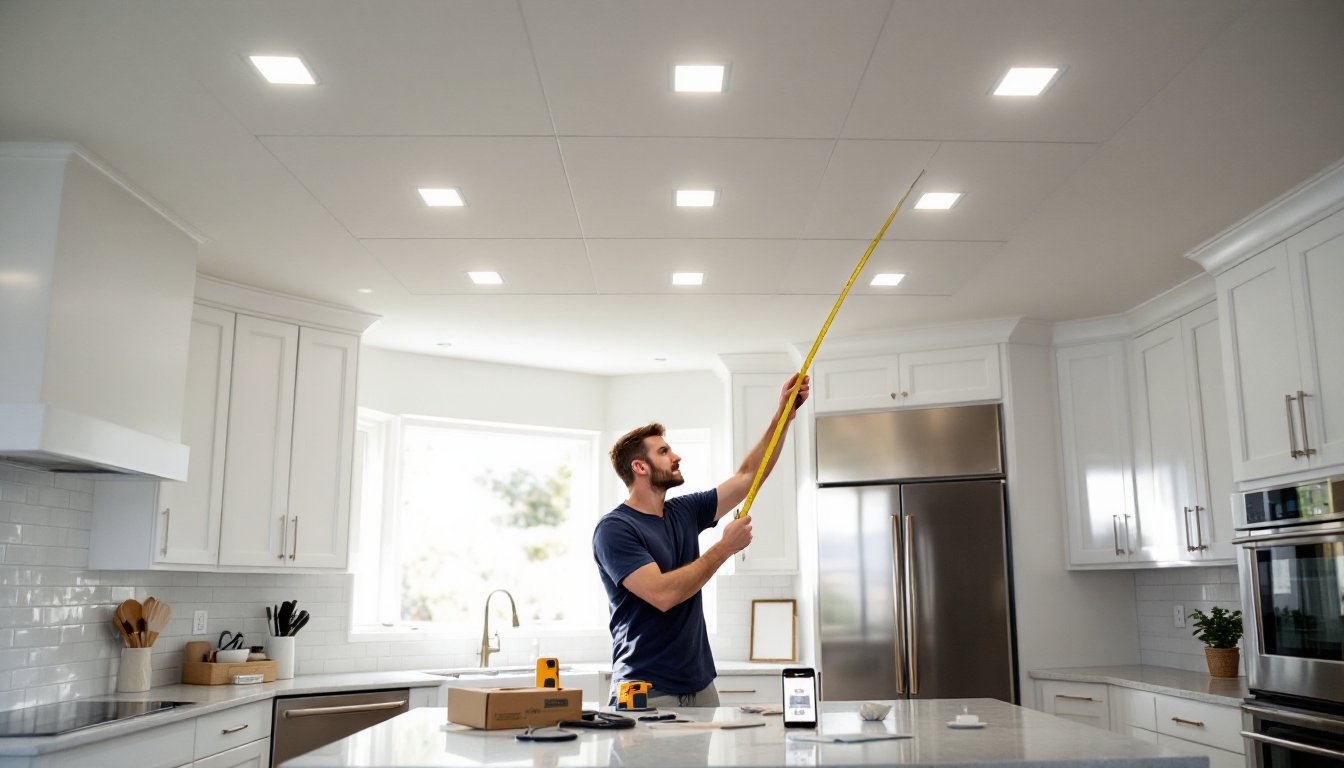
Square recessed lighting has become the go-to fixture for homeowners looking to blend clean, contemporary lines with functional overhead illumination. Unlike traditional round cans, square fixtures offer a sharper aesthetic that complements modern architecture and minimalist interiors. They’re also easier to align in grid patterns, making layout planning simpler for DIYers tackling their first ceiling project. Whether retrofitting an existing space or working with new construction, understanding the differences between square and round recessed lights, and knowing which rooms benefit most, saves time, money, and prevents common installation headaches.
Table of Contents
ToggleKey Takeaways
- Square recessed lighting offers a sharp, contemporary aesthetic that aligns with modern architecture and simplifies fixture spacing compared to traditional round cans.
- Choosing the right fixture type—LED integrated, retrofit kits, or shallow-depth housings—depends on your ceiling height, room function, and installation constraints.
- Proper placement matters: space square recessed lights 24–30 inches apart in kitchens, use symmetrical grids 4–6 feet apart in living areas, and install task lights centered over bathroom vanities.
- Select fixtures based on trim size (4-inch or 6-inch for standard 8-foot ceilings), color temperature (warm 2700K for bedrooms, neutral 3500–4000K for kitchens), and lumen output (50–75 lumens per square foot for ambient lighting).
- Always verify IC-rating and airtightness, locate joists before layout planning, test dimmer compatibility before drywall installation, and confirm permit requirements with your local building department.
What Is Square Recessed Lighting and Why Choose It?
Square recessed lighting (also called can lights or downlights) consists of a square housing installed into the ceiling cavity with a trim that sits flush against the drywall. The fixture itself mounts between joists, with the visible portion, the trim and lens, forming a clean, geometric opening.
The primary advantage is aesthetic alignment. Square trims line up visually with room corners, tile grout lines, cabinetry edges, and architectural features in ways round fixtures can’t match. In kitchens with subway tile backsplashes or offices with grid ceilings, square recessed lights reinforce the room’s geometry rather than fighting it.
Another practical benefit: easier spacing and layout. When installing multiple fixtures, square trims make it simpler to measure equal distances from walls and adjacent lights. You’re aligning parallel edges rather than estimating radial centers. This matters when installing six or eight fixtures in a single room, small alignment errors compound quickly with round cans.
From a construction standpoint, square housings fit the same junction box cutouts as round versions. Most use standard 4-inch or 6-inch nominal sizes, though actual trim dimensions vary slightly by manufacturer. If you’re retrofitting, new construction housings require attic or above-ceiling access, while remodel housings (with spring clips) install from below through a drywall cutout.
Types of Square Recessed Lights for Every Room
Not all square recessed lights serve the same purpose. Choosing the right type depends on ceiling height, room function, and whether you need directional control.
LED integrated fixtures come with non-replaceable LED arrays built into the housing. They’re the most energy-efficient option (typically 10-15 watts for 700-900 lumens) and last 50,000+ hours. The downside: when the LED fails, you replace the entire fixture. Best for general ambient lighting in living rooms, hallways, and bedrooms.
Retrofit kits convert existing round recessed cans to square trim without replacing the housing. You remove the old trim, attach the adapter plate to the existing socket, and snap the new square trim into place. This is the fastest DIY upgrade, no drywall cutting, no attic access. Just make sure your existing can is compatible (most standard 5-inch and 6-inch housings work).
Shallow-depth housings (sometimes called wafer lights or ultra-thin) measure 1 to 2 inches tall, making them ideal for ceilings with minimal clearance, drop ceilings, basement soffits, or floors with shallow joist cavities. They don’t require a traditional recessed housing: the entire fixture mounts flush against the drywall with junction box wiring.
Fixed vs. Adjustable Square Recessed Fixtures
Fixed square trims aim light straight down. They provide uniform, wide-angle illumination perfect for general overhead lighting in kitchens, dining rooms, and bathrooms. Fixed fixtures cost less and install faster since there’s no aiming mechanism to adjust.
Adjustable (gimbal) square trims pivot within the housing, letting you angle the beam 30 to 40 degrees off-axis. Use these for accent lighting, highlighting artwork, architectural features, or task zones like kitchen counters. They’re also useful near walls where straight-down fixtures create dark spots. The trade-off: slightly higher cost and a visible pivot ring inside the trim.
For rooms needing both ambient and task lighting, many homeowners mix fixed lights in the center grid with adjustable fixtures around the perimeter. This creates even base lighting with directional control where it matters.
Where to Install Square Recessed Lighting in Your Home
Kitchens benefit most from square recessed lights, especially when installed in rows parallel to cabinetry. Space fixtures 24 to 30 inches apart for task lighting over countertops, and keep them 18 to 24 inches from the wall to avoid shadows on upper cabinets. In kitchens with islands, center a row of three or four fixtures lengthwise over the work surface.
Bathrooms need focused task lighting near mirrors and general ambient light elsewhere. Install fixtures centered over the vanity (not behind the mirror, which creates shadows) and add one or two in the shower area if your building code allows (use wet-rated housings rated for direct water contact). Check local electrical codes, most require GFCI protection for all bathroom circuits.
Living rooms and bedrooms use square recessed lighting for ambient illumination and to reduce visual clutter from floor and table lamps. Install fixtures in a symmetrical grid pattern spaced 4 to 6 feet apart, depending on ceiling height and beam spread. For rooms with ceiling fans, coordinate fixture placement so lights don’t point directly into fan blades.
Hallways work well with a single row of square fixtures spaced 4 to 5 feet apart. Keep fixtures centered in narrow hallways (under 4 feet wide) or slightly offset in wider corridors to avoid a runway effect.
Sloped or vaulted ceilings require IC-rated sloped ceiling housings to maintain proper thermal clearance with insulation. Standard flat-ceiling housings on vaulted ceiling applications create heat buildup and fire risk. Adjustable fixtures help aim light downward rather than sideways up the slope.
How to Choose the Right Square Recessed Lighting
Start with trim size. Common sizes include 3-inch, 4-inch, and 6-inch (nominal dimensions: actual trim face is slightly larger). Smaller trims work for accent lighting and tight spaces, while 6-inch fixtures provide broader ambient coverage. For 8-foot ceilings, 4-inch or 6-inch trims are standard. Higher ceilings (10+ feet) may need 6-inch fixtures or higher lumen output to maintain adequate light levels.
Next, choose color temperature measured in Kelvin (K). Warm white (2700K-3000K) matches incandescent bulbs and feels cozy, ideal for bedrooms and living areas. Neutral white (3500K-4000K) suits kitchens and bathrooms where you need clear task visibility. Cool white (5000K+) mimics daylight and works in garages or workshops. Don’t mix color temps within the same room: the mismatch is immediately noticeable.
Lumen output determines brightness. For ambient lighting, aim for 50 to 75 lumens per square foot. A 120-square-foot room needs roughly 6,000 to 9,000 total lumens. If you’re installing six fixtures, each should deliver 1,000 to 1,500 lumens. Task areas like countertops need the higher end of that range.
Check the beam angle specification. Narrow beams (25-35 degrees) focus light in a tight cone, good for accent lighting. Wide beams (90-120 degrees) spread light evenly across a room, better for general illumination. Most fixed square trims use 90 to 110-degree beams.
Dimmer compatibility matters if you want adjustable brightness. Not all LED fixtures dim smoothly: some flicker or hum at low settings. Look for fixtures labeled “dimmable” and pair them with LED-compatible dimmers (standard incandescent dimmers often cause issues). Test the combination before finishing drywall, flickering problems are easier to fix during rough-in.
Finally, verify IC rating (Insulation Contact) and airtightness. IC-rated housings can touch ceiling insulation without overheating. Non-IC housings require a 3-inch clearance, which reduces energy efficiency. Airtight-rated fixtures (often marked AT) prevent conditioned air from escaping into the attic, a requirement in many energy codes. Builders working in regions with strict energy-efficient building standards prioritize AT-rated housings.
Installing Square Recessed Lighting: A Step-by-Step Guide
Safety first: Shut off power at the breaker panel before starting, and verify it’s off with a non-contact voltage tester. Wear safety glasses and a dust mask if cutting drywall.
Tools & Materials
- Measuring tape, pencil, and stud finder
- Drywall saw or hole saw sized to your fixture’s cutout template
- Wire strippers, wire nuts, and electrical tape
- Voltage tester
- Square recessed housings (new construction or remodel style)
- 14/2 or 12/2 NM cable (depending on circuit amperage)
Step-by-Step Installation
-
Plan the layout. Mark ceiling fixture locations with a pencil. Use a stud finder to locate joists, housings must fit between joists, not through them. Standard joist spacing is 16 inches on center: adjust fixture spacing accordingly.
-
Cut the ceiling openings. Trace the cutout template (included with the fixture) onto the drywall. Use a drywall saw for precise cuts. For remodel housings, the spring clips grip the back of the drywall, so cutout size is critical, too large and clips won’t hold.
-
Run electrical cable. From the attic or through the ceiling cavity, run NM cable from your power source to each fixture location. Leave 12 to 18 inches of slack at each opening for connections. If you’re adding a new circuit, it must originate at the breaker panel: if tapping an existing circuit, make sure the added load doesn’t exceed the circuit’s amperage.
-
Install the housing. For new construction housings, attach the mounting brackets to adjacent joists before drywall goes up. For remodel housings, feed the electrical cable through the housing’s knockout, push the housing into the ceiling cutout, and tighten the spring clips until they grip the back of the drywall. The housing flange should sit flush against the ceiling.
-
Make electrical connections. Strip 1/2 inch of insulation from the cable wires. Connect black (hot) to black, white (neutral) to white, and bare copper (ground) to the green ground screw on the housing. Twist wire nuts clockwise until secure, then wrap the base with electrical tape. Tuck wires into the junction box.
-
Attach the trim and LED module. Most LED-integrated fixtures have a plug-in connector: plug the LED module into the housing socket, then push or twist the square trim into the mounting clips. The trim should snap flush against the ceiling.
-
Restore power and test. Flip the breaker back on and test each fixture. If any don’t light, recheck connections at the housing and switch.
Permit requirements: Adding new circuits or extending existing ones in most jurisdictions requires an electrical permit and inspection. Replacing existing fixtures on a circuit (like swapping old trims for LED retrofits) typically doesn’t. Check with your local building department before starting work. If your project involves more than basic fixture replacement, consulting professionals experienced in residential electrical upgrades may save time and ensure code compliance.
Common Mistakes to Avoid with Square Recessed Lighting
Ignoring joist direction. Homeowners often plan a perfect grid on paper, then discover ceiling joists run perpendicular to their layout. Always locate joists before finalizing fixture placement.
Overcrowding fixtures. More lights don’t always mean better lighting. Spacing fixtures too close (under 3 feet apart in standard 8-foot ceilings) creates overlapping hot spots and washes out depth. Follow the manufacturer’s spacing recommendations based on beam angle and ceiling height.
Mixing trims from different manufacturers. Even if housings are compatible, trims from different brands rarely match in finish, size, or flange style. Stick with one product line for a uniform look.
Using non-IC housings in insulated ceilings. Non-IC fixtures require a 3-inch insulation clearance, creating a thermal gap that leaks energy and fails energy code inspections. Always spec IC-rated housings if insulation is present.
Skipping the rough-in inspection. If your project requires a permit, don’t close up the ceiling before the inspector signs off. Fixing code violations after drywall is installed means cutting access holes and patching.
Choosing the wrong remodel housing size. Remodel housings rely on spring clips that grip the drywall. If the cutout is too large, clips can’t engage, and the fixture falls through. Use the exact template provided, and cut carefully.
Forgetting about dimmer compatibility. Standard dimmers designed for incandescent bulbs often cause LED flicker or buzzing. Always pair LED fixtures with dimmers specifically labeled for LED loads.
Placing fixtures too close to walls. Fixtures closer than 18 inches from a wall create shadows and uneven light distribution. This is especially noticeable on textured walls. Adjustable fixtures help, but proper spacing is the first fix.
Finally, don’t attempt complex trim applications like trimless or plaster-in fixtures without understanding the drywall finishing process. Trimless installs require precise mudding and sanding to achieve the seamless look, most DIYers find standard trim easier and more forgiving.