Ferguson isn’t just a plumbing supply warehouse, it’s become a go-to source for quality outdoor lighting fixtures that combine commercial-grade durability with residential aesthetics. Whether someone’s replacing a flickering porch light or planning a complete landscape lighting system, Ferguson’s selection spans everything from basic wall sconces to smart-enabled pathway lights. Their showrooms let homeowners see and touch fixtures before buying, which beats guessing based on thumbnail images. This guide walks through what Ferguson offers, how to choose the right fixtures for different exterior zones, and what to know before pulling wire.
Table of Contents
ToggleKey Takeaways
- Ferguson outdoor lighting combines trade-quality construction with accessible pricing, offering mid-to-premium fixtures from brands like Kichler and Hinkley that outlast budget alternatives through better gaskets, sealed junction boxes, and corrosion-resistant hardware.
- Choose fixtures based on functional zones and lighting needs: 800–1100 lumens for entry doors, 300–600 lumens for pathways, and verify IP ratings and wet/damp location ratings per NEC code to ensure durability in your climate.
- Proper installation requires attention to mounting height (66–72 inches for entries, 72–78 inches for garages), voltage selection (120V line-voltage vs. low-voltage 12V/24V systems), and sealed connections with silicone caulk to prevent water infiltration.
- Ferguson stocks replacement parts, gaskets, photocells, and bulb adapters that extend fixture lifespan—replacing a $3 gasket beats replacing a $150 fixture damaged by moisture intrusion.
- Maintain outdoor fixtures with semi-annual cleaning, annual gasket inspections, quarterly photocell sensor checks, and wire connection inspections every two years to prevent corrosion and flickering caused by environmental exposure.
What Is Ferguson Outdoor Lighting and Why Choose It?
Ferguson Enterprises operates over 1,600 showrooms across North America, primarily known for plumbing and HVAC supplies but stocking a broad outdoor lighting inventory from manufacturers like Kichler, Progress Lighting, Hinkley, and Sea Gull Lighting. Unlike big-box retailers that focus on budget-tier fixtures, Ferguson carries mid-to-premium-grade products often specified by contractors and landscape designers.
The real advantage? Trade-quality construction at accessible price points. Many Ferguson fixtures use marine-grade finishes, sealed junction boxes, and impact-resistant glass or polycarbonate lenses, features that matter in climates with salt air, high UV exposure, or freeze-thaw cycles. A $120 Ferguson wall lantern typically outlasts a $60 box-store equivalent by several years because of better gasket seals and corrosion-resistant hardware.
Ferguson also stocks replacement parts, photocells, bulb adapters, mounting plates, which matters three years in when a motion sensor fails or a homeowner wants to swap incandescent sockets for LED retrofits. Their staff can cross-reference fixture specs and pull wiring diagrams, something rare in general home improvement stores.
One consideration: Ferguson’s pricing structure leans toward contractor accounts. Walk-in retail customers pay list price, while trade accounts get discounts ranging from 10–40% depending on volume. Homeowners tackling a single project won’t see those margins, but the fixture quality still justifies the cost for exterior applications where longevity matters.
Top Ferguson Outdoor Lighting Styles for Every Home
Ferguson’s catalog runs deep, but most homeowners narrow choices by matching architectural style and functional zones (entries, pathways, decks, landscape accents). Here’s how styles break down.
Modern and Contemporary Fixtures
Clean-lined fixtures with geometric shapes, brushed or matte finishes (graphite, black, brushed nickel), and integrated LED modules define this category. Look for flush-mount ceiling lights with frosted acrylic diffusers for covered entries, linear wall sconces for flanking garage doors, and cylindrical up/down lights for highlighting textured siding or stone veneer.
Many contemporary Ferguson fixtures now include CCT-selectable LEDs (adjustable color temperature from 2700K warm white to 5000K daylight), controlled via dip switches inside the fixture. This flexibility helps when exterior paint colors change or when someone wants cooler light for security zones and warmer tones for entertaining areas.
Smart home integration is growing, several lines offer Bluetooth mesh or Zigbee connectivity that syncs with existing platforms. These work well for smart home automation setups that control multiple zones from one app, though they require compatible hubs or bridges.
Traditional and Farmhouse Designs
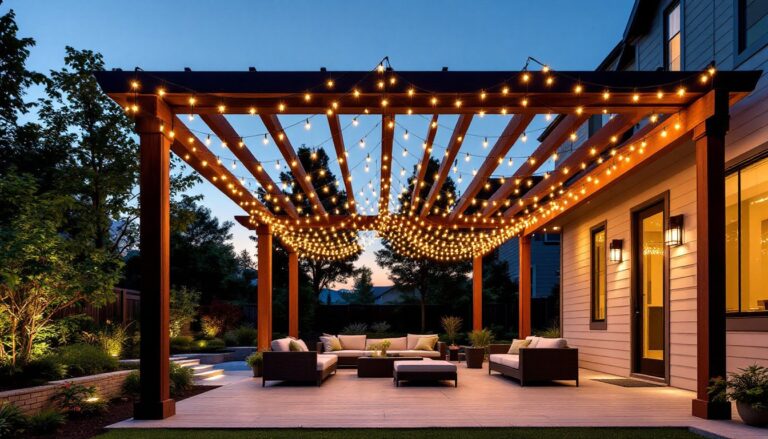
Lantern-style fixtures with seeded or clear glass panes, oil-rubbed bronze or aged iron finishes, and vintage Edison bulb compatibility anchor this aesthetic. Ferguson stocks carriage lights, gooseneck barn lights, and pendant lanterns that work on covered porches or pergolas.
For farmhouse looks, galvanized steel fixtures with exposed cage guards mimic old grain silo lights. These pair well with board-and-batten siding or stone foundations. Traditional designs often use E26 medium-base sockets, giving homeowners freedom to choose bulb types, useful when someone prefers the warm glow of 2200K filament LEDs or wants dimmable options.
One installation note: heavier cast-aluminum or wrought-iron fixtures require solid backing. If mounting to vinyl or fiber-cement siding, locate a stud or install a 1/2-inch plywood backer block between sheathing and siding during installation. Fixtures over 10 pounds shouldn’t hang on siding alone.
How to Select the Right Ferguson Outdoor Lighting for Your Space
Matching lumens to function prevents over- or under-lighting. For reference, 800–1100 lumens works for primary entry doors, 300–600 lumens for pathway lights spaced 10–15 feet apart, and 50–200 lumens for accent uplights on trees or architectural features.
Check the fixture’s IP (Ingress Protection) rating. IP65 means dust-tight and protected against water jets, fine for covered soffits. IP66 or IP67 handles direct rain and temporary submersion, necessary for ground-level bollards or deck post caps in regions with heavy storms. Ferguson’s spec sheets list IP ratings: if missing, ask staff before buying.
Wet vs. damp location ratings matter per NEC (National Electrical Code). Wet-rated fixtures handle direct exposure (uncovered walls, posts, ground mounts). Damp-rated fixtures suit covered porches or soffits where moisture condenses but rain doesn’t hit directly. Using a damp-rated fixture in a wet location voids warranties and risks electrical shorts.
Consider beam spread for wall-mounted fixtures. Narrow beams (20–40 degrees) create dramatic uplighting or downlighting. Wide floods (90–120 degrees) wash walls or illuminate steps. Some Ferguson sconces offer interchangeable lenses or adjustable heads, helpful when needs change.
Voltage choice: 120V line-voltage systems integrate with household wiring and work best for fixtures near the main panel or existing outdoor outlets. Low-voltage 12V or 24V systems require transformers but allow safer DIY installation for landscape lighting, with thinner buried cable (though voltage drop becomes an issue beyond 100 feet from the transformer). Ferguson sells both: choose based on project scope and comfort running conduit and pulling permits.
Installation Tips for Ferguson Outdoor Lighting Fixtures
Permit requirements vary by jurisdiction, but most locales require permits for new 120V circuits or modifications to service panels. Low-voltage landscape lighting typically doesn’t need permits, but check local codes. If tapping into existing exterior outlets for additional fixtures, confirm the circuit’s load capacity, most 15A outdoor circuits can handle 1440W safely (80% of 1800W capacity), but adding multiple high-wattage fixtures risks tripping breakers.
Safety first: Shut off power at the breaker, verify with a non-contact voltage tester, and work in dry conditions. Exterior installations require weatherproof boxes (NEMA-rated with gasketed covers) and outdoor-rated wire nuts or direct-burial splices if running cable underground.
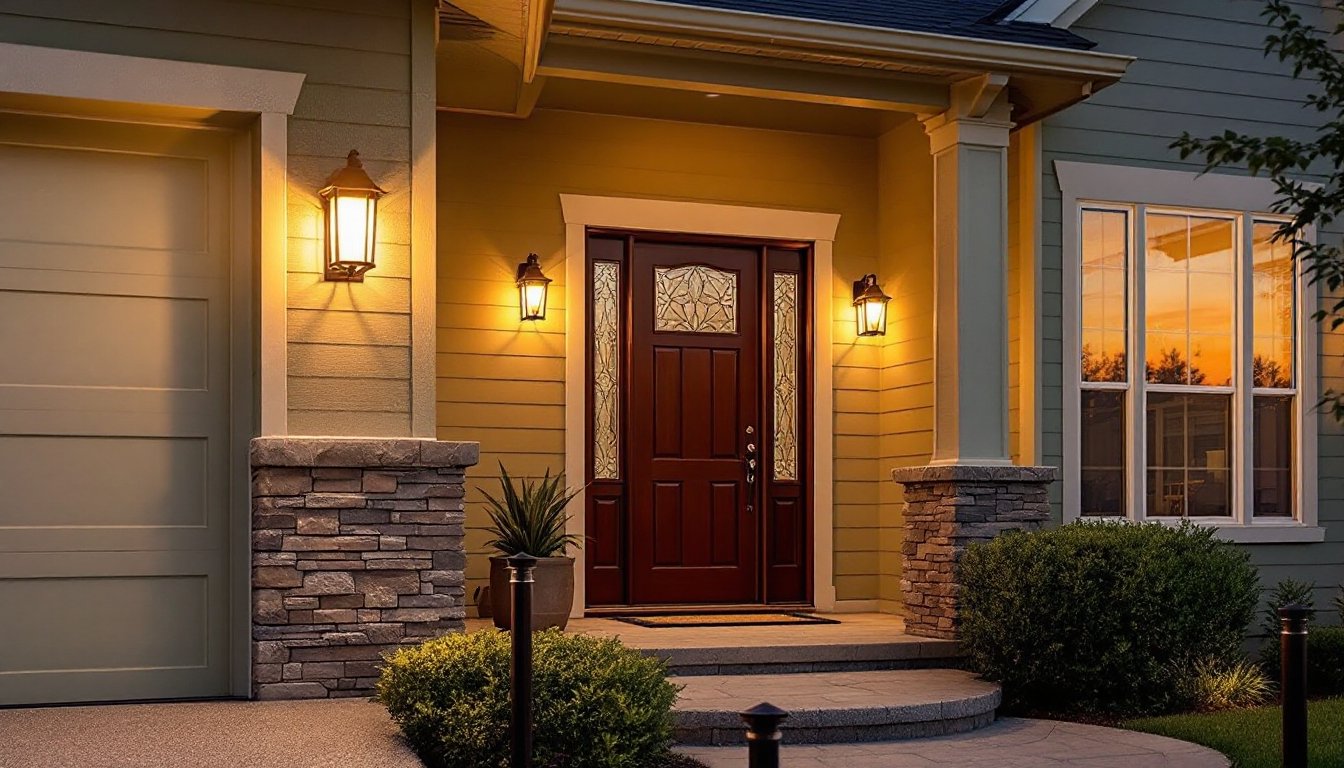
Mounting height affects light distribution. Entry fixtures typically mount 66–72 inches above the threshold (about eye level), while garage wall lights sit 72–78 inches to clear vehicle roofs. For flanking a door, space fixtures 8–10 feet apart for balanced illumination without harsh shadows.
Use silicone caulk around mounting brackets and entry points to seal gaps between fixture bases and siding, water infiltration ruins junction boxes. If drilling through masonry or stucco, use a masonry bit and plastic anchors rated for the fixture’s weight.
For outdoor track lighting systems that require adjustable heads, mounting to solid lumber (studs, rafters, or beams) ensures stability under wind loads. Toggle bolts work in hollow walls, but only for lighter fixtures under 5 pounds.
Wiring basics: Match wire gauges to circuit amperage, 14 AWG for 15A circuits, 12 AWG for 20A. Use UF-B (underground feeder) cable for buried runs, with trenches at least 12 inches deep for 120V circuits (or 18 inches with conduit protection). Low-voltage cable can run 6 inches deep but should route through PVC conduit under driveways or high-traffic areas.
Don’t skip the ground wire, connect it to the fixture’s grounding screw and back to the panel’s ground bus. Exterior shock hazards are serious, especially near pools or irrigation systems.
If a project involves running new circuits from the panel or installing photocell-controlled switches, hire a licensed electrician. Most DIYers can swap existing fixtures or extend low-voltage runs, but panel work and complex switching require expertise.
Maintaining Your Ferguson Outdoor Lighting for Longevity
Outdoor fixtures face UV degradation, corrosion, insect nests, and moisture intrusion, all preventable with routine maintenance.
Clean fixtures twice yearly (spring and fall). Use a soft cloth and mild detergent to remove pollen, dirt, and salt residue. Avoid abrasive cleaners that scratch finishes and accelerate corrosion. For fixtures near coastal areas, rinse monthly with fresh water to flush salt buildup.
Inspect gaskets and seals annually. Rubber and silicone degrade over time, letting moisture into junction boxes. Ferguson sells replacement gaskets for many fixture lines, swap them when cracks or hardening appear. A $3 gasket replacement beats replacing a $150 fixture ruined by water.
Check wire connections inside fixtures every two years. Look for corrosion (green or white crusty deposits) on wire nuts or terminal screws. If found, cut back corroded wire, strip fresh copper, and re-splice with dielectric grease-coated wire nuts rated for outdoor use. Corroded connections cause flickering and voltage drops.
Clean photocell sensors (the small bubble on dusk-to-dawn fixtures) quarterly. Dust, spider webs, and pollen can trick sensors into staying on during the day, wasting energy. Wipe with a damp cloth: don’t use solvents that cloud the lens.
For garden lighting inspiration that involves ground-level fixtures, trim vegetation that blocks light paths or traps moisture against housings. Shrubs growing over bollard lights create shadowed zones and hold dew against metal, promoting rust.
LED modules in integrated fixtures last 25,000–50,000 hours but aren’t user-replaceable in most designs. When they dim or fail, the entire fixture often needs replacement, plan this into long-term budgets. Ferguson’s premium lines sometimes offer replaceable driver modules, extending fixture lifespan.
In regions with harsh winters, consider removing glass panes from decorative lanterns and storing them indoors if the fixture allows disassembly. This prevents thermal shock cracking when snow melts and refreezes. Store removed parts in labeled bags to simplify reassembly.
Finally, update timers and smart controls as technology evolves. Older photocell switches and mechanical timers wear out: replacing them with programmable or smart home controllers improves energy efficiency and adds scheduling flexibility.