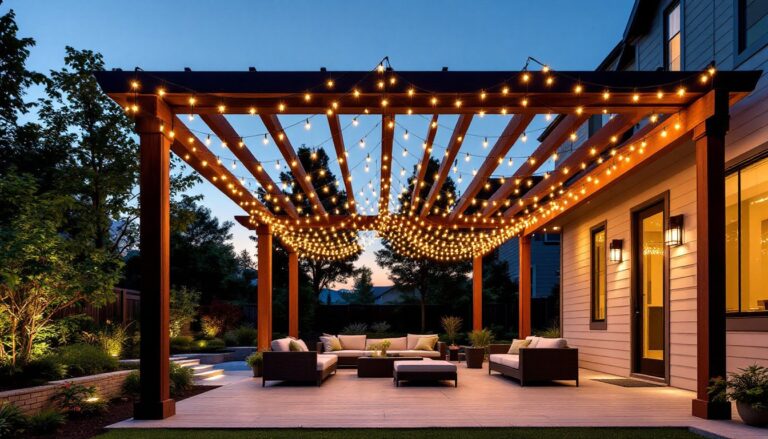
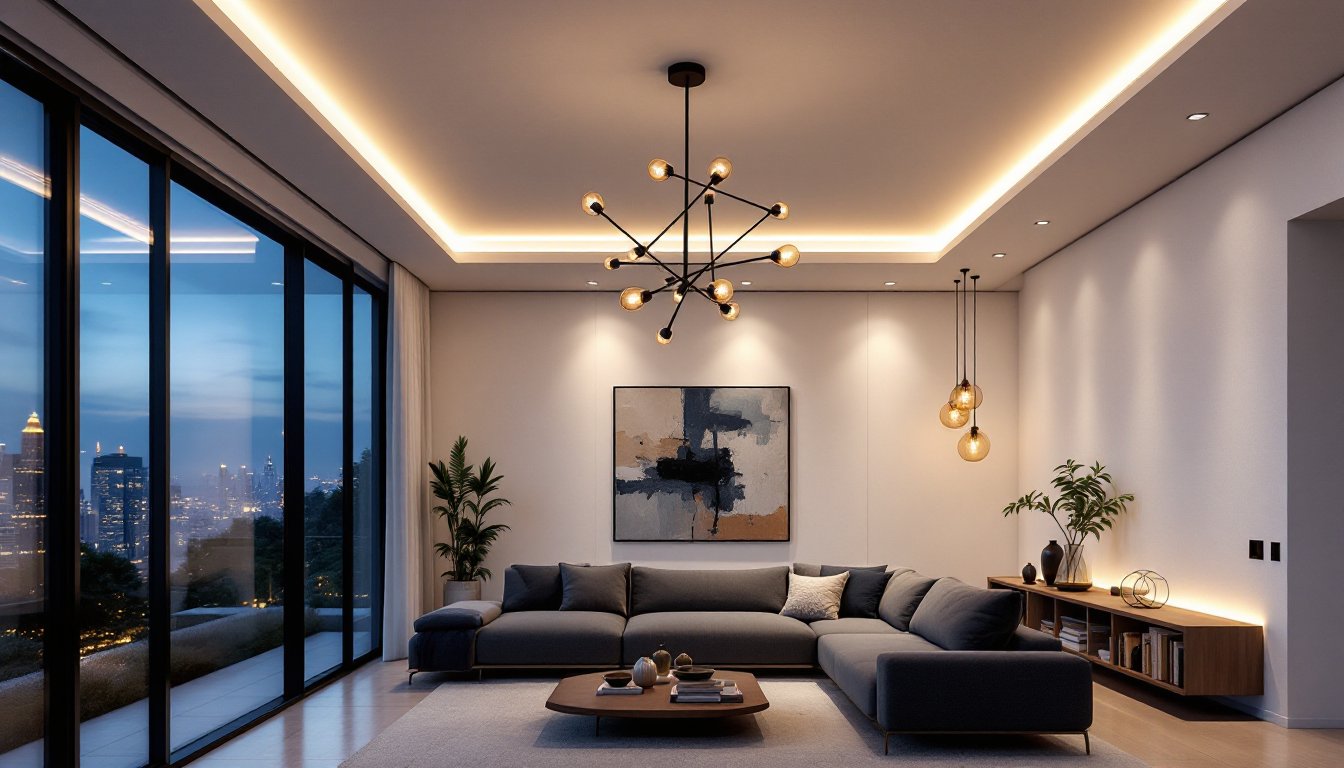
Ceiling lighting in a living room does more than just illuminate, it sets the mood, defines zones, and showcases architectural features. In 2026, modern living room ceiling lighting ideas blend energy efficiency, smart technology, and striking design to create spaces that feel both functional and elevated. Whether homeowners are gutting a space down to the joists or swapping out a dated fixture, the right ceiling lighting choice can dramatically change how a room feels and functions. From recessed cans that disappear into the ceiling plane to sculptural chandeliers that command attention, today’s options offer flexibility for every aesthetic and budget.
Table of Contents
ToggleKey Takeaways
- Modern living room ceiling lighting ideas require layering multiple light sources—recessed LEDs for ambient light, track systems for flexibility, and statement fixtures like chandeliers or pendant clusters for visual impact.
- Recessed LED downlights remain the foundation of contemporary designs, offering energy savings up to 85%, long lifespan (25,000+ hours), and clean aesthetics when spaced according to the half-ceiling-height rule.
- Smart lighting integration through dimmers and switches (not just bulbs) enables scene programming, occupancy sensors, and color temperature adjustments that support circadian rhythms and adapt to daily activities.
- Cove and indirect lighting creates sophisticated ambient atmospheres by hiding LED strips in ceiling recesses, paired with separate dimmers for layered control that prevents flat, one-note illumination.
- Proper fixture sizing, electrical box ratings, and dimming compatibility are non-negotiable: mismatched dimmers cause flickering, and chandeliers heavier than 50 pounds need fan-rated or joist-mounted boxes.
- Track lighting and pendant clusters offer unmatched flexibility for evolving layouts and open-plan spaces, with adjustable gimbal heads and varying drop heights that define zones without permanent architectural changes.
Recessed LED Lighting for Clean, Minimalist Appeal
Recessed LED downlights remain the backbone of modern ceiling lighting schemes. They’re code-compliant in most jurisdictions when installed per NEC Article 410, and they provide even, shadow-free illumination without eating into headroom or cluttering sightlines.
For new construction or major remodels, IC-rated recessed housings allow direct contact with ceiling insulation, critical in climate zones where energy codes require continuous thermal barriers. In retrofit scenarios, homeowners can swap out old incandescent cans with LED retrofit kits that snap or twist into existing housings, cutting energy use by up to 85% and lasting 25,000+ hours.
Spacing matters. A common rule of thumb: divide ceiling height (in feet) by two to get spacing in feet. For an 8-foot ceiling, that’s roughly 4 feet on center. Adjust closer for task zones or farther apart if layering with other sources. Use narrow beam angles (15–25°) to highlight artwork or architectural details, and wide floods (40–60°) for general ambient light.
Dimming capability is non-negotiable in a modern living room. Verify that both the LED driver and the dimmer switch are compatible, mismatched components cause flickering or failure to dim below 50%. Vaulted ceiling installations require adjustable-angle trims to aim light where it’s needed, and they often need deeper housings to maintain clearance from roof sheathing.
Color temperature shapes the room’s feel: 3000K offers warm white that flatters skin tones and wood finishes, while 4000K leans cooler and crisper, ideal if the space doubles as a home office. Avoid mixing color temps in the same room unless there’s a deliberate zoning strategy.
Statement Chandeliers That Blend Form and Function
A well-chosen chandelier anchors a living room and serves as functional sculpture. Modern designs have moved away from crystal-dripping traditionalism toward geometric forms, mixed materials, and integrated LED arrays.
Size and scale are critical. Measure the room’s length and width in feet, add those numbers, and convert to inches, that’s a safe starting diameter. For a 14×18-foot living room, consider a fixture around 32 inches wide. Hang the bottom of the chandelier at least 7 feet above finished floor in open areas, or 30–36 inches above a coffee table if centering over a seating vignette.
Modern chandeliers often feature modular designs, arms or globes that can be added or removed to suit ceiling height and room proportions. Materials like powder-coated steel, brass, and handblown glass dominate 2026 trends, according to contemporary design sources.
Electrical boxes must be rated for the fixture’s weight. Standard pancake boxes support up to 50 pounds: anything heavier requires a fan-rated or bar-hanger box secured to ceiling joists. If the existing box isn’t adequate, retrofit braces that slide through a ceiling hole and expand between joists are available, no attic access required.
Bulb choice affects both aesthetics and maintenance. Fixtures with exposed filament LEDs deliver vintage charm without the heat and short lifespan of incandescents. Look for CRI (Color Rendering Index) above 90 to ensure colors look true under the light. Dimmable drivers allow the chandelier to shift from bright task lighting during the day to a warm glow in the evening.
Track Lighting Systems for Flexible Illumination
Track lighting offers unmatched flexibility for living rooms with evolving layouts or multiple focal points. Modern track systems shed the industrial look of decades past, now available in low-profile linear tracks, monorail curves, and cable-suspended designs that feel at home in contemporary interiors.
Track systems come in three main types: H-type (single-circuit), J-type, and L-type. For residential use, H-type suffices, all heads on the track share one switch and dimmer. The track mounts directly to ceiling joists or uses toggle anchors in drywall, with a single electrical connection at the canopy.
Head selection drives the system’s versatility. Adjustable gimbal heads rotate and tilt to spotlight artwork, shelving, or architectural features. Cylinder pendants drop light onto seating areas or side tables. Many manufacturers offer decorative accessories that clip onto standard tracks, allowing homeowners to mix spotlights with ambient pendants on the same run.
For living rooms with high ceilings or angled planes, consider cable track systems. Aircraft-grade steel cables suspend the track, and adjustable tensioners keep everything level. Installation requires secure anchor points, ideally into structural framing.
One common mistake: overloading a track. Most residential tracks support up to 1,200 watts total. With modern LEDs drawing 8–15 watts per head, that’s rarely an issue, but verify the combined load doesn’t exceed the breaker rating (typically 15 amps, or 1,800 watts at 120V).
Pair track lighting with smart controls to program scenes, one button for movie night (accent lights only), another for entertaining (full brightness). Wireless systems integrate with voice assistants and don’t require rewiring.
Cove and Indirect Lighting for Ambient Atmosphere
Cove lighting hides LED strip or linear fixtures in recesses near the ceiling perimeter, washing walls or ceilings with soft, shadow-free light. It’s architectural and invisible, the source disappears, leaving only the glow.
Building a cove involves framing a ledge or soffit 10–16 inches below the ceiling plane, typically using 2×4 or 2×6 lumber and finishing with drywall. The recess depth should be at least 4–6 inches to prevent the fixture from being visible from below. Paint the interior surfaces matte white to maximize reflectance without hot spots.
LED strip lights are the most common source. Look for high-density strips (120–180 LEDs per meter) to avoid visible dotting when reflected off surfaces. 24V systems are preferable to 12V, they allow longer runs (up to 32 feet) without voltage drop and dimming at the far end. Use aluminum channels with frosted diffusers to eliminate individual LED points and create a continuous line of light, as noted by design-focused publications.
Power supplies (drivers) must match the total wattage of the strip run, with 20% overhead for safety and longevity. A 10-foot run of 10W-per-meter strip draws 100W total, spec a 120W driver minimum. Drivers generate heat and need ventilation: avoid burying them in sealed cavities.
Cove lighting pairs beautifully with recessed downlights on separate dimmers, allowing layered control. Use cove lighting as ambient fill and downlights for task illumination or accent. This two-layer approach mimics natural light variation and keeps the space from feeling flat.
For retrofit projects without soffits, consider linear LED fixtures that mount directly to the ceiling perimeter, grazing the wall from above. They achieve a similar effect with far less carpentry.
Pendant Clusters and Linear Fixtures for Contemporary Style
Pendant clusters and linear suspensions bring lighting down into the living volume, defining seating zones and adding visual interest at eye level. They’re especially effective in open-plan spaces where the ceiling is high but you want intimacy below.
Cluster pendants, groups of two to five shades hung at varying heights, create a sculptural focal point without the formality of a chandelier. Spacing individual pendants 6–12 inches apart horizontally prevents them from looking cluttered. Use a multi-port canopy rated for the combined weight, and stagger drop lengths by 4–8 inches to add movement.
For longer spaces or over sectional seating, linear pendant fixtures span 3–6 feet and distribute light evenly. Many contemporary designs integrate edge-lit acrylic or OLED panels for ultra-thin profiles and diffuse glow. Mount these 60–72 inches above finished floor to keep sightlines open while preventing glare from seated positions.
Cord and cable management matters. Adjustable-height systems use counterweight pulleys or friction locks, making it easy to raise or lower pendants as furniture layouts change. For permanent installations, measure twice and use a laser level to mark mounting points, uneven pendants are immediately obvious.
Glass shades show fingerprints and dust: consider powder-coated metal, fabric, or ceramic for lower maintenance. Translucent materials diffuse light and soften shadows, while opaque shades focus light up and down, creating dramatic pools.
Pendants integrate seamlessly into overall living room design schemes, serving as jewelry for the ceiling plane. Pair them with recessed or track lighting on separate circuits for full flexibility, pendants for ambiance, task lighting when you need it.
Smart Lighting Integration for Modern Living
Smart lighting transforms static ceiling fixtures into dynamic systems that respond to time of day, activity, and even voice commands. In 2026, integration is simpler and more affordable than ever, no degree in electrical engineering required.
Start with smart switches or dimmers rather than smart bulbs. Switches control any fixture on the circuit, don’t lose functionality when someone flips a dumb switch, and survive longer than the average bulb lifespan. Brands like Lutron Caséta, Leviton, and Brilliant offer Wi-Fi or hub-based systems that integrate with Amazon Alexa, Google Assistant, and Apple HomeKit.
Installation is straightforward if you’re comfortable with basic wiring. Turn off the breaker, remove the old switch, connect line (hot), load (to fixture), neutral, and ground wires per the manufacturer’s diagram, and mount the smart switch. Most require a neutral wire, older homes without one need a different switch model or an electrician to pull new cable.
Scenes and schedules are where smart lighting shines. Program “Movie Mode” to dim overheads and activate cove lighting, or set pendants to gradually brighten in the morning. Occupancy sensors can trigger lights when someone enters, and daylight sensors adjust output based on natural light levels, useful near large windows.
For maximum flexibility, combine smart switches with tunable white or RGBW fixtures. These allow not just dimming, but color temperature shifts, cool and bright during the day, warm and dim in the evening to support natural circadian rhythms, as emphasized by modern architecture sources.
Interoperability is improving. The new Matter protocol lets devices from different brands communicate over a common standard, reducing app clutter and “ecosystem lock-in.” If buying new fixtures or switches, verify Matter compatibility for future-proofing.
Conclusion
Modern ceiling lighting ideas for living rooms balance aesthetics, technology, and practicality. Whether installing recessed LEDs for clean minimalism, suspending a sculptural chandelier, or layering cove lighting with smart controls, the goal is the same: create a space that adapts to how people actually live. Measure carefully, respect electrical and building codes, and don’t skip dimming capability. The right lighting doesn’t just fill a room, it transforms it.