LED strip lighting has quietly become one of the most versatile tools in a DIYer’s arsenal for bedroom upgrades. Unlike traditional fixtures that flood a space with uniform light, LED strips create layers of ambient glow that can shift from task lighting to mood-setting with a tap on a controller. They’re energy-efficient, flexible enough to wrap around architectural quirks, and available in everything from warm whites to RGB color-changing varieties. Whether someone’s looking to eliminate harsh overhead glare or add a custom accent behind a headboard, LED strips deliver professional-looking results without tearing into walls or hiring an electrician. This guide walks through placement strategies, product selection, installation steps, and design ideas to help anyone add functional, stylish lighting to their bedroom.
Table of Contents
ToggleWhy LED Strip Lights Are Perfect for Bedrooms
Bedrooms demand lighting flexibility that ceiling fixtures and table lamps alone can’t deliver. LED strips fill that gap by providing indirect illumination that reduces eye strain, ideal for winding down before sleep. They consume roughly 80% less energy than incandescent equivalents and generate minimal heat, making them safe for extended use near fabrics and wood.
Most quality strips now ship with adhesive backing and low-voltage power supplies, so installation doesn’t require cutting into drywall or pulling permits. Many modern options integrate with smart home ecosystems, allowing users to automate dimming schedules or sync colors with routines. From a practical standpoint, LED strips last 30,000 to 50,000 hours, that’s years of nightly use before replacement becomes necessary.
Beyond function, LED strips offer creative control. A single roll can outline an entire bed frame, highlight crown molding, or backlight a floating shelf, all without the visual clutter of multiple fixture housings. For renters or anyone hesitant to drill holes, peel-and-stick strips provide a reversible upgrade that leaves walls and furniture intact.
Best Placement Ideas for Bedroom LED Strip Lighting
Strategic placement turns LED strips from a novelty into a functional layer of bedroom lighting. The goal is to hide the strip itself while maximizing the wash of light it produces.
Behind the Headboard and Bed Frame
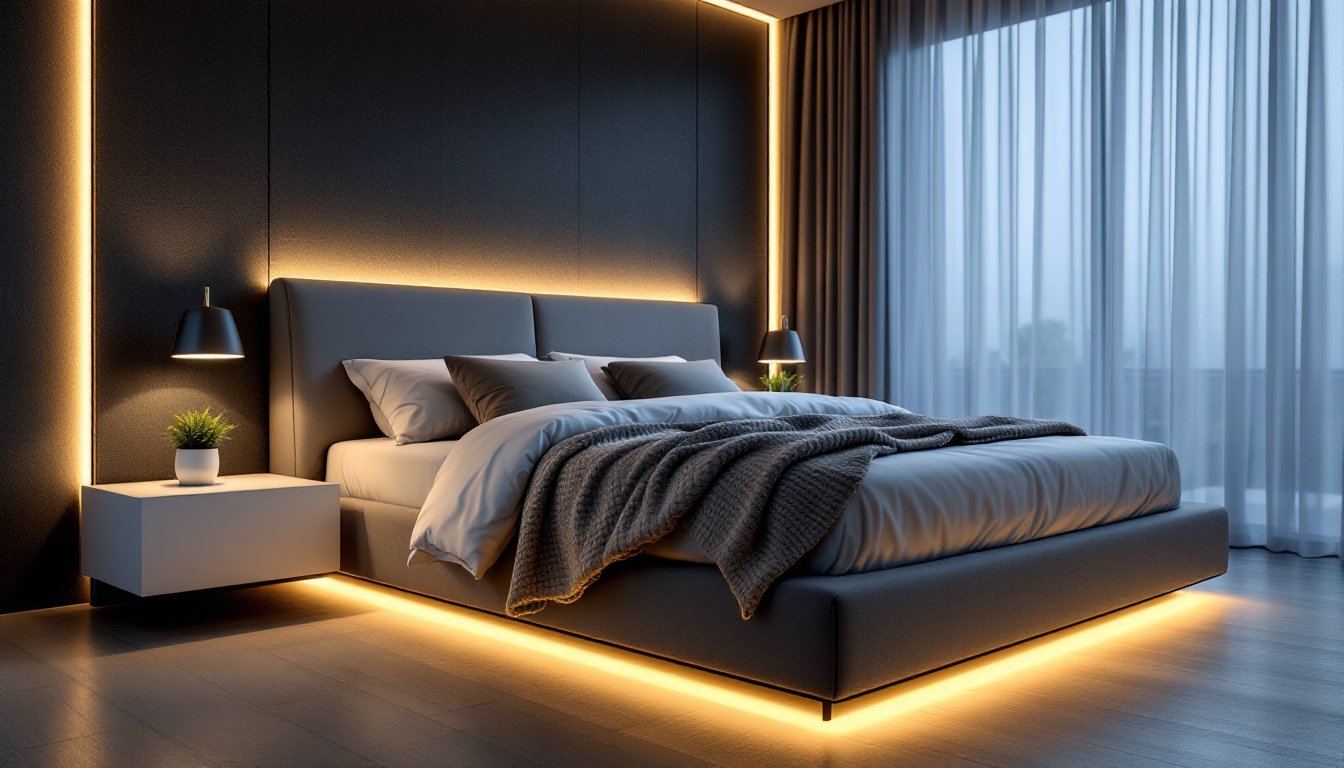
Mounting strips along the back edge of a headboard or underneath a platform bed creates a floating effect that lifts the furniture off the floor visually. For headboard installations, run the strip along the top or rear perimeter so light spills onto the wall rather than directly into eyes. Use aluminum channels with frosted diffusers if the strip will be visible from any angle, they eliminate individual LED hotspots and produce a smooth, continuous glow.
For bed frames, especially platform or upholstered styles, tuck strips into the gap between the frame and the floor. This works best when there’s at least 2 inches of clearance. Route the power cable along a leg or through a corner to keep it out of sight. If the bed sits flush to the wall, consider running the strip along the sides only, or install a small spacer block to create a shadow gap.
Under Furniture and Shelving
Dressers, nightstands, and floating shelves become accent features when underlit. For floating shelves, mount the strip along the underside front edge, angled slightly downward. This highlights objects on lower shelves and adds depth to the wall. Match the strip length to the shelf width, or stop a few inches short on each end to avoid visible diodes.
Under dressers or wardrobes, LED strips provide both ambiance and practical task lighting for finding clothes in low light. Secure strips to the furniture’s underside using the included adhesive or mounting clips if the surface is textured. Make sure the power supply is accessible but hidden, inside a drawer, behind the furniture, or routed through a cable management box. According to experts at Digital Trends, integrating these setups with smart dimmers allows users to adjust brightness without reaching for switches.
Choosing the Right LED Strip Lights for Your Bedroom
Not all LED strips are created equal. The wrong choice leads to dim output, poor color accuracy, or frustrating installation.
LED density matters. Strips are rated by LEDs per meter, common options include 30, 60, or 120 LEDs/m. For bedrooms, 60 LEDs/m delivers even coverage without visible gaps. Higher densities (120 LEDs/m) are useful for close-up applications like vanity mirrors but add cost.
Color temperature sets the mood. Warm white (2700K–3000K) mimics incandescent bulbs and promotes relaxation. Cool white (4000K–5000K) suits task areas like reading nooks. RGB or RGBW strips offer color-changing capability: the “W” adds a dedicated white channel for better color rendering. If someone wants both ambiance and functionality, RGBW is the smarter pick.
Voltage and power supply need to match. Most residential strips run on 12V or 24V DC. Higher voltage reduces voltage drop over longer runs, if installing more than 16 feet, opt for 24V. Calculate total wattage by multiplying the strip’s wattage per foot by the total length, then add 20% headroom when sizing the power supply. A 16-foot strip rated at 4W/ft draws 64W: pair it with an 80W supply.
IP ratings indicate water resistance. For dry bedroom environments, IP20 (no protection) is fine. If installing near a humidifier, aquarium, or in a particularly humid climate, IP65 (splash-resistant) adds durability.
Dimmability and control vary widely. Basic strips use in-line dimmers or remote controllers. Smart strips connect via Wi-Fi, Zigbee, or Bluetooth, enabling voice control and automation. Check compatibility with existing smart home platforms before buying. Reviews on Tom’s Guide often compare controller responsiveness and app reliability across brands.
Avoid the cheapest no-name strips on marketplaces, they often use inferior diodes that shift color over time or fail early. Look for products with at least a two-year warranty and UL or ETL certification on the power supply.
How to Install LED Strip Lights in Your Bedroom
LED strip installation is straightforward, but attention to surface prep and cable routing separates a clean job from a sloppy one.
Materials and tools needed:
- LED strip lights (measured to length)
- Power supply (matched to strip voltage and wattage)
- Mounting surface cleaner (isopropyl alcohol works well)
- Scissors or wire cutters (for trimming strips at designated cut points)
- Aluminum channel with diffuser (optional, for exposed runs)
- Cable clips or adhesive wire channels
- Extension cables or connectors (if splitting runs)
- Safety glasses and gloves
Step-by-step installation:
-
Plan the route. Measure the installation area and sketch cable paths. Locate the nearest outlet or plan for concealed wiring if hardwiring to a switch. LED strips can only be cut at marked intervals, usually every 2 to 4 inches, so plan lengths accordingly.
-
Prep the surface. Wipe down mounting surfaces with isopropyl alcohol to remove dust, oils, and residues. The adhesive backing on most strips is strong but won’t bond to dirty or textured surfaces. For rough wood or painted walls, consider using mounting clips or an aluminum channel instead of relying solely on adhesive.
-
Test before permanent mounting. Unroll the strip, connect it to the power supply, and plug it in. Verify that all LEDs light evenly and that the controller functions properly. This step catches defective sections before they’re stuck in place.
-
Mount the strip. Peel back a few inches of the adhesive backing and press the strip firmly into position, working in short sections. Avoid stretching the strip, tension can damage the circuitry. For corners, either use corner connectors or carefully bend the strip at a right angle (most strips tolerate gentle bends but check the manufacturer’s minimum bend radius).
-
Route and secure cables. Run power cables along furniture edges, baseboards, or behind trim. Use cable clips or adhesive channels to keep them tidy. If the power supply is bulky, hide it inside a nightstand drawer or behind furniture. Some installations benefit from mounting the supply on the wall behind a dresser, then drilling a small hole to route the cable discreetly.
-
Connect and test. Plug in the power supply, test all functions (dimming, color changes, timers), and verify that no sections flicker or dim unexpectedly. Flickering often indicates voltage drop on long runs or a loose connection.
Safety notes: Always use the power supply included with the kit or one that matches the strip’s voltage and wattage. Never splice household 120V AC directly to LED strips, that’s a fire hazard. If hardwiring the power supply to a wall switch, the work may require a permit and should follow National Electrical Code (NEC) guidelines. When in doubt, consult a licensed electrician. Homeowners looking for comprehensive lighting strategies for bedrooms often layer LED strips with other fixture types for balanced illumination.
Creative Design Ideas and Color Schemes
LED strips aren’t just functional, they’re a design tool that can redefine a bedroom’s character.
Accent architectural features. Run strips along crown molding, tray ceilings, or recessed panels to highlight details that overhead lighting flattens. This technique works especially well in rooms with textured or coffered ceilings. The upward or downward wash of light adds depth and makes the ceiling feel taller.
Create zones. Use different color temperatures or intensities to separate sleeping, reading, and dressing areas. A warm white strip behind the headboard signals rest, while a cooler white strip under a floating desk supports focus. Smart controllers can save these as scenes, toggled with a single command.
Sync with media. Some RGB strips sync with music or on-screen content via apps or HDMI sync boxes. While this feature leans gimmicky, it’s popular for gaming setups or teenagers’ rooms. Keep it subtle in adult bedrooms, constant color shifts can be distracting.
Mirror backlighting. Mounting strips around the perimeter of a wall-mounted mirror creates a floating vanity effect. Use warm white or tunable white for accurate makeup and grooming tasks. Ensure the strip is hidden behind the mirror’s edge so only the reflected glow is visible.
Headboard shelving. For beds with integrated shelving or floating nightstands, tuck strips into the back of each shelf niche. This creates individual pools of light that highlight decor without cluttering surfaces with lamps.
Color psychology. If using RGB strips, consider the impact of hues. Warm oranges and reds can feel cozy but may energize rather than relax. Blues and cool purples promote calm but can feel clinical if too bright. Warm white or soft amber remains the safest choice for sleep-focused spaces. Smart home enthusiasts frequently reference guides on CNET for pairing color settings with circadian rhythm automation.
Layering with other lighting. LED strips work best as part of a layered strategy. Combine them with dimmable overhead fixtures, bedside task lamps, and perhaps a floor lamp for reading. This approach, detailed in articles about LED lighting principles, ensures the room functions well at any time of day without relying on a single source.
Seasonal and event flexibility. Programmable strips can shift palettes for holidays, celebrations, or moods without repainting or buying new decor. A bedroom that glows soft white most nights can transition to festive reds and greens in December or pastel hues in spring, all controlled from a phone.
The key is restraint. A bedroom isn’t a nightclub. Use LED strips to enhance architecture and add functional layers, not to overwhelm the space with color. When done well, the strips themselves disappear, leaving only the glow.