Contemporary dining room lighting does more than keep diners from eating in the dark, it sets the mood, defines the space, and can turn a utilitarian room into a gathering spot worth showing off. Unlike traditional fixtures with ornate brass and crystal dripping everywhere, contemporary designs lean on clean lines, mixed materials, and sculptural forms that double as functional art.
The right fixture changes how a room feels and functions. Too small, and it looks like an afterthought. Too large or poorly placed, and it overwhelms the table. Getting it right involves understanding scale, layering light sources, and knowing which styles work with your specific layout.
Table of Contents
ToggleKey Takeaways
- Contemporary dining room lighting combines clean lines, mixed materials, and sculptural forms to set mood and define the space while serving as functional art.
- Proper fixture sizing and placement—with the bottom 30-36 inches above the tabletop and diameter matching one-half to two-thirds of table width—prevents common lighting mistakes and ensures balanced illumination.
- Layering multiple light sources (ambient, task, and accent lighting) with dimmable controls and smart switches creates flexibility to shift from bright task lighting during meal prep to warm ambient light during dining.
- Material and finish trends in 2026 emphasize matte black, brushed brass, mixed metals, and natural materials like wood and rattan that add warmth and character without sacrificing the minimalist contemporary aesthetic.
- Linear suspension fixtures proportioned at roughly two-thirds the table length work best for rectangular tables and distribute light evenly while maintaining sightlines across the dining surface.
- Installing contemporary dining room lighting on separate switches or smart dimmer systems allows homeowners to create customized lighting scenes for different activities and occasions.
What Defines Contemporary Dining Room Lighting?
Contemporary lighting isn’t a single aesthetic, it’s an evolving category that borrows from mid-century modern, minimalism, industrial design, and even organic forms. What ties it together is a focus on simplicity, geometry, and intentional material choices.
Typical characteristics include exposed bulbs (often LED filament styles), matte or brushed metal finishes like black, brass, or nickel, and asymmetrical or angular silhouettes. Glass elements tend to be clear or lightly smoked rather than frosted or colored. Designers frequently use mixed materials, wood with metal, concrete with fabric shades, or metal mesh with Edison bulbs.
Contemporary fixtures avoid heavy embellishment. If there’s detail, it’s structural, a cantilevered arm, a geometric cage, or a series of staggered pendants. The effect should feel curated, not cluttered. Many contemporary designs also emphasize dimmability and adjustable color temperature, integrating smart controls that let homeowners shift from bright task lighting during dinner prep to warmer ambient light during meals.
One key distinction: contemporary isn’t the same as modern. Modern design refers to a specific mid-20th-century movement, while contemporary reflects current trends and often blends influences. That’s why you’ll see fixtures that mix warm woods (a nod to Scandinavian design) with sleek metal frames (industrial influence) in the same piece.
Choosing the Right Fixture Style for Your Dining Room
The fixture style should complement both the table shape and the room’s overall design language. A round table pairs well with a centered chandelier or clustered pendants, while rectangular tables often call for linear suspensions or multiple pendants arranged in a row.
Statement Chandeliers and Pendant Lights
Statement chandeliers work best in rooms with at least 9-foot ceilings and enough square footage to handle visual weight. A sputnik chandelier with radiating arms, a geometric cage design, or a sculptural piece with multiple light sources can anchor the dining area without relying on traditional tiered crystal.
Single large pendants, think oversized drum shades, globe fixtures, or abstract sculptural forms, excel over round or square tables. They create a focal point without competing for attention. Look for designs where the shade diameter is roughly one-half to two-thirds the table width. For instance, a 48-inch round table pairs well with a 24- to 32-inch pendant.
Multiple pendants hung in a cluster or staggered at different heights add visual interest and work especially well in open-concept spaces where the dining area shares sight lines with the kitchen or living room. Ensure the individual pendants aren’t too small, three 8-inch globes will look lost over a standard dining table. Aim for 10- to 14-inch diameters when clustering.
Many homeowners appreciate decorative lighting that serves as both illumination and art. Fixtures with exposed bulbs or interesting shapes make a strong impression, especially when paired with dimmable controls.
Linear Suspensions for Rectangular Tables
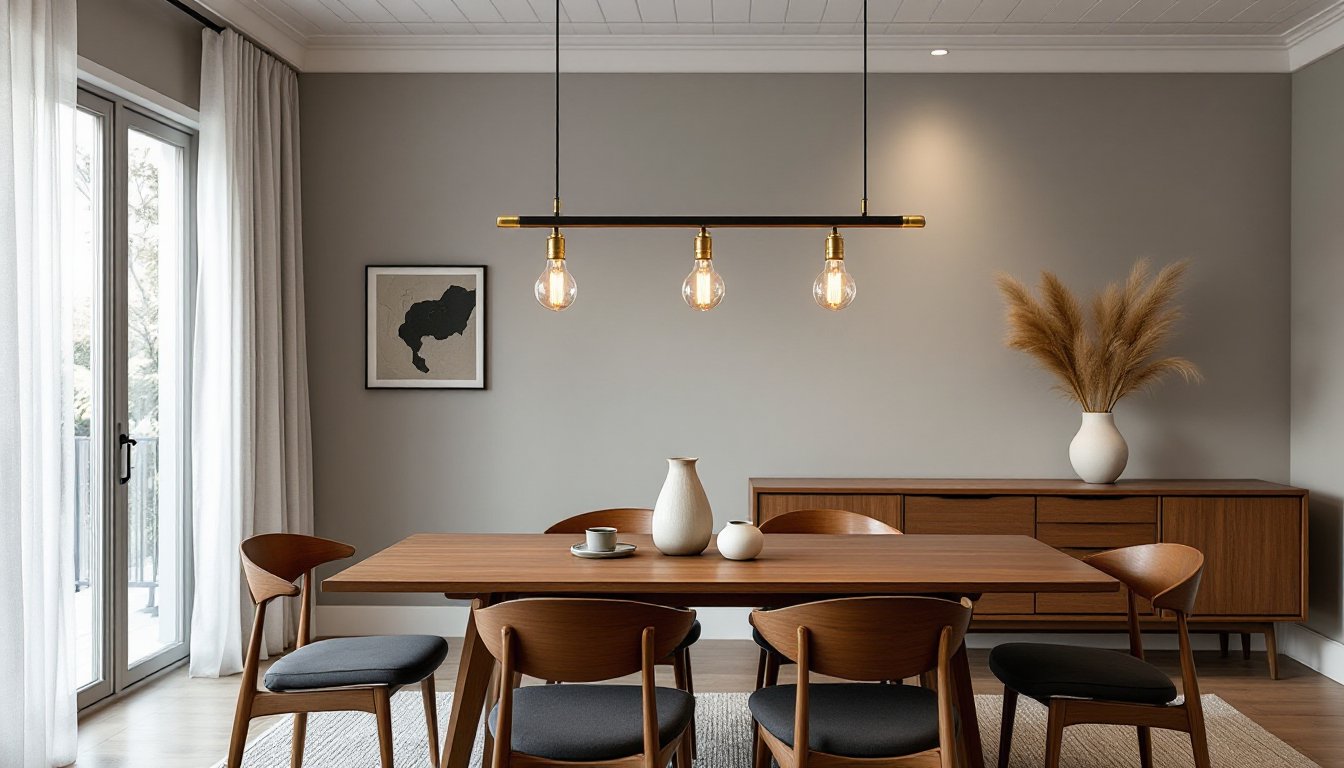
Linear suspension fixtures, also called linear chandeliers or island lights, are purpose-built for rectangular dining tables. They distribute light evenly along the table’s length and visually reinforce the geometry of the space.
A standard guideline: the fixture length should be about two-thirds the length of the table. For a 72-inch table, look for a fixture around 48 inches long. If the table is particularly narrow or wide, adjust slightly to maintain visual balance.
Linear suspensions come in multiple configurations. Some feature a single elongated frame with multiple bulbs or downlights. Others use a canopy that supports several individual pendants hung in a line, which offers flexibility in spacing and height. The latter style works well when diners need to see across the table without a solid bar of metal blocking sightlines.
Material matters here. Metal frames with clear or seeded glass shades maintain an airy feel. Solid drum shades or wood slat designs add warmth but can feel heavier visually. Consider the ceiling height and wall color, dark ceilings can handle bolder fixtures, while lighter ceilings benefit from designs that don’t visually lower the ceiling plane.
Expert designers frequently highlight contemporary fixtures in editorial features, and publications like Domino often showcase how linear suspensions ground modern dining rooms without overwhelming them.
Sizing and Placement Guidelines That Actually Work
Getting the size and height right prevents the most common dining room lighting mistakes. A fixture that’s too small looks like a placeholder, and one hung too high fails to illuminate the table properly.
Diameter or width: For chandeliers and pendants, add the room’s length and width in feet, then convert that sum to inches. In a 12-foot by 14-foot dining room, that’s 12 + 14 = 26, so a 26-inch fixture is a good starting point. This formula works for single chandeliers or clustered pendants measured at their widest point.
Hanging height: The bottom of the fixture should sit 30 to 36 inches above the tabletop. Stick to 30 inches if the ceiling is 8 feet or lower: use 34 to 36 inches for higher ceilings. This range keeps the light source low enough to illuminate faces and food without becoming a head-knocker when someone stands up.
If the ceiling is higher than 10 feet, add 3 inches of chain or rod for every additional foot of ceiling height beyond 8 feet. For example, in a room with a 12-foot ceiling, hang the fixture roughly 42 inches above the table.
Wattage and lumen output: Dining rooms generally need 3,000 to 4,000 lumens for adequate task and ambient lighting combined. LED bulbs have largely replaced incandescents, so check the lumen rating rather than wattage. A typical setup might use five to eight bulbs at 400 to 500 lumens each. Always install a dimmer, dining rooms shift from task-oriented (serving, clearing) to ambient (lingering over dessert), and fixed brightness rarely suits both.
Electrical box capacity: Most decorative chandeliers weigh between 15 and 50 pounds. Standard ceiling boxes are rated for 50 pounds, but verify before installation. Heavier fixtures, especially those with thick metal frames or large glass shades, require a fan-rated or heavy-duty box anchored to a joist or blocking. If the existing box is a lightweight plastic pancake box, replace it before hanging anything over 20 pounds.
Using a lighting layout tool during planning can help visualize fixture placement and ensure proper spacing, especially in rooms with multiple light sources.
Layering Light: Creating the Perfect Ambiance
A single overhead fixture rarely delivers enough flexibility for a dining room. Layered lighting, combining ambient, task, and accent sources, creates depth and allows homeowners to adjust brightness and mood for different occasions.
Ambient lighting comes from the primary fixture (chandelier, pendant, or linear suspension) and provides overall illumination. This is the layer that gets dimmed during dinner and brightened when clearing dishes or helping kids with assignments.
Task lighting can include recessed downlights or adjustable track lights aimed at a buffet, bar cart, or serving area. If the dining room doubles as a workspace, consider a secondary fixture or portable lamp on a sideboard. Recessed lights should be IC-rated (insulation contact) if they’ll be covered by attic insulation, and many contemporary designs use adjustable gimbal trims to direct light without a visible track.
Accent lighting highlights artwork, architectural details, or built-in shelving. Picture lights, small LED strip lighting behind floating shelves, or low-voltage puck lights inside glass-front cabinets add visual interest without competing with the main fixture. Warm white LEDs (2700K to 3000K) integrate better with contemporary designs than cool white, which can feel clinical.
Installing all lighting on separate switches, or better, on a smart dimmer system, gives the most control. Homeowners can create lighting scenes for different activities: full brightness for game night, mid-level for weeknight dinners, and low ambient with accent lights for entertaining.
Don’t forget about natural light. If the dining room has windows, consider how daylight interacts with artificial sources. Sheer curtains or adjustable blinds let you modulate brightness during the day, and fixtures with interesting silhouettes look just as good unlit when sunlight is doing the work.
For those looking to broaden their approach, exploring various lighting solutions can provide ideas for integrating multiple layers effectively.
Material and Finish Trends in 2026
Material and finish choices in contemporary dining room lighting continue to evolve, with several clear trends emerging in 2026. Matte black remains a dominant finish, offering contrast against white or light-colored ceilings and pairing well with both warm wood tones and cool concrete or stone. It’s also forgiving, fingerprints and dust are less visible than on polished chrome.
Brushed brass and aged brass are holding strong after several years of popularity. Unlike the shiny, yellow-toned brass of the 1980s, contemporary brass has a softer, more golden or rose-tinted hue and a subtle brushed or satin texture. It adds warmth without feeling traditional, especially when combined with matte black cabling or frosted glass shades.
Mixed metals are increasingly common. A single fixture might pair a black canopy and downrods with brass sockets and clear glass shades, or combine brushed nickel frames with copper accents. This approach works best when other elements in the room (cabinet hardware, faucet finishes, furniture legs) echo at least one of the metals.
Natural materials are making a comeback, particularly wood, rattan, and woven fibers. Wood bead chandeliers, pendant shades wrapped in jute or rattan, and fixtures with walnut or oak frames soften the hard edges of metal and glass. These work especially well in dining rooms with natural or organic contemporary styles, and they help absorb sound in open-plan spaces.
Textured and artisan glass is trending over plain globes. Seeded glass, ribbed glass, and hand-blown shapes with slight irregularities add character and diffuse light in interesting ways. Smoked or amber glass creates a warmer glow compared to clear glass and complements brass or black finishes.
Concrete, terrazzo, and ceramic are showing up in pendant shades, bringing industrial and handmade aesthetics into the same space. These materials are heavier, so confirm the electrical box can handle the load.
Sustainability continues to influence choices. Fixtures with replaceable LED modules, FSC-certified wood components, and recyclable metal frames are more widely available. Many manufacturers now offer modular designs where individual parts (shades, bulbs, or suspension rods) can be swapped out rather than replacing the entire fixture.
Design-focused platforms like Design Milk regularly feature new lighting collections that push material boundaries, and architecture-minded publications such as Dwell highlight how material choices affect both aesthetics and environmental impact.
When selecting finishes, consider the room’s existing palette. A dining room with cool grays and whites benefits from polished nickel or matte black, while spaces with warm wood and earth tones pair better with brass, bronze, or natural fiber shades. If the home has other visible lighting accessories like sconces or floor lamps, coordinate finishes for a cohesive look.
Finally, don’t overlook the finish on the canopy and mounting hardware. A mismatched canopy stands out more than most homeowners expect. If the fixture itself is brass but the canopy is chrome, it reads as an oversight rather than a design choice. Most manufacturers offer finish-matched canopies, and some provide custom options for a small upcharge.