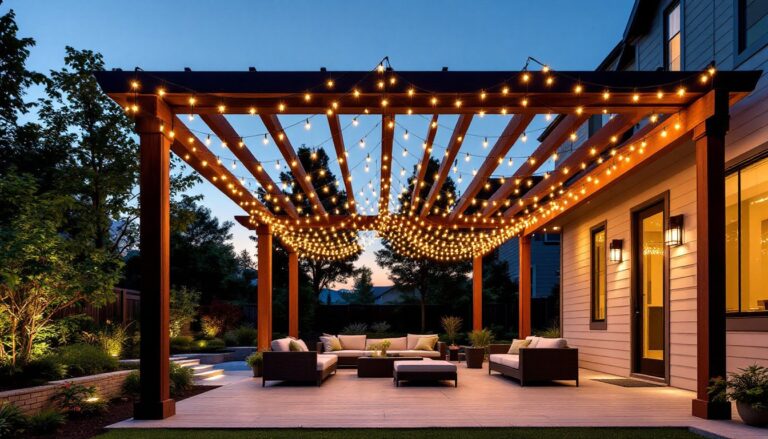
Outdoor lighting transforms a dark yard into a functional, secure, and inviting extension of your home. But stringing up a few solar stakes won’t cut it if you’re serious about curb appeal, safety, or showcasing landscaping after sunset. Professional outdoor lighting installation services handle everything from voltage calculations to transformer placement, zoning permits to weatherproof junction boxes. Whether you’re lighting a walkway, deterring prowlers, or highlighting specimen trees, understanding what pros bring to the table, and how to hire the right one, makes the difference between a flickering mess and a system that lasts a decade or more.
Table of Contents
ToggleKey Takeaways
- Professional outdoor lighting installation services ensure electrical code compliance, system longevity, and cohesive design that DIY approaches rarely achieve.
- Outdoor lighting installation breaks into three main specialties: landscape and garden lighting for visual appeal, security and motion-activated lighting for deterrence, and multi-zone systems that combine aesthetics with safety.
- A qualified outdoor lighting contractor should hold appropriate state licensing, carry at least $1 million liability insurance, provide a nighttime site visit with a scaled lighting plan, and offer a minimum one-year labor warranty.
- Typical costs for outdoor lighting installation range from $2,000–$5,000 for low-voltage landscape systems to $8,000–$15,000+ for high-end designs, with major cost drivers including fixture materials, cable run length, transformer capacity, and design complexity.
- LED fixtures reduce energy consumption by 75 percent compared to halogen alternatives and lower annual electricity costs to $50–$75/year, making them the preferred choice for modern outdoor lighting installations.
- Before hiring, verify the contractor will pull necessary permits, check local frost-line and zoning requirements, and review completed projects with references to confirm their outdoor lighting installation quality lasts a decade or longer.
Why Professional Outdoor Lighting Installation Matters
DIY landscape lighting kits promise plug-and-play simplicity, but reality hits when you’re trenching cable through rocky soil at dusk or troubleshooting a transformer that trips every time it rains. Professionals bring three critical advantages: electrical code compliance, longevity, and design coherence.
Most outdoor lighting runs on low-voltage systems (12V or 24V), which don’t require a licensed electrician in many jurisdictions, but the line-voltage feed from your breaker panel does. A qualified installer ensures the transformer is sized correctly (total wattage load plus 20 percent headroom), GFCI-protected per NEC Article 680 (if near water features), and mounted in a weatherproof enclosure. They also pull permits when necessary, avoiding fines or insurance headaches down the road.
Beyond code, pros understand photometric planning: calculating lumen output, beam spread, and fixture spacing to avoid hot spots and dark gaps. They know that die-cast brass or copper fixtures resist corrosion better than plastic housings, that LED retrofits slash energy use by 75 percent compared to halogen, and that shielded downlights prevent glare and light trespass. A well-designed system highlights architectural features, layers ambient and accent lighting, and integrates with timers or smart controls, something a homeowner with a shovel and a YouTube video rarely achieves.
Types of Outdoor Lighting Services Available
Professional outdoor lighting breaks into several specialties, each with distinct goals, equipment, and installation techniques. Choosing the right service starts with understanding what problem you’re solving: aesthetics, security, safety, or all three.
Landscape and Garden Lighting
Landscape lighting emphasizes visual drama and plant health. Installers use path lights (typically 1.5–3 watts LED) to line walkways without creating glare, well lights recessed in-grade to uplight trees or architectural columns, and spotlights (3–10 watts) to accent focal points like water features or specimen shrubs. Moonlighting, downlights mounted high in tree canopies, casts dappled shadows that mimic natural moonlight.
Pros run 14-gauge or 12-gauge direct-burial cable in trenches 6–12 inches deep (check local frost-line requirements) and use watertight wire connectors rated IP67 or higher. They position fixtures to avoid root zones, space them to overlap light pools by about 30 percent, and angle beams to prevent upward light pollution. Many services now integrate smart controllers (WiFi or Zigbee) that adjust brightness by season, sync with sunset tables, and respond to motion or ambient light sensors.
For homeowners interested in creative illumination beyond standard fixtures, exploring artistic light installations can inspire unique design approaches that blend function with visual impact.
Security and Motion-Activated Lighting
Security lighting prioritizes coverage, brightness, and deterrence. Installers mount floodlights (typically 20–50 watts LED, 1,500–3,000 lumens) on eaves, garage corners, or dedicated poles to eliminate blind spots near entries, driveways, and side yards. Motion sensors (passive infrared or dual-technology) trigger lights when movement is detected within a 180-degree zone, conserving energy and alerting occupants to activity.
Key specs matter: dusk-to-dawn photocells keep perimeter lights on all night, adjustable sensitivity prevents false triggers from small animals or windblown branches, and timer overrides let you set duration (5 seconds to 10 minutes). Professionals wire these fixtures to dedicated circuits, install tamper-resistant housings, and aim beams downward to comply with dark-sky ordinances.
Many outdoor track lighting systems now incorporate motion and smart dimming for flexible security coverage along decks and patios.
How to Choose the Right Outdoor Lighting Installation Service
Not all lighting contractors are created equal. Landscape lighting specialists, electricians who dabble in outdoor work, and full-service design-build firms each bring different skill sets. Vet candidates with these criteria:
Licensing and insurance. Verify the contractor holds the appropriate electrical or landscape-contractor license for your state (requirements vary). Request proof of general liability insurance (minimum $1 million) and workers’ compensation if they employ a crew. If the job involves line-voltage work, adding a new circuit or relocating a panel, confirm the electrician is licensed and bonded.
Portfolio and references. Ask to see completed projects similar to yours: modern minimalist vs. traditional estate lighting, hardscape vs. naturalistic gardens. Request contact info for three recent clients and ask about responsiveness, cleanup, and whether the system still works flawlessly a year later.
Design process. Reputable installers offer a nighttime site visit to evaluate existing light sources (streetlamps, porch fixtures, neighbors’ floodlights) and discuss goals. They should present a scaled lighting plan showing fixture locations, cable runs, transformer placement, and load calculations. Be wary of contractors who quote over the phone without measuring.
Warranty and service. Quality fixtures carry 5–10 year warranties on LEDs and housings: transformers typically 3–5 years. The installer should warranty labor for at least one year and offer seasonal maintenance packages (cleaning lenses, re-aiming fixtures, checking connections). For cost benchmarking and contractor comparisons, homeowners often consult resources like HomeAdvisor or ImproveNet to gather estimates and read verified reviews.
Finally, confirm the contractor will pull permits if required. Some municipalities mandate permits for any outdoor wiring: others exempt low-voltage systems. Skipping this step can void insurance and complicate home sales.
What to Expect During the Installation Process
A professional outdoor lighting install typically spans two to five days, depending on system size and site complexity. Here’s the sequence:
-
Site prep and layout. The crew marks fixture locations with flags, maps cable routes to avoid irrigation lines and tree roots, and confirms transformer location near a GFCI outlet or dedicated circuit. They notify you of any conflicts (underground utilities, shallow bedrock) discovered during the survey.
-
Trenching and conduit. Using a flat-blade spade or trenching machine, installers dig narrow channels 6–12 inches deep. In rocky or root-heavy soil, they may run cable through schedule 40 PVC conduit for added protection. Direct-burial UF-B cable (rated for wet locations) is pulled through conduit or laid directly in sandy backfill.
-
Transformer and circuit installation. The transformer is mounted on an exterior wall, post, or inside a weatherproof pedestal. An electrician connects the line-voltage feed, installs a GFCI breaker if needed, and verifies voltage at each tap (most transformers have multiple output terminals, common, 12V, 13V, 14V, 15V, to compensate for voltage drop over long runs).
-
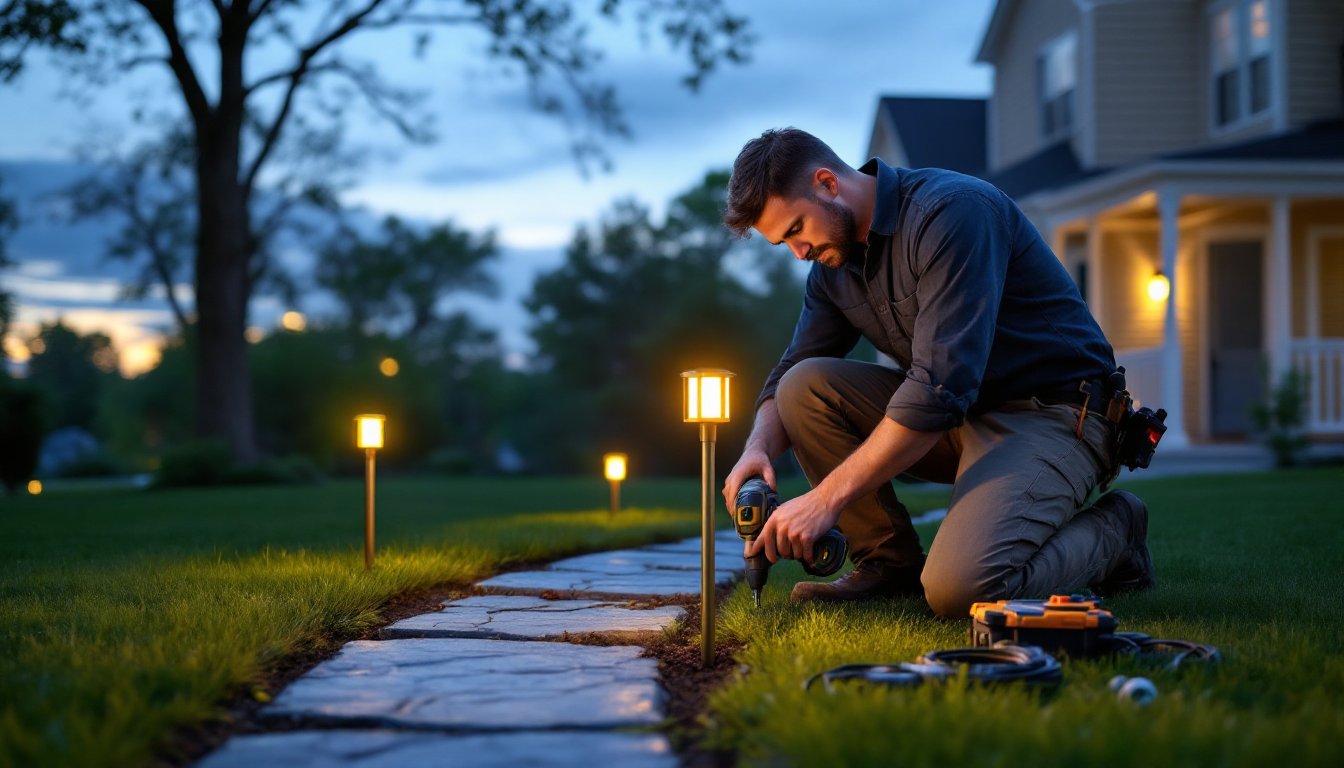
Fixture mounting and aiming. Each fixture is connected using silicone-filled wire nuts or crimp connectors, then staked, recessed, or bracket-mounted. Pros test illumination at dusk, adjusting beam angles to eliminate glare and balance light levels. They walk the property with you to confirm the design meets expectations.
-
Programming and cleanup. Smart controllers are configured with schedules, zones, and automation rules. Trenches are backfilled and tamped: sod or mulch is replaced. The crew hauls away excess soil and debris, leaving only the finished lighting system.
Expect minor lawn disruption. Professional installers minimize damage, but grass may need reseeding along trenches. Request that they flag cable routes on a site plan for future reference when planting or excavating.
Cost Factors for Outdoor Lighting Installation
Outdoor lighting costs vary widely based on system complexity, fixture quality, and labor rates. Ballpark figures as of 2026:
Low-voltage landscape lighting: $2,000–$5,000 for a typical single-family home (8–16 fixtures, one transformer, 200–400 feet of cable). High-end systems with die-cast brass or copper fixtures, architectural-grade LEDs, and smart controls run $8,000–$15,000 or more.
Security and floodlighting: $300–$800 per fixture installed, including line-voltage wiring and permits. Motion-sensor LED floodlights with dusk-to-dawn sensors average $150–$400 each: add $200–$500 for an electrician to run a new circuit if no convenient outlet exists.
Key cost drivers:
- Fixture materials. Plastic housings cost $20–$50 each: cast aluminum or powder-coated steel fixtures run $80–$200: solid brass or copper pieces start at $150 and climb past $400 for architectural designs.
- Cable runs. Longer distances require heavier-gauge wire (12 AWG vs. 14 AWG) to prevent voltage drop, raising material costs. Rocky soil or extensive landscaping increases trenching labor.
- Transformer capacity. A 300-watt transformer costs $150–$300: a 600-watt or multi-tap model runs $400–$700. Smart transformers with WiFi and dimming capability add $200–$500.
- Design complexity. Multi-zone systems, color-changing RGB fixtures, and integration with existing home-automation platforms (Lutron, Control4) require advanced programming, pushing hourly labor rates from $75–$125 to $150–$250.
Regional labor rates fluctuate significantly: installers in major metros charge 30–50 percent more than rural markets. Material costs also shift with commodity prices (copper wire, aluminum extrusions). Always request itemized bids and compare fixture specs, not just bottom-line numbers.
Many pros offer maintenance contracts ($150–$400/year) covering seasonal adjustments, bulb replacements (if still using halogens), and connection inspections. LED systems reduce this need, but corrosion and soil movement still warrant periodic checks.
For homeowners planning broader illumination projects indoors and out, lighting solutions offer guidance on cohesive design strategies, while lighting layout tools help visualize fixture placement before installation begins. When gathering contractor bids, many homeowners cross-reference estimates using platforms like Angi to compare local pros and read verified customer reviews.
Finally, factor in energy costs. A 200-watt LED system running six hours nightly costs roughly $50–$75/year in electricity (at $0.13/kWh). Halogen equivalents can triple that figure, another reason professionals now default to LED for both performance and operating expense.