Good exterior lighting isn’t just about curb appeal, it’s about safety, security, and making your property usable after dark. Flood lights deliver broad, high-intensity illumination that can deter intruders, light up driveways and walkways, and extend the hours you can spend in outdoor living areas. Whether someone’s looking to upgrade old halogen fixtures or install smart-enabled LEDs from scratch, understanding the options and installation requirements helps avoid costly mistakes and ensures the system performs as needed for years to come.
Table of Contents
ToggleKey Takeaways
- Outdoor flood lighting enhances security, safety, and functionality by illuminating driveways, walkways, and entry points with broad, high-intensity beams spanning 120 degrees or more.
- LED flood lights outperform halogen options by drawing 70–80% less power, lasting 25,000–50,000 hours, and paying for themselves within two years through energy savings despite higher upfront costs of $25–$80 per fixture.
- Strategic placement of flood lights 8–10 feet high above entry points and angled downward, combined with motion sensors covering approach paths, maximizes both security effectiveness and energy efficiency by reducing usage 50–70%.
- A typical two-car driveway requires 1,500–2,500 lumens total, while a backyard patio needs 3,000–5,000 lumens depending on size—proper lumens and beam angle selection prevents both security gaps and wasted energy.
- Successful flood light installation requires weatherproof junction boxes, proper wire connections with outdoor-rated wire nuts, sealed penetrations with silicone caulk, and compliance with NEC codes to prevent water damage and electrical hazards.
What Is Outdoor Flood Lighting and Why Do You Need It?
Outdoor flood lights are wide-beam, high-output fixtures designed to illuminate large areas, think driveways, yards, building facades, and entry points. Unlike spotlights that focus a narrow beam on a specific feature, flood lights spread light across 120 degrees or more, making them ideal for security and general visibility.
Homeowners install flood lighting for three main reasons: security (motion-activated lights startle intruders and alert residents), safety (illuminating steps, pathways, and dark corners reduces trip hazards), and functionality (extending usable hours for outdoor kitchens, play areas, or garages). Many municipalities don’t require permits for low-voltage or simple fixture replacements, but any work involving new 120V circuits typically falls under National Electrical Code (NEC) standards and may need inspection. Check local codes before running new wiring.
Modern flood lights range from 800 to 3,000+ lumens per fixture. For reference, a standard 60-watt incandescent bulb produces about 800 lumens. A two-car driveway usually needs 1,500–2,500 lumens total: a backyard patio might need 3,000–5,000 lumens depending on size and desired brightness.
Types of Outdoor Flood Lights for Your Property
LED vs. Halogen Flood Lights
LED flood lights dominate the market in 2026 for good reason. They draw 70–80% less power than equivalent halogen fixtures, last 25,000–50,000 hours (versus 2,000–4,000 for halogen), and generate far less heat. A typical 20W LED delivers the same output as a 150W halogen. Upfront cost runs higher, $25–$80 per fixture compared to $10–$30 for halogen, but energy savings recoup the difference within two years for most households. LED color temperature ranges from 3,000K (warm white) to 5,000K (daylight): 4,000K strikes a neutral balance suitable for most security and task lighting.
Halogen flood lights remain an option for those needing cheap, immediate replacements or preferring the warmer, more natural color rendering halogen provides. They’re plug-and-play if an existing halogen fixture fails, but the short lifespan and high energy draw make them a poor long-term investment. Many models tested by independent sources also struggle with damp ratings: when considering halogen, verify the fixture carries a UL wet location rating if it’ll be exposed to rain.
One advantage halogen retains: instant full brightness in freezing temps. Some budget LEDs dim slightly or delay startup below 0°F, though premium models now include cold-weather drivers that eliminate this issue.
Motion-Sensor and Smart Flood Lighting Options
Motion-sensor flood lights use passive infrared (PIR) detectors to trigger illumination when they sense heat movement. Sensitivity and range vary, most detect motion 20–40 feet out and offer adjustable duration (30 seconds to 10 minutes). These are the workhorse choice for security and energy savings: lights stay off unless needed, extending LED lifespan and cutting electricity use by 50–70% compared to dusk-to-dawn photocells.
Adjust sensor angle carefully during installation. Mounting too high or aimed incorrectly leads to missed triggers or false alarms from passing cars and animals. Most units include a test mode and adjustable detection zones.
Smart flood lights integrate with Wi-Fi or hub-based systems (Z-Wave, Zigbee) for remote control, scheduling, and integration with voice assistants and home automation. Models from manufacturers like Ring and Arlo bundle cameras with flood lighting, creating multipurpose security nodes. Smart options cost $60–$200+ per fixture, but the ability to trigger lights from a phone or sync them with other devices adds flexibility traditional sensors can’t match. Setup requires a stable Wi-Fi signal at the installation point, test signal strength before committing.
Where to Install Flood Lights Around Your Home
Strategic placement matters more than raw lumens. Start by identifying dark zones that create security vulnerabilities or safety hazards: side gates, back doors, detached garages, basement stairwells, and blind corners.
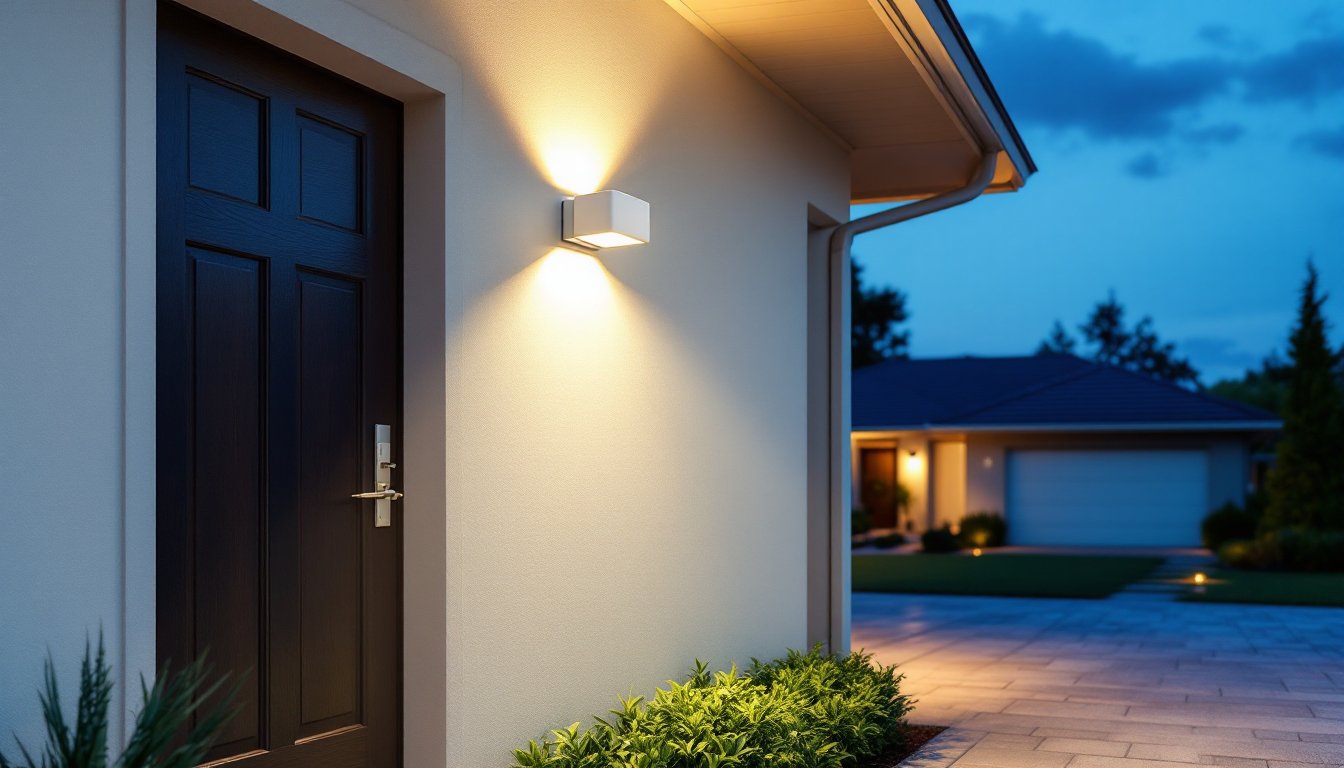
Entry points should be top priority. Mount flood lights 8–10 feet high above doors and garage entries, angled downward to eliminate shadows where someone could hide. If the fixture includes a motion sensor, position it to cover the approach path, not just the door itself.
Driveways and walkways benefit from dual fixtures at opposite ends or staggered along long runs, minimizing glare while maintaining even coverage. Avoid mounting lights directly above where vehicles park: headlight-height fixtures blind drivers backing out. Instead, mount to the side at 10–12 feet, angled across the drive.
For yards and patios, balance security with livability. Motion-sensor floods work well for perimeter areas that need occasional full illumination, while dimmable or lower-lumen fixtures suit spaces used for entertaining. Overlapping coverage from multiple fixtures prevents dark pockets but requires careful aiming to avoid light trespass into neighbors’ windows.
Building codes generally don’t restrict flood light placement, but light pollution ordinances in some areas limit upward spill and glare beyond property lines. Fixtures should be fully shielded or aimed downward to comply. When working near existing structures, maintain clearance from combustible materials, many outdoor track lighting systems and decorative fixtures are rated for closer mounting, but high-output floods generate more heat.
Don’t overlook power source access. Running new conduit through siding or burying cable for detached structures adds time and cost. If existing junction boxes or eave-mounted receptacles are available, use them. Battery-powered solar flood lights offer an alternative for remote spots, though output and reliability lag behind hardwired options.
How to Choose the Right Flood Lights for Your Needs
Start with lumens and beam angle. For security lighting covering 400–600 square feet (a typical two-car driveway or small yard), look for fixtures delivering 1,500–2,500 lumens with a 120–140 degree beam spread. Tighter beams (90–110 degrees) work for focused areas like doorways: wider beams (140–180 degrees) suit open yards.
Color temperature affects visibility and mood. 5,000K (daylight white) maximizes contrast and alertness, ideal for security and task areas. 3,000–4,000K (neutral to warm white) feels less harsh and blends better with landscape lighting for patios and entertainment zones. When matching multiple fixtures, buy the same brand and model: color temp varies between manufacturers even at the same Kelvin rating.
Check the IP (Ingress Protection) rating. Outdoor fixtures should carry at least IP65 (dust-tight, protected against water jets). Fixtures in direct weather exposure or coastal areas need IP66 or higher. UL wet location listings are mandatory for any fixture exposed to rain: damp-rated fixtures are only suitable under eaves or covered areas.
Power and wiring determine installation complexity. 120V fixtures deliver the highest output and integrate with existing household circuits but require electrical boxes, conduit, and potentially a permit. Low-voltage (12V) systems are safer and easier to DIY, running off a transformer plugged into a standard outlet or hardwired in the garage. Output tops out around 1,200 lumens per fixture with low-voltage, which limits their use to accent and pathway applications rather than security floods.
Solar-powered floods have improved, but remain a compromise. Budget models rarely exceed 500 lumens and dim noticeably after an hour. Premium units with separate, larger solar panels and lithium batteries push 1,000–1,500 lumens and hold charge better, but cost $80–$150 per fixture. They’re best reserved for locations where trenching cable isn’t feasible.
Finally, read real-world tests before buying. Independent evaluations at sources like CNET’s outdoor floodlight reviews and Digital Trends’ motion detection tests reveal which models actually deliver advertised lumens and how reliably sensors perform in different weather.
DIY Installation: Step-by-Step Guide to Installing Outdoor Flood Lights
Safety first: Work with the circuit breaker off and use a non-contact voltage tester to confirm power is dead before touching any wires. Wear safety glasses and work gloves. If the project involves running new circuits or working inside the main panel, hire a licensed electrician, this isn’t the place to learn on the job.
Tools and Materials:
- Non-contact voltage tester
- Drill/driver with bits for masonry or wood (depending on mounting surface)
- Wire strippers and lineman’s pliers
- Outdoor-rated junction box (if installing new fixture location)
- Conduit and fittings (if running exposed wiring)
- Silicone caulk (exterior-grade)
- Wire nuts (outdoor rated, filled with dialectric grease for corrosion resistance)
- Flood light fixture with hardware
- Ladder rated for your working height
Step-by-Step Installation:
-
Turn off power at the breaker and confirm with the voltage tester.
-
Mount the junction box. If replacing an existing fixture, remove the old unit and inspect the box. Plastic boxes crack over time, replace with a metal weatherproof box if needed. For new installations, mount the box to a stud or use a retrofit ceiling box rated for the fixture weight (most flood lights are 3–5 lbs). Seal around the box with silicone caulk to prevent water intrusion.
-
Run wiring if installing a new location. Use UF-B (underground feeder) cable for buried runs or rigid conduit for exposed runs along walls. Bury cable at least 12 inches deep (18 inches under driveways) per NEC Article 300.5. Local codes may require deeper burial or metal conduit. If tapping into an existing circuit, confirm the circuit can handle the additional load. A 15-amp, 120V circuit supports roughly 1,800 watts: most LED floods draw 15–30W, but older circuits may already be loaded.
-
Connect fixture wiring. Match black to black (hot), white to white (neutral), and green or bare copper to ground. Twist connections clockwise, secure with wire nuts, and wrap with electrical tape. Tuck wires neatly into the box, don’t force the cover if wires are bunched.
-
Attach the fixture. Most models mount with two screws through a bracket. Ensure the gasket seats flush against the mounting surface. If installing on vinyl siding, use a mounting block to create a flat surface and prevent crushing the siding.
-
Adjust sensor settings if applicable. Set detection range, sensitivity, and timer duration per manufacturer instructions. Test by walking through the coverage area at different angles.
-
Restore power and test. Cycle the fixture on and off several times, and check for flicker or delay. If installing multiple fixtures on the same circuit, turn them all on simultaneously to confirm the breaker holds.
Common Mistakes:
- Skipping caulk. Water infiltration is the #1 cause of premature fixture failure. Seal every penetration.
- Over-tightening screws. You’ll crack plastic housings or strip threads. Snug, not gorilla-tight.
- Ignoring wire gauge. For runs over 50 feet, bumping from 14 AWG to 12 AWG reduces voltage drop and prevents dimming.
- Poor sensor aiming. Motion sensors need a clear view of the approach path and should be angled slightly downward, not straight out.
After installation, monitor performance for a few nights. Fine-tune sensor angle and duration as needed. If DIY installation feels beyond your skill level, especially for new circuit work, hiring a pro runs $150–$300 per fixture installed, cheap compared to fixing DIY electrical mistakes. Guides like those found at Popular Mechanics’ floodlight installation tips offer additional troubleshooting for common issues.
Well-placed, properly installed flood lighting transforms a home’s exterior from a security risk into a safe, usable extension of living space. Take the time to plan, use quality materials, and follow code. The difference shows every time the lights come on.