String lights do more than brighten a patio, they create ambiance that turns an ordinary backyard into a destination. Whether hosting summer dinners or winding down after dark, the right outdoor string lighting defines zones, extends usable hours, and adds architectural interest without the cost of hardwired fixtures. In 2026, options range from classic Edison filaments to weatherproof LEDs that last decades. This guide breaks down types, must-have features, top picks, and installation strategies so homeowners can choose and hang lights that actually perform.
Table of Contents
ToggleKey Takeaways
- Outdoor string lighting offers a cost-effective alternative to hardwired landscape fixtures, delivering ambiance and property value for less than $50 per 27-foot strand.
- LED globe string lights provide superior energy efficiency and longevity (25,000–50,000 hours), while Edison-style bulbs deliver authentic vintage warmth but require careful placement in low-wind areas.
- Durability depends on weather ratings (IP65 minimum), wire gauge (18 AWG or thicker), and replaceable bulbs—non-replaceable integrated LEDs are convenient but create e-waste if they fail.
- Proper installation requires measuring first, using zinc-coated eye hooks or concrete anchors, and incorporating support cables for spans over 15 feet to prevent sagging and ensure longevity.
- LED dimmers need compatible drivers to avoid flickering, while incandescent bulbs work with standard dimmers; verify compatibility before purchasing dimmer switches.
- Year-round outdoor string lighting projects deliver one of the highest ROI in outdoor design, instantly extending patio usability after sunset and transforming backyards into inviting entertainment spaces.
Why Outdoor String Lighting Is a Game-Changer for Your Home
String lights solve the same problem landscape lighting does, extending outdoor living after sunset, but at a fraction of the cost and complexity. A 48-foot strand costs less than a single hardwired path light, yet delivers immediate visual impact.
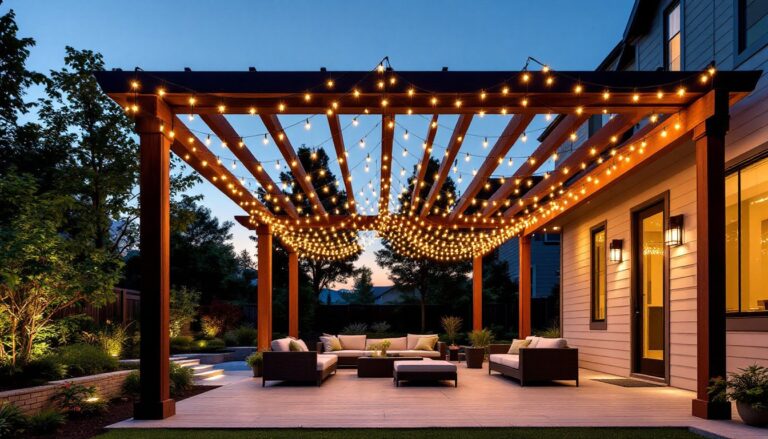
Ambiance and Usability: Overhead string lights create a “ceiling” effect that makes open patios and decks feel intimate. They diffuse light downward, reducing glare while illuminating seating areas, walkways, and dining tables. This is particularly valuable in spaces without permanent roofing or architectural features.
Flexibility: Unlike buried landscape lights or wall-mounted sconces, string lights are repositionable. Hang them for a summer party, take them down for storm season, or rearrange as furniture moves. They work on temporary rentals and permanent structures alike.
Property Value: Well-lit outdoor spaces photograph better and signal to buyers that the backyard is finished, functional space, not just lawn. According to Southern Living, outdoor living features consistently rank high in buyer preferences, especially in warm climates.
Safety: String lights aren’t security lighting, but they do illuminate trip hazards like steps, transitions between deck and yard, and low planters. Pair them with task lighting for grills or work areas.
Code and Electrical Considerations: Most low-voltage string lights (under 30 volts) don’t require permits. Standard 120V strands plugged into GFCI-protected outdoor outlets are typically code-compliant, but running new outdoor circuits or hardwiring junction boxes may require permits and an electrician. Check local electrical codes before drilling through siding or running wire underground.
Types of Outdoor String Lights to Consider
String lights fall into a few main categories, each with distinct aesthetics and performance traits.
Edison Bulb String Lights
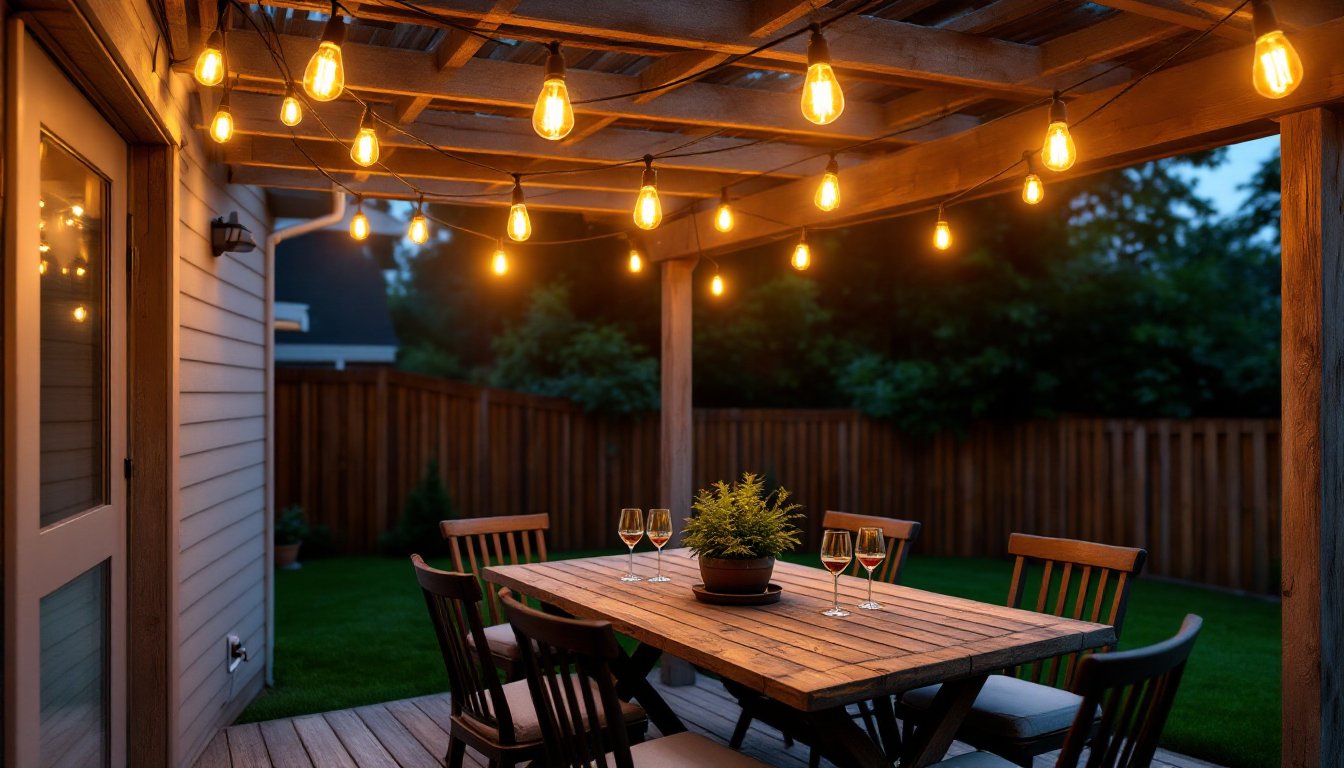
Edison-style bulbs feature exposed filaments (or LED filament replicas) in clear or amber glass. The vintage look pairs well with industrial, farmhouse, and bistro-style patios.
Pros:
- Warm color temperature (2200K–2700K) mimics candlelight.
- Visible filament glow creates depth and texture, especially at night.
- Widely available in both incandescent and LED versions.
Cons:
- Incandescent versions draw 5–15 watts per bulb, adding up fast on a 25-bulb strand.
- Glass bulbs are fragile: expect breakage if installing in high-traffic or windy areas.
- Larger bulb diameter (ST40 or G40 sizes) requires stronger suspension cables or support posts.
Best Use: Covered patios, pergolas, or low-wind zones where the bulbs won’t swing into posts or railings. Pair with a dimmer for mood control.
LED Globe String Lights
LED globes use plastic or acrylic housings with internal diodes. They range from warm white to RGB color-changing models.
Pros:
- Energy efficiency: A 48-foot strand draws as little as 7 watts total, about the cost of a single incandescent bulb.
- Longevity: Quality LEDs last 25,000–50,000 hours (roughly 10–20 years of seasonal use).
- Durability: Shatterproof housings survive drops, hail, and contact with branches.
- Weather resistance: Look for IP65 or higher ratings for full rain and snow exposure.
Cons:
- Cheaper models produce flat, clinical light (5000K+). Stick to warm white (2700K–3000K) for outdoor comfort.
- Color rendering index (CRI) below 80 can make food and faces look washed out.
- Non-replaceable bulbs mean the entire strand is trash if diodes fail (though failure rates are low).
Best Use: Year-round installations, high-wind areas, or budget-conscious projects. LED lights offer the best cost-per-lumen ratio for permanent outdoor setups.
Top Features to Look for When Choosing String Lights
Not all strands are created equal. Here’s what separates pro-grade lights from big-box throwaways.
Weather Rating: Look for IP65 (protected against water jets) at minimum. IP67 (submersion-resistant) is overkill unless the strand will be in standing water. Check that both the bulbs and the cord carry the rating, some manufacturers skimp on cord insulation.
Wire Gauge: 18 AWG or thicker wire reduces voltage drop over long runs. Thin 22 AWG wire causes dimming at the far end of 48-foot+ strands. For runs over 100 feet, consider splitting into two circuits.
Bulb Spacing: Standard spacing is 12 inches for ambient lighting, 6–8 inches for denser, cafe-style looks. Closer spacing requires more bulbs and draws more power but creates a fuller canopy effect.
Replaceable vs. Integrated Bulbs: Replaceable bulbs (E12 or E26 sockets) let you swap out failures or change color temperature. Integrated LEDs are more weatherproof but turn the whole strand into e-waste when diodes die.
Dimmer Compatibility: Incandescent bulbs dim smoothly with standard dimmers. LEDs need dimmable drivers, verify compatibility before buying a dimmer switch. Non-dimmable LEDs will flicker or shut off.
Cord Color: Black or brown cord disappears against wood and foliage. White cord shows less on painted structures. Green works for stringing through trees. Avoid mismatched cord unless you like the look of floating bulbs.
End-to-End Connectors: Strands that link end-to-end save outlet space and simplify layout. Check the maximum linked length, usually 200–300 feet for LEDs, less for incandescent.
UL Listing: UL or ETL certification confirms the strand meets North American safety standards for outdoor use. Skip unbranded imports without third-party testing.
Our Top Picks for Best Outdoor String Lighting
These recommendations balance durability, light quality, and value across common use cases.
Best Overall: Brightech Ambience Pro LED String Lights
Shatterproof 1-watt LED bulbs, 27-foot strand with 12-inch spacing, warm white (2700K). Weatherproof to IP65, replaceable bulbs, end-to-end connectors rated for 750 feet total. Black cord blends with most backdrops. Runs cool enough to touch after hours of use. Around $35–$45 per 27-foot strand depending on sales.
Best Budget: Newhouse Lighting Outdoor LED String Lights
Plastic G40 bulbs, 25-foot strand, warm white (2200K), IP44 rating (splash-resistant). Non-replaceable integrated LEDs, but solid build quality for the price (~$20–$25). Good for covered porches or seasonal use. Not rated for freezing rain or heavy snow.
Best Edison Look: Brightown Outdoor String Lights with Edison Bulbs
Glass ST38 bulbs with LED filament replicas, 25-foot strand, 2700K. Bulbs screw into E12 candelabra bases (replaceable). IP65-rated sockets, black cord. Draws 0.9 watts per bulb. Slightly pricier (~$40–$50) but delivers authentic filament glow without incandescent power draw.
Best for Large Spaces: Outdoor string lights from Gardenista curated brands
Commercial-grade strands (often sold in 100-foot spools) with 15-inch spacing, 14 AWG wire, and S14 medium-base sockets. Built for cafe and event use but work great on large patios or pool decks. Expect $80–$120 per 100 feet. Bulbs sold separately, allowing custom color temperatures.
Runner-Up: Govee Outdoor String Lights (Smart)
RGB + warm white LEDs, Wi-Fi control via app, 48 feet. Scheduling, dimming, and color scenes. IP65 rating. Around $60–$70. Best for tech-forward setups or parties. Avoid if you want simple plug-and-forget operation.
Creative Installation Ideas for Maximum Impact
Proper installation makes the difference between sagging, tangled wires and a polished overhead canopy.
Measure First: Sketch the layout on graph paper, marking anchor points (posts, walls, trees). Add 10% extra length for sag and draping. String lights hung dead-straight look institutional: a gentle 12–18 inch sag per 10-foot span creates natural curves.
Choose Anchor Points: Wood posts, pergola beams, and fascia boards are ideal. Use screw-in eye hooks (zinc-coated or stainless) rated for outdoor use. For masonry or stucco, drill and install concrete anchors with eye bolts. Avoid hanging from gutter hangers, they’re not load-rated and will bend.
Support Cable for Long Runs: Spans over 15 feet need a stainless steel support cable (1/16-inch or 1/8-inch diameter) to prevent sagging. String the lights below the cable using cable ties or S-hooks every 2–3 feet. Tension the cable with a turnbuckle at one end.
Tree-Hanging: Wrap tree-safe straps around trunks or branches, never screw directly into live wood. Trees grow and move: allow slack and check attachment points annually. String lights can enhance outdoor track lighting setups by adding overhead ambiance.
Pattern Ideas from Sunset Magazine:
- Parallel lines: Run strands from house to fence, spaced 4–6 feet apart. Clean, modern look.
- Zigzag: Angle lines across the patio for dynamic geometry.
- Perimeter loop: Outline the deck or seating area for a defined glow.
- Canopy drape: Run from a central high point (pergola peak, tree) outward to posts, creating a tent effect.
Power and Outlets: Plug into GFCI-protected outdoor outlets. If the circuit also powers tools or other loads, verify total amperage won’t trip the breaker. A 15-amp circuit can handle roughly 1,800 watts: most LED strands draw under 50 watts, so capacity is rarely an issue. For permanent installations, consider burying UF-B cable in conduit to a dedicated outlet near the fixture zone (requires permit and electrician in most jurisdictions).
Safety Checks: Test strands on the ground before hanging. Look for damaged insulation, loose sockets, or broken bulbs. Don’t splice or extend cords with indoor-rated wire. Use only outdoor-rated extension cords if needed. Install lights when the weather’s dry, working with wet hands on a ladder near electrical connections is asking for trouble.
Seasonal Storage: Take down strands before heavy snow or hurricane season unless they’re rated for extreme weather. Coil gently around a cord reel or cardboard to prevent kinks. Store in a dry space, moisture in sockets causes corrosion. Label each strand with length and bulb type for easy spring setup.
Alternatives to String Lights: For task lighting or accent work, consider portable lighting for movable spots, or lighting solutions that integrate string lights with other fixtures for layered illumination.
String lights pair especially well with rustic or casual design themes, including farmhouse lighting styles that emphasize warmth and texture.
Final Thought: String lights are one of the highest ROI projects in outdoor design, modest cost, huge visual payoff, and zero structural work required. Done right, they make backyards usable well past sunset and turn simple patios into places people actually want to spend time.