Outdoor lighting isn’t just about flipping a switch when darkness falls, it’s about creating zones, highlighting architecture, and making your property safer while adding curb appeal. Whether you’re lighting a front walkway, accenting a Japanese maple, or extending usable hours on your deck, the right fixtures and placement make the difference between a flat, uninviting yard and a space that feels intentional after dark. This guide walks through practical landscape lighting ideas, from pathway solutions to security strategies, with specific fixture types, installation tips, and layout considerations that work for DIYers and those planning a pro install alike.
Table of Contents
ToggleKey Takeaways
- Landscape lighting serves three critical purposes—safety, security, and aesthetics—transforming your outdoor space while reducing trip hazards and deterring intruders.
- Low-voltage LED systems (12V or 24V) make DIY landscape lighting ideas achievable without permits, using direct-burial cable and plug-in transformers that are safer and more energy-efficient than line-voltage alternatives.
- Layered lighting—combining pathway lights, accent uplighting on trees, and task lighting over gathering spaces—creates visual depth and a cohesive outdoor environment visible from multiple vantage points.
- Pathway and step lights should be spaced 8–10 feet apart with downward-facing lenses to minimize glare, while hardscape lights mounted flush in pavers provide a modern aesthetic for landscape lighting designs.
- Motion-activated floodlights (2,000–3,000 lumens at 8–10 feet height) paired with dusk-to-dawn photocell lights provide layered security that deters trespassers and alerts homeowners to movement near entry points.
- All outdoor lighting circuits must connect to GFCI-protected outlets, and line-voltage work requires proper conduit burial and potential permitting to ensure safety and code compliance.
Why Landscape Lighting Matters for Your Home
Well-designed landscape lighting design serves three purposes: safety, security, and aesthetics. On the safety front, it reduces trip hazards on steps, slopes, and uneven paths, critical for homes with older residents or frequent guests. From a security standpoint, motion-activated floods and strategically placed spotlights deter intruders by eliminating hiding spots near entries and garage doors.
Aesthetically, lighting extends your home’s architecture into the landscape. A single uplighted tree or softly lit stone wall adds depth and visual interest that daylight can’t deliver. Properties with thoughtful lighting typically photograph better for resale listings and create stronger first impressions during evening showings.
Modern low-voltage LED systems (12V or 24V) have made DIY installations feasible. Unlike line-voltage fixtures that require buried conduit and often a permit, low-voltage runs use direct-burial cable rated for wet locations and a plug-in transformer. Transformers range from 100W to 600W depending on fixture count: calculate total wattage and add 20% headroom to avoid overload. Most residential systems use warm white LEDs (2700K–3000K) to complement exterior finishes without the harsh blue cast of higher color temperatures.
Pathway and Walkway Lighting Solutions
Pathway lights prevent twisted ankles and guide visitors from the driveway to your front door. The two main types are path lights (stand-alone fixtures on stakes) and hardscape lights (recessed into pavers or retaining walls).
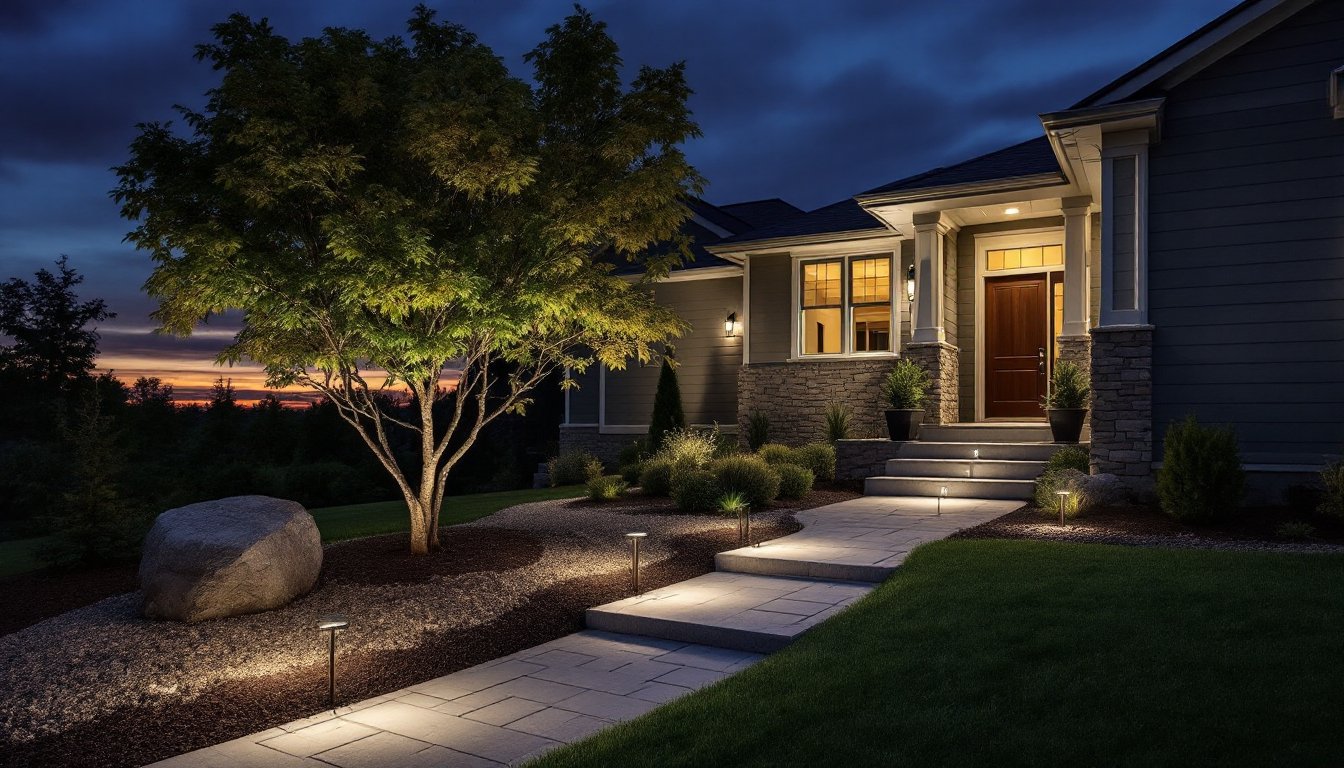
Path lights typically stand 18–24 inches tall and space 8–10 feet apart along walkways. For a natural look, stagger fixtures on alternating sides rather than lining them up like runway lights. Choose fixtures with downward-facing shades or frosted lenses to minimize glare, bare bulbs create hot spots that actually reduce visibility.
Hardscape lights mount flush in steps, seat walls, or paver edges. They’re ideal for modern or minimalist landscape lighting designs where visible fixtures disrupt clean lines. Installation requires cutting into masonry or pavers, so plan placement before hardscape goes down if you’re building new. Use IP67-rated fixtures for in-ground or wet locations: anything less will fail after the first heavy rain.
For front landscape lighting ideas, combine both types: path lights along the main walk and a pair of recessed lights in the porch steps. This layering provides functional light at foot level while keeping fixtures unobtrusive. Run cable along the path edge, burying it 6 inches deep in a shallow trench, and secure with landscape staples every 24 inches to prevent frost heave from pulling connections loose.
Accent Lighting for Trees, Plants, and Garden Features
Accent lighting adds drama by highlighting focal points, specimen trees, architectural plants, boulders, or water features. The two workhorse techniques are uplighting and downlighting (also called moonlighting).
Uplighting uses bullet-style spotlights or well lights placed at the base of trees or walls, aiming upward. Position fixtures 12–18 inches from the trunk for narrow trees (birch, redbud) and 24–36 inches for broad canopies (oak, maple). Use narrow beam angles (15–25 degrees) for tall, slender forms and wider floods (35–60 degrees) for spreading branches. Avoid placing lights directly against bark, heat buildup and moisture promote rot.
Downlighting mounts fixtures high in trees or on structures, casting light downward to mimic natural moonlight. This works beautifully over patios, garden beds, or seating areas. Use weatherproof mounting brackets and stainless steel hardware: cheap zinc-plated screws rust out in two seasons. Aim for soft, overlapping pools of light rather than isolated bright spots.
For water features or sculpture, submersible LED lights or low-voltage spotlights with colored lenses add visual interest. Underwater lights require IP68 rating and GFCI protection. Many decorative lighting options work well when integrated into garden beds, but keep wattage low (3–5W per fixture) to avoid washing out plant textures. Garden features benefit from a landscape lighting layout design that considers sightlines from multiple vantage points, inside the house, the driveway, and outdoor seating areas.
Outdoor Living Space Lighting Ideas
Decks, patios, pergolas, and gazebos need layered lighting: task light for cooking or dining, ambient light for mood, and accent light for architectural details. Here’s how to approach each structure.
Deck and Patio Lighting Options
Deck lighting starts with safety: post cap lights or recessed step lights on stairs and level changes. Post caps replace standard rail caps with built-in LEDs, providing gentle ambient light and marking the deck perimeter. Step lights recess into risers, illuminating treads without creating trip hazards.
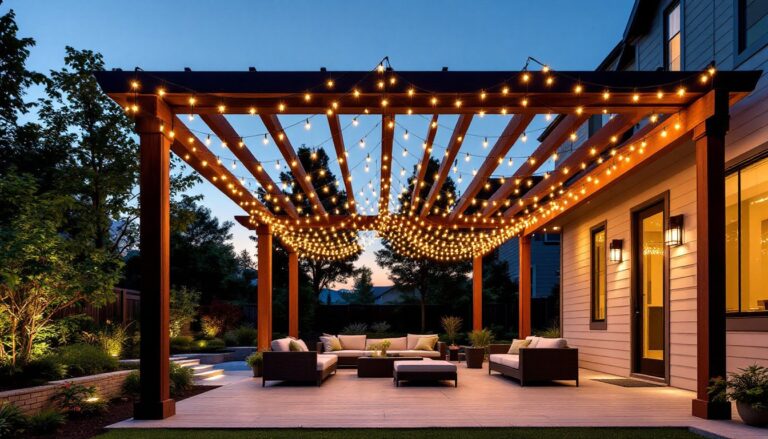
For task lighting over grills or dining tables, use overhead string lights or pendant fixtures on a covered patio. String lights (also called bistro lights) have become the go-to for casual patio lighting design, but don’t rely on them alone, add recessed downlights or track lighting in patio covers for functional task light. According to research on outdoor entertaining spaces, layering multiple light sources at different heights creates a more inviting atmosphere than a single overhead fixture.
Deck rail lights and under-rail LED strips add subtle accent lighting without cluttering the deck surface. Strips mount to the underside of top rails or bench seating, casting a soft glow downward. Use aluminum channels with diffuser lenses to protect the strips and reduce glare. Most LED strips run on 12V DC: use a transformer rated for outdoor use and install it in a weatherproof enclosure.
For front yard landscape lighting ideas that extend to patio spaces, consider integrating pathway lights that lead from the front walk through a side gate to the patio, creating a cohesive lighting narrative across the property. Modern lighting solutions often incorporate smart controls, allowing homeowners to adjust brightness and timing from a smartphone app.
Pergola and Gazebo Lighting Techniques
Pergolas and gazebos benefit from overhead chandeliers, string lights woven through rafters, or recessed canister lights in beams. For open pergolas, weatherproof chandeliers rated for damp or wet locations add a focal point above dining tables. Look for fixtures with UL wet location rating if the structure has no roof protection.
String lights work best when tensioned properly, sag creates a sloppy look and increases wind load. Use guide wire (galvanized steel cable) strung taut between posts or beams, then clip light strings to the wire with cable ties or hooks. This separates structural support from the lights, making bulb replacement easier.
For enclosed gazebos or pavilions, flush-mount ceiling fixtures or recessed downlights provide cleaner lines than pendants. Aim for 100–150 lumens per square meter for comfortable ambient light: dimmer switches let you dial it back for mood lighting. Gazebos often serve as focal points in landscape lighting design ideas, so add uplighting around the perimeter to highlight columns or decorative trim after dark.
Many landscape lighting designers recommend using LED lights for outdoor structures because of their longevity and energy efficiency, most outdoor-rated LEDs last 25,000–50,000 hours, compared to 1,000–2,000 for incandescent bulbs. That’s 15–25 years at typical usage rates.
Security and Safety Lighting Strategies
Security lighting focuses on coverage, brightness, and motion activation. The goal is to eliminate dark zones near entry points, garages, and side yards where someone could approach unnoticed.
Motion-activated floodlights are the most common solution. Mount them 8–10 feet high with a 180-degree detection pattern covering doors, driveways, or gates. Adjustable sensitivity and timer settings reduce false triggers from pets or branches. LED floods with 2,000–3,000 lumens provide ample light without the power draw of older halogen units. When planning a landscape lighting design guide, many experts from sources like Gardenista suggest integrating security fixtures into the overall aesthetic by choosing fixtures that match other exterior lighting styles.
For side yards and back gates, dusk-to-dawn photocell lights provide constant low-level illumination. These fixtures use ambient light sensors to turn on automatically at sunset and off at sunrise, eliminating timer programming. Pair them with motion floods for layered security, steady light deters casual trespassers, and motion activation alerts you to movement.
Step and grade-change lighting prevents falls. Building codes in many jurisdictions (check your local amendments to the IRC) require lighting at stairs with three or more risers. Even if not required, it’s cheap insurance. Use low-profile recessed step lights (1–3W LEDs) or surface-mount fixtures on adjacent walls. Space them so every tread receives some light, especially at the top and bottom where most falls occur.
Garage and shed entries benefit from wall-mounted sconces or gooseneck lights. Position fixtures beside or above doors at 60–72 inches above grade, aiming downward to light the threshold and lock. Choose fixtures with photocell or motion sensors to avoid leaving them on 24/7.
If you’re planning a comprehensive front landscape lighting ideas scheme, consider integrating security lights into decorative elements. A well-placed spotlight on a front tree serves double duty, aesthetic uplighting at low brightness during evening hours, and motion-triggered high brightness if someone approaches the porch. Many lighting accessories such as smart bulbs and programmable timers allow this type of dual-mode operation without separate circuits.
Always connect outdoor lighting circuits to GFCI-protected outlets or breakers, especially in wet locations. Low-voltage systems are safer to install since they don’t carry line voltage through the yard, but transformers and timers should still plug into GFCI receptacles. If running line-voltage circuits for floods or sconces, bury cable in rigid PVC conduit at code-required depths (typically 18 inches for buried cable, 6 inches under concrete). When in doubt, check whether your project requires a permit, electrical work often does, even outdoors. Consulting resources like The Spruce can provide additional guidance on outdoor electrical safety and best practices.