Charlotte homeowners know that landscape lighting isn’t just about visibility, it’s about shaping how a property feels after dark. With the region’s mild winters and long outdoor living seasons, well-planned lighting extends the usability of patios, walkways, and gardens year-round. Whether highlighting century oaks in Dilworth or illuminating a modern hardscape in South End, the right fixtures turn yards into thoughtfully designed nighttime landscapes. This guide walks through fixture selection, placement techniques, and installation considerations specific to Charlotte properties, cutting through the fluff to deliver practical, actionable advice.
Table of Contents
ToggleKey Takeaways
- Charlotte landscape lighting enhances security, increases property value (50–80% ROI at resale), and extends outdoor living usability year-round thanks to the region’s mild climate.
- Low-voltage LED systems are ideal for most Charlotte homeowners—they’re safer for DIY installation, consume 75% less power than halogens, and last 25,000+ hours.
- Proper placement matters: space path lights 6–8 feet apart, position tree spotlights 2–3 feet from trunks at 30–45 degrees, and layer multiple light sources at entryways to avoid harsh shadows.
- Select fixtures with IP65+ ratings and corrosion-resistant materials like powder-coated brass, copper, or marine-grade stainless steel to withstand Charlotte’s humidity and clay soil conditions.
- DIY low-voltage projects cost $300–$800 for materials, while professional full-property installations range $2,500–$6,000; hire a licensed electrician for line-voltage work or smart home integration.
- Maintain landscape lighting quarterly by repositioning fixtures as canopy trees grow, cleaning lenses to prevent pollen and debris buildup, and inspecting wire connections for corrosion in humid conditions.
Why Landscape Lighting Matters in Charlotte
Charlotte’s architecture ranges from historic bungalows to contemporary new builds, and outdoor lighting plays a functional role beyond curb appeal. Security is the first benefit, illuminated entryways, driveways, and side yards deter unwanted activity. Motion-activated floodlights work, but layered path and accent lighting provides constant visibility without the harsh glare.
Property value gets a measurable boost from professional-grade landscape lighting. Real estate agents in Charlotte consistently note that homes with integrated outdoor lighting systems photograph better and sell faster, particularly in competitive neighborhoods like Myers Park and Eastover. The investment typically recoups 50–80% at resale.
Charlotte’s climate allows for nearly year-round outdoor entertaining. Thoughtful lighting extends usable hours on decks, around fire pits, and near pool areas. Unlike northern markets where outdoor spaces sit dormant for months, Charlotte homeowners get ROI on every fixture from March through November, and often beyond.
Popular Landscape Lighting Styles for Charlotte Homes
Traditional/Colonial: Homes in Eastover and Cotswold favor classic lantern-style path lights and coach lamps flanking doorways. Warm white LEDs (2700K–3000K) in black or bronze finishes complement brick and painted wood trim. Avoid overly ornate fixtures, Charlotte’s traditional aesthetic leans clean, not Victorian.
Modern/Contemporary: South End and Plaza Midwood properties suit low-profile bollards, recessed step lights, and sleek linear wall washers. Cooler color temperatures (3500K–4000K) emphasize architectural lines without feeling clinical. Brands like FX Luminaire and Kichler offer durable powder-coated aluminum housings that hold up in humidity.
Craftsman/Bungalow: Dilworth and Chantilly have plenty of these. Use copper or aged brass path lights with frosted glass diffusers. Downlighting from eaves highlights wide porches and exposed rafter tails. Avoid bright whites, opt for 2700K to preserve the warm, inviting character.
Transitional: This is Charlotte’s most common style. Mix metal finishes (bronze posts, stainless steel accents) and vary fixture heights. Uplighting specimen trees while path-lighting walkways creates visual interest without committing to a single design language. The flexibility suits evolving landscapes, especially in newer developments like Ballantyne and Waxhaw.
Choosing the Right Fixtures for Your Charlotte Property
Voltage Options: Low-voltage systems (12V or 24V) dominate residential landscape lighting. They’re safer for DIY installation, require a step-down transformer, and work well for path lights, spotlights, and well lights. Line-voltage (120V) systems demand burial at 18 inches minimum per NEC Article 300 and typically need a licensed electrician, reserve these for large properties or commercial-grade applications.
Material Durability: Charlotte’s humidity and occasional ice events demand corrosion-resistant materials. Brass, copper, and marine-grade stainless steel outlast painted steel or cheap aluminum. Powder-coated finishes chip less than spray paint. Check IP (Ingress Protection) ratings, IP65 or higher ensures dust-tight and water-resistant performance.
LED vs. Halogen: LEDs are the default choice now. They draw 75% less power than halogens, run cooler (critical when fixtures sit near mulch or wood decking), and last 25,000+ hours. Halogen bulbs still offer slightly better color rendering for high-end applications, but the heat and short lifespan (2,000 hours) make them impractical for most Charlotte homeowners.
Lumen Output: Path lights need 50–150 lumens per fixture for safe navigation. Uplighting trees or architectural features calls for 200–400 lumens depending on height and desired drama. Overlighting is a common mistake, Charlotte yards benefit from subtlety, not stadium glare. Dimmers or fixtures with adjustable heads add flexibility.
Best Placement Strategies for Maximum Impact
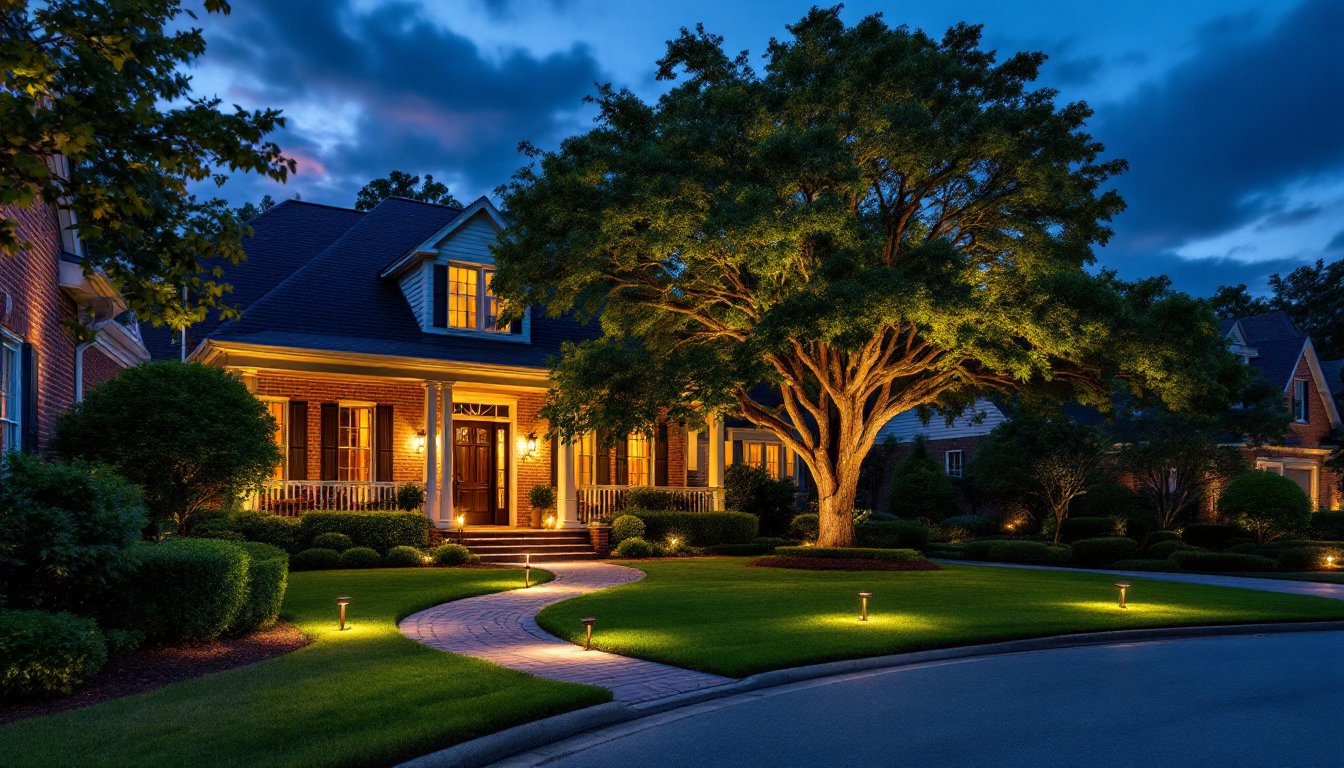
Pathways and Walkways: Space fixtures 6–8 feet apart along both sides of walkways for even illumination. Stagger placement slightly rather than lining them up military-style, it feels more natural. Avoid aiming lights directly at eye level: downward-facing or shielded fixtures prevent glare.
Tree Uplighting: Position spotlights 2–3 feet from the trunk base, angled upward at 30–45 degrees. For Charlotte’s mature oaks and magnolias, use narrow beam spreads (10–20 degrees) to graze bark texture. Wide floods wash out detail. If the tree canopy is dense, consider moonlighting, downlights installed in branches that mimic dappled natural light.
Hardscapes and Water Features: Graze retaining walls and stone facades with fixtures placed 12–18 inches away. This creates shadow lines that emphasize texture. For ponds or fountains, submersible LEDs add drama, but ensure they’re rated for continuous submersion (IP68). Charlotte’s clay soil shifts seasonally, so stake or anchor fixtures securely.
Entryways and Facades: Flank front doors with sconces at 60–66 inches above the threshold. Downlights in soffits or eaves provide ambient fill. If highlighting columns or stonework, use wall washers positioned 3–5 feet out to avoid harsh shadows. Layer multiple sources rather than relying on a single bright fixture.
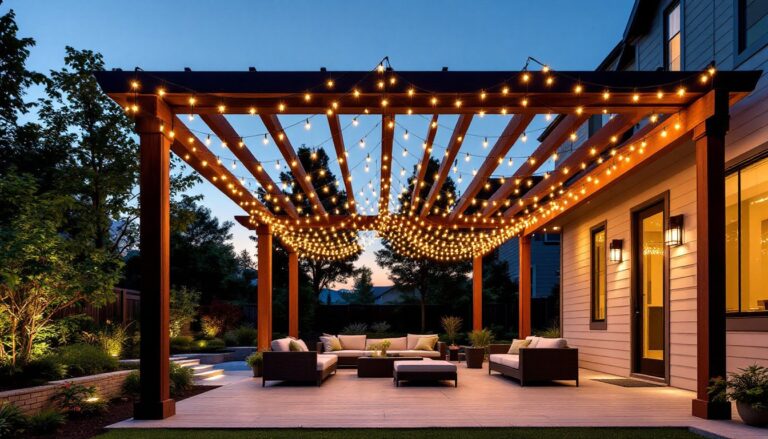
Decks and Patios: Recessed deck lights work well in treated lumber or composite boards, install during construction or retrofit with hole saws. For existing structures, low-profile step lights or post caps add safety without cutting into surfaces. Integrate with smart dimming controls to shift from task lighting during dinner to ambient glow for conversation.
DIY Installation vs. Professional Services in Charlotte
DIY-Friendly Scenarios: Low-voltage kits from big-box stores work for straightforward projects, path lighting along a 50-foot walkway, for example. You’ll need a 300W transformer (handles about 25 fixtures at 12W each), 12/2 or 14/2 landscape wire, wire connectors, and a timer or photocell. Bury cable 6 inches deep in conduit or direct-burial rated wire. A weekend warrior with basic electrical knowledge can handle this.
When to Hire a Pro: Complex designs involving multiple zones, smart home integration (Lutron, Control4), or line-voltage runs justify professional help. Licensed electricians ensure code compliance, especially for GFCI-protected circuits required near water features. Charlotte has experienced exterior lighting professionals who understand local soil conditions (heavy clay that retains water) and tree root interference.
Permit Considerations: Low-voltage systems typically don’t require permits. Line-voltage work does, particularly if you’re tapping into your home’s main panel. Mecklenburg County building codes align with NEC standards, but verify with local inspectors before trenching or splicing into existing circuits.
Cost Reality Check: DIY low-voltage setups run $300–$800 for materials covering an average front yard. Professional installation for a full property (front, back, hardscapes) ranges $2,500–$6,000+ depending on fixture quality and labor. Copper fixtures and smart controls push costs higher. Get three quotes, ask for portfolios, and verify licensing.
Maintenance Tips for Year-Round Performance
Seasonal Adjustments: Charlotte’s canopy trees grow fast. What worked in spring may be blocked by July foliage. Walk the property quarterly and redirect or reposition fixtures as plantings mature. Mulch settles and pathways shift, reset sunken fixtures to maintain proper angles.
Cleaning and Debris Removal: Pollen in spring and falling leaves in autumn clog fixture lenses and vents. Wipe down lenses with a damp microfiber cloth monthly. Remove spider webs and dirt buildup from heat vents on LED housings, restricted airflow shortens LED lifespan, even though they run cool.
Electrical Checks: Inspect wire connections annually. Charlotte’s wet springs and occasional freezes cause corrosion in poorly sealed connectors. Use silicone-filled wire nuts rated for direct burial, not standard twist-on caps. Check transformer output with a multimeter, voltage drop over long wire runs dims distant fixtures. If voltage sags below 10.8V on a 12V system, upgrade wire gauge or add a second transformer.
Timer and Photocell Updates: Mechanical timers drift. Replace them every 3–5 years or upgrade to digital astronomical timers that auto-adjust for sunrise/sunset. Photocells fail from UV exposure, swap them out when lights stay on during the day or refuse to activate at dusk.
Bulb and LED Replacement: LEDs last decades, but drivers (the electronics inside) can fail sooner in high-heat or high-moisture environments. If a fixture flickers or dims prematurely, replace the driver assembly rather than the entire unit. Keep spare bulbs or driver models on hand, many manufacturers discontinue specific parts after 5–7 years.
Pest and Water Intrusion: Ants and spiders nest in warm fixtures. A light spray of silicone lubricant around gaskets discourages intrusion. If water pools inside lenses, check O-rings and replace cracked seals. According to home improvement guides, sealed fixtures should never accumulate condensation, if they do, the IP rating isn’t being met.
Safety Reminder: Always disconnect power at the transformer before servicing fixtures. Wear gloves and safety glasses when handling broken lenses or cutting wire. Low-voltage systems are safer than line-voltage, but shorts can still damage equipment or cause small fires in dry mulch.
Conclusion
Charlotte’s landscape lighting potential goes well beyond builder-grade porch lights. With the right fixtures, strategic placement, and honest assessment of DIY skills versus professional help, homeowners can craft outdoor spaces that perform as well after dark as they do at noon. Focus on durability, code compliance, and layered lighting zones, your yard will thank you for it year-round.