An outdoor kitchen without proper lighting is like grilling in the dark, literally. Whether flipping burgers at dusk or prepping vegetables after sunset, the right lighting transforms a frustrating experience into a functional, inviting space. Beyond mere visibility, strategic illumination enhances safety, extends usable hours, and creates ambiance that rivals any indoor kitchen. From task lighting over prep surfaces to subtle accent fixtures highlighting stonework, today’s outdoor kitchen lighting balances practicality with aesthetics. This guide breaks down proven lighting strategies, fixture types, and installation considerations to help homeowners design an outdoor cooking space that works as well at 9 PM as it does at noon.
Table of Contents
ToggleKey Takeaways
- Outdoor kitchen lighting ideas must balance three layers—task, ambient, and accent—to create a functional and inviting cooking space that operates safely after dark.
- Task lighting with LED strips (300+ lumens) and gooseneck fixtures at 4000-5000K color temperature ensures accurate food prep visibility and prevents cooking accidents.
- Ambient warm-white lighting (2700-3000K) with wall sconces and dimmable controls extends usable hours, transforming your outdoor kitchen into a year-round entertaining destination.
- LED fixtures reduce energy costs by 85% compared to incandescent bulbs while lasting 25,000-50,000 hours, making them essential for outdoor applications.
- All outdoor electrical work requires GFCI protection, wet-rated fixtures, proper cable burial depths (24 inches for direct burial), and permits—always hire a licensed electrician for circuits and permanent installations.
Why Proper Lighting Matters for Your Outdoor Kitchen
Cooking outdoors after dark without adequate lighting creates safety hazards and limits functionality. Poor visibility increases the risk of knife accidents during food prep, makes it difficult to judge meat doneness, and turns simple tasks like reading recipe cards into frustrating guesswork.
Safety is the primary concern. Grills operate at temperatures exceeding 500°F, and inadequate lighting around cooking surfaces raises the risk of burns or contact with hot grates. Proper illumination also helps identify trip hazards like uneven pavers or deck boards, especially when carrying hot dishes or sharp utensils.
Functionality extends your outdoor kitchen’s usable hours. Without lighting, most homeowners abandon their outdoor setup once natural light fades, typically by 6 PM in winter months. Strategic fixtures allow cooking well into evening hours, making the space a practical year-round investment rather than a summer-only amenity.
Code compliance matters, too. While outdoor kitchens aren’t always subject to the same stringent requirements as indoor spaces, the National Electrical Code (NEC) mandates GFCI protection for all outdoor receptacles and fixtures within 6 feet of water sources. Many municipalities also require dedicated circuits for outdoor cooking areas. Check local building codes before planning electrical work.
Task Lighting Solutions for Food Prep and Cooking Areas
Task lighting focuses bright, directed light exactly where work happens, countertops, cutting boards, grill surfaces, and cooktops. This isn’t the place for mood lighting: prioritize high lumen output and color accuracy.
Under-cabinet LED strips are the workhorse of outdoor kitchen task lighting. Mount them beneath overhead cabinets or shelving to eliminate shadows on prep surfaces. Look for fixtures rated at minimum 300 lumens per linear foot for adequate brightness. Choose models with a color temperature of 4000-5000K (neutral to cool white), which renders food colors accurately, critical when checking whether chicken is fully cooked.
For grill areas without overhead structures, adjustable gooseneck lights mounted to the grill hood or nearby wall provide targeted illumination. Position them to light the cooking surface without creating glare in the cook’s eyes. Many built-in grills now include integrated LED lighting, but aftermarket options work well for existing setups.
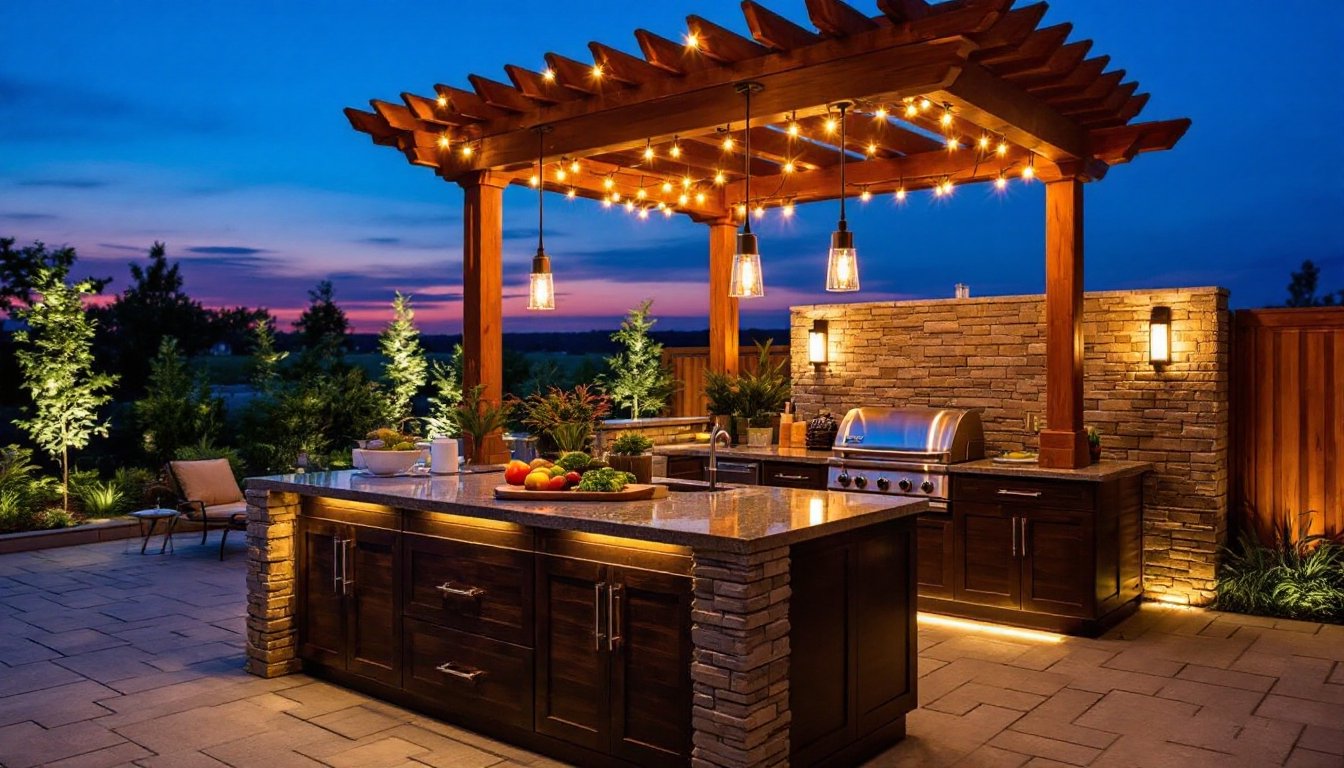
Pendant lights over islands or bar seating double as task and ambient lighting. Hang them 30-36 inches above the counter surface to provide adequate work light without obstructing sightlines. Choose wet-rated fixtures with enclosed bulbs to withstand rain and moisture.
For countertop zones without overhead coverage, consider rechargeable puck lights as a flexible solution. While not a permanent fix, they’re useful for secondary prep areas or temporary setups. Those planning extensive custom decks and patios often incorporate task lighting into the overall design from the start.
Avoid common mistakes: Never position task lights behind the cook, which creates shadows on the work surface. And don’t rely solely on string lights or lanterns for task areas, they’re decorative, not functional.
Ambient Lighting to Set the Perfect Outdoor Mood
Ambient lighting provides overall illumination that makes the space feel welcoming without harsh glare. This layer fills in shadows, defines the perimeter, and creates atmosphere for dining and entertaining.
Wall-mounted sconces flanking doorways or structural posts offer reliable ambient light. Mount them at 5-6 feet above finished grade, spaced 8-10 feet apart for even coverage. Choose fixtures with diffused glass or fabric shades that spread light in multiple directions rather than harsh downward beams.
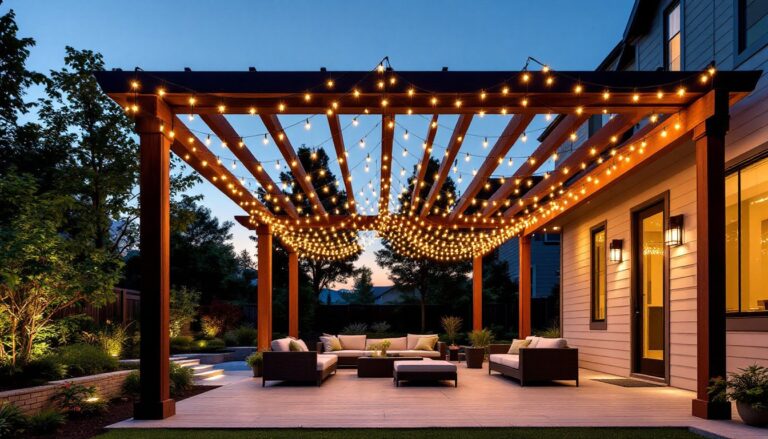
Overhead string lights remain popular for good reason, they’re affordable, easy to install, and create instant ambiance. Use commercial-grade string lights with shatterproof bulbs rated for outdoor use, not the lightweight versions sold for holiday decorating. Suspend them in crisscross or zigzag patterns rather than straight lines, which can feel institutional. Secure mounting points to structural beams or posts, not gutter systems or trim.
Post cap lights on deck railings or freestanding posts provide low-level ambient light that guides movement without overwhelming the space. Solar-powered options work fine for decorative accent, but hardwired fixtures with LED bulbs deliver more consistent brightness.
For integrated designs, outdoor track lighting systems allow adjustable fixture placement along a single electrical run, making it easy to direct light where needed as layouts evolve.
Dimmer switches are essential for ambient layers. Install compatible LED dimmers to adjust light levels based on activity, brighter for meal prep, softer for after-dinner conversation. Not all LED fixtures play nice with standard dimmers, so verify compatibility before purchasing.
Keep ambient lighting warmer in color temperature than task lighting, 2700-3000K creates a comfortable, inviting glow similar to incandescent bulbs. This contrast between warm ambient and cooler task lighting helps define different functional zones visually.
Accent Lighting Ideas to Highlight Architectural Features
Accent lighting adds visual interest by highlighting specific features, stone veneers, outdoor fireplaces, planters, or architectural details. This layer elevates the space from purely functional to thoughtfully designed.
Up-lights placed at ground level wash light upward across textured surfaces. Position them 12-18 inches from stone or brick walls to create dramatic shadows that emphasize texture. Use narrow beam angles (15-25 degrees) for tall vertical surfaces, wider beams (40-60 degrees) for shorter features. LED fixtures drawing 3-5 watts typically provide sufficient accent illumination without overwhelming other layers.
In-grade well lights recessed into hardscape create similar effects with a cleaner look. These require planning during patio or deck construction, as they need to be set flush with the finished surface. Use only fixtures rated for wet locations and vehicle loads if installed in driveways or high-traffic areas.
For pergolas or overhead structures, downlights recessed into beams create moonlighting effects, soft, dappled light filtering through slatted roofs. This technique works especially well over backyard decks and patios where you want gentle illumination without visible fixtures.
Landscape lighting in adjacent planting beds extends the visual impact beyond the kitchen footprint. Small spotlights aimed at specimen trees or shrubs create depth and dimension. According to Sunset Magazine’s outdoor lighting tips, layering accent lights with other types creates a more dynamic and professional appearance.
Toe-kick lights under base cabinets or step risers serve both accent and safety functions. These low-level LEDs outline pathways and edges, helping guests navigate without tripping while adding subtle visual interest. Many professionals draw inspiration from pictures of decks and patios when planning accent placement.
Avoid over-lighting. Accent fixtures should be subtle, aim for one-third the brightness of ambient lighting to create contrast without competition.
Smart and Energy-Efficient Lighting Options
Smart controls and energy-efficient fixtures reduce operating costs while adding convenience. Given that outdoor kitchens often include multiple lighting layers, automation and efficiency matter.
LED technology is non-negotiable for outdoor applications. LED fixtures use 75-80% less energy than incandescent equivalents and last 25,000-50,000 hours versus 1,000 hours for traditional bulbs. They also generate minimal heat, reducing fire risk near combustible materials like wood pergolas or fabric awnings.
Color temperature consistency matters when mixing fixtures. Stick to a single Kelvin range for each lighting layer (warm for ambient, neutral for task) across all fixtures. Mismatched temperatures create visual discord, some areas feel clinical while others look dingy.
Smart switches and hubs integrate outdoor lighting into whole-home automation systems. Wi-Fi-enabled dimmers allow control via smartphone apps, voice assistants, or programmed schedules. Set timers to turn on lights at dusk and off at midnight, or create scenes that adjust multiple fixture groups simultaneously. Brands like Lutron Caseta and Leviton offer outdoor-rated smart switches compatible with most LED fixtures.
Motion sensors work well for pathway lighting or secondary prep areas that don’t need constant illumination. Adjust sensitivity and duration settings to avoid nuisance triggering from pets or wind-blown debris. Place sensors 6-8 feet above grade with clear sightlines to the area you want to monitor.
Solar fixtures have improved significantly but remain best suited for accent and pathway applications rather than task lighting. Quality solar lights now deliver 100-200 lumens from a full charge, adequate for low-level illumination. Position solar panels where they’ll receive 6+ hours of direct sunlight daily, shaded locations won’t charge sufficiently.
For integrated smart outdoor solutions, many homeowners coordinate lighting with broader outdoor decks and patios projects to ensure unified control systems.
Photocell sensors automatically switch lights on at dusk and off at dawn, eliminating the need for manual operation or timers. These simple devices screw into standard light sockets or integrate into switch boxes. They’re reliable and inexpensive, though they lack the flexibility of smart systems.
Energy savings add up. A typical outdoor kitchen using ten 60-watt incandescent bulbs for four hours nightly costs roughly $105 annually in electricity. Switching to equivalent 9-watt LEDs drops that to $16, an 85% reduction.
Installation Tips and Safety Considerations
Outdoor electrical work involves different hazards and code requirements than indoor installations. Doing it wrong creates shock risks, fire hazards, and code violations that affect home insurance and resale value.
Hire a licensed electrician for anything beyond replacing existing fixtures. Running new circuits, installing junction boxes, or tapping into the main panel requires permits in most jurisdictions and specialized knowledge. The NEC requires all outdoor receptacles and fixtures to be protected by GFCI devices, either at the breaker or receptacle level. Ground-fault protection trips the circuit within milliseconds if it detects current leakage, preventing electrocution.
All fixtures, boxes, and wiring must be rated for wet or damp locations depending on exposure. Wet-rated fixtures withstand direct rain and spray: damp-rated fixtures handle moisture but not direct water contact. Check manufacturer specifications, indoor fixtures used outdoors fail quickly and create hazards.
Use only outdoor-rated cable: UF-B (underground feeder) cable for buried runs or metal or PVC conduit containing THWN-2 wire. Bury cable at code-required depths: 24 inches for direct-burial cable under 120V, 18 inches when protected by GFCI, 6 inches minimum when run through rigid metal conduit. Depth requirements vary by jurisdiction and voltage, so verify local codes.
Conduit routing should avoid sharp bends that make wire pulling difficult. Use sweeping elbows rather than 90-degree fittings where possible, and install pull boxes at long runs or complex turns. Seal all conduit entries with weatherproof fittings to prevent moisture infiltration.
For decorative lighting elements or low-voltage systems, use 12V transformers located in weatherproof enclosures. Low-voltage lighting reduces shock risk and doesn’t require conduit for most above-ground applications, though burying wire 6 inches deep protects it from damage.
Fixture mounting requires solid backing. Screw boxes directly to studs, joists, or structural posts, never rely on siding or trim alone. Use corrosion-resistant hardware: stainless steel or coated fasteners rather than bare steel that rusts quickly outdoors.
Safety gear includes voltage testers, insulated tools, rubber-soled boots, and safety glasses. Always turn off power at the breaker and verify it’s dead with a non-contact voltage tester before working on circuits.
Load calculations matter when adding multiple fixtures. A standard 15-amp circuit supports 1,800 watts maximum, but the NEC limits continuous loads (operating 3+ hours) to 80% of capacity, 1,440 watts. Ten LED fixtures at 15 watts each plus a 1,200-watt grill light exceed that threshold, requiring a dedicated circuit or splitting loads.
Inspection requirements vary. Some jurisdictions require permits and inspections for any new circuits, others only for work exceeding specific amperage. Assume you need a permit and call the building department to confirm, unpermitted work discovered during home sales creates negotiation leverage for buyers.
Conclusion
Effective outdoor kitchen lighting combines three layers, task, ambient, and accent, each serving distinct functions. Prioritize bright, focused task lighting over cooking and prep surfaces, use warm ambient fixtures to create inviting atmosphere, and add accent lighting sparingly to highlight architectural features. LED technology and smart controls maximize efficiency while extending usability well into evening hours. Always follow electrical codes, use wet-rated fixtures, and call in licensed professionals for circuit work. With proper planning and execution, a well-lit outdoor kitchen becomes a true extension of indoor living space rather than a fair-weather novelty.